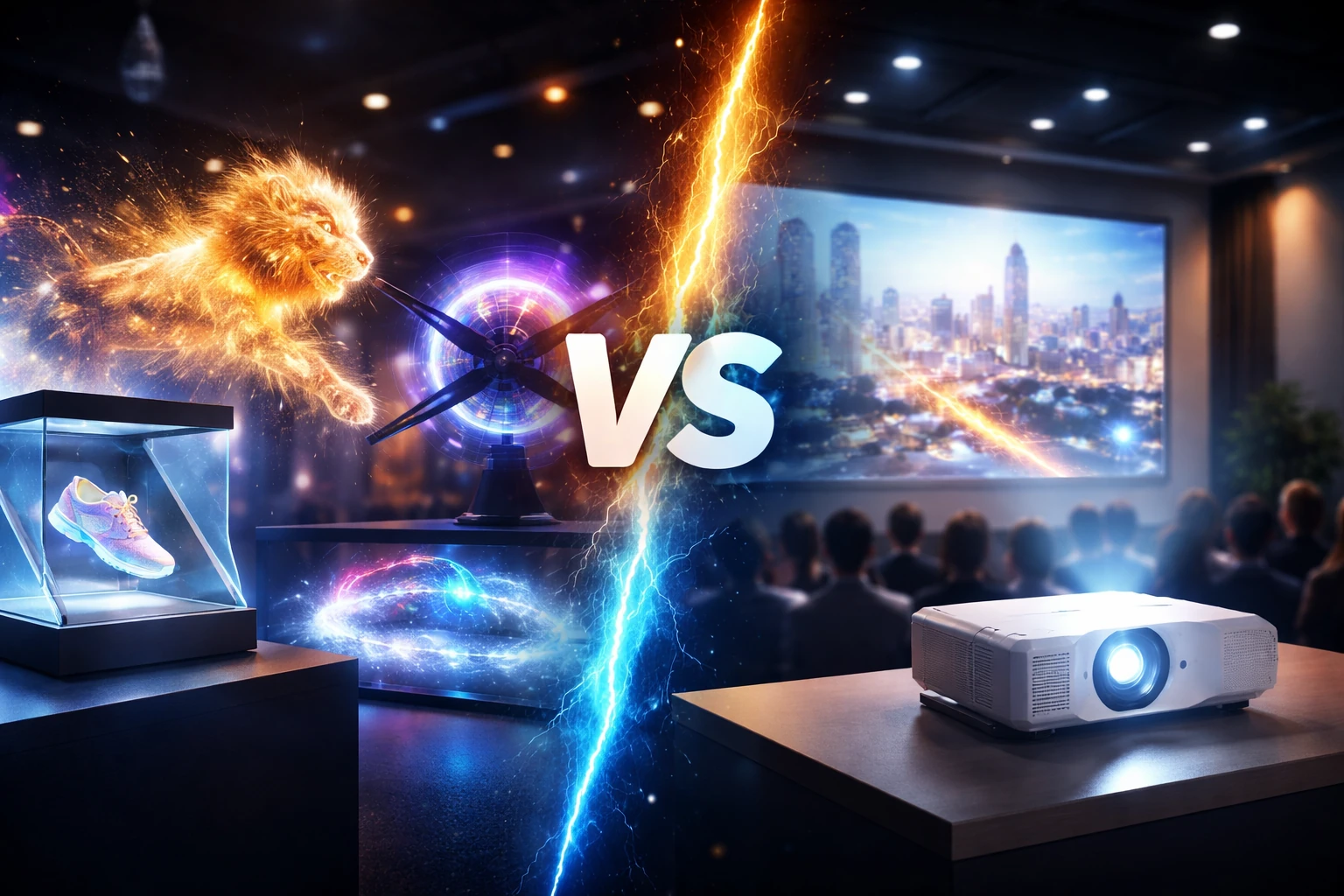
What Is a Traditional Projector?
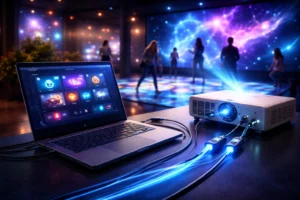
A traditional projector is a system that throws an image or video onto a flat surface such as a wall, curtain, white screen, or board. It is one of the most common visual display tools in education, business presentations, cinema rooms, conference spaces, and many commercial installations.
Traditional projectors are widely used because they are flexible, familiar, and suitable for many content types. They can display slides, video, branded graphics, interactive media, and large-format visuals. In addition, they can scale well in both small and large spaces depending on brightness and installation design.
For many venues, a standard projector remains a reliable and cost-effective solution.
What Is a Hologram Projector?
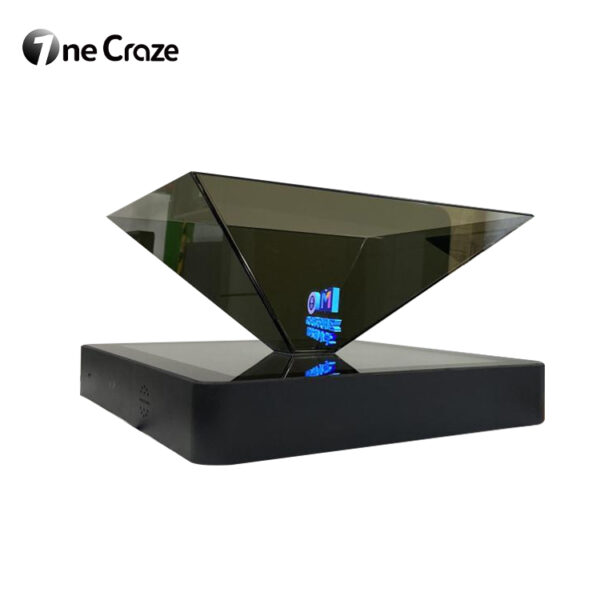
A hologram projector is a commercial display system designed to create a floating, three-dimensional, or holographic-style visual effect. In real business applications, the term can refer to several technologies, including 3D hologram LED fans, transparent display boxes, fog screen projection systems, and customized holographic installations.
Unlike a traditional projector, a holographic projector is not usually focused on projecting flat content onto a normal wall. Instead, it is designed to create a more futuristic, attention-grabbing, illusion-based presentation.
This is why hologram projector systems are becoming increasingly popular in:
- retail stores
- shopping malls
- product launches
- museums
- exhibitions
- immersive event spaces
They are especially valuable when visual novelty and audience attention are major priorities.
Hologram Projector vs Traditional Projector: The Core Difference
The biggest difference lies in the type of visual experience each system creates.
A traditional projector is designed for clear content delivery on a visible surface. It is ideal when your goal is to present information, storytelling content, environmental projection, or large-scale visuals across walls and screens.
A hologram projector, by contrast, is designed for visual illusion and impact. It aims to make content appear floating, layered, futuristic, or more dimensional.
So the decision is not simply about which one is “better.” It is about which one matches your display objective more effectively.
Installation Requirements: Which System Is Easier to Set Up?
In many cases, a traditional projector is easier to deploy, especially in simple environments. If you already have a wall, screen, or planned projection surface, installation can be straightforward.
Still, installation quality depends on several factors:
- projection distance
- ambient light
- brightness
- mounting position
- keystone correction
- screen surface quality
A hologram projector can be simple or complex depending on the technology used. For example, a 3D hologram LED fan may be relatively easy to install in a retail display. On the other hand, a fog screen or customized holographic installation can require much more planning and environmental control.
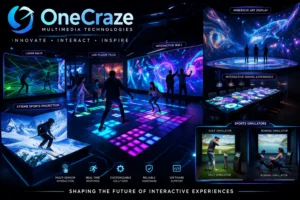
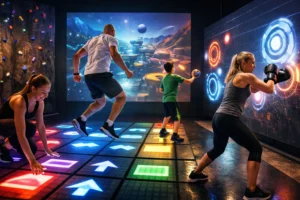
At OneCraze, we understand that not every venue should use the same display method. Some projects need a hologram projector for premium commercial impact. Others need traditional projection or immersive projection mapping for environmental storytelling and large-format experience design.
Not always. A hologram projector is better for high-impact product display and futuristic visual effects, while a traditional projector is better for large-scale content, storytelling, and room-based projection.
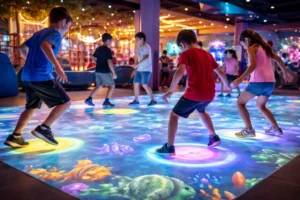
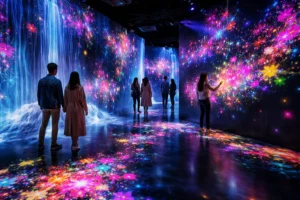
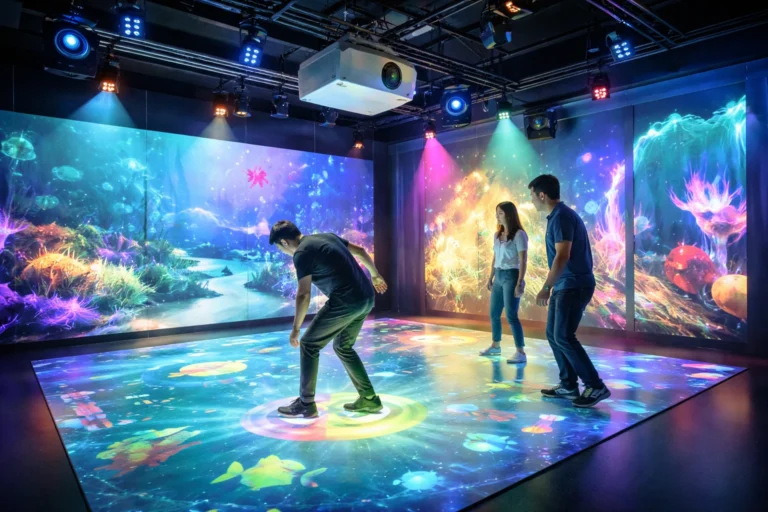
Yes. Traditional projectors can create highly immersive environments when used for projection mapping, wall projection, or full-room visual installations.
It depends on the goal. For booth attraction and product focus, a hologram projector is often stronger. For educational or large-format visual storytelling, a traditional projector may be more suitable.