Why Is Competitive Interaction Essential in Active LED Floor Grid Games? 🧠🔥
Competitive interaction transforms a simple LED floor game into a high-energy experience. Instead of passive play, players feel pressure, excitement, and urgency.
Here’s why it matters:
- Players stay longer
- Replay frequency increases
- Team battles encourage social sharing
- Operators can justify higher price points
From a venue perspective, competitive mechanics directly affect store revenue, customer lifetime value, and brand differentiation.
➡️ Without competition, LED floors are entertainment.
➡️ With competition, they become sports-like attractions.
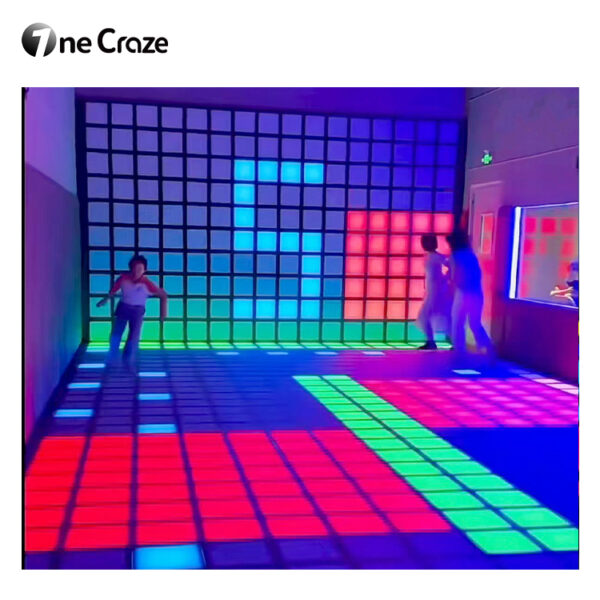
What Hardware Configuration Is Required for Active LED Floor Grids? ⚙️🟦
A reliable hardware configuration for active LED floor grids is the foundation of competitive gameplay. Precision, durability, and response speed define the player experience.
Core Hardware Components
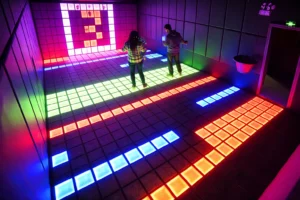
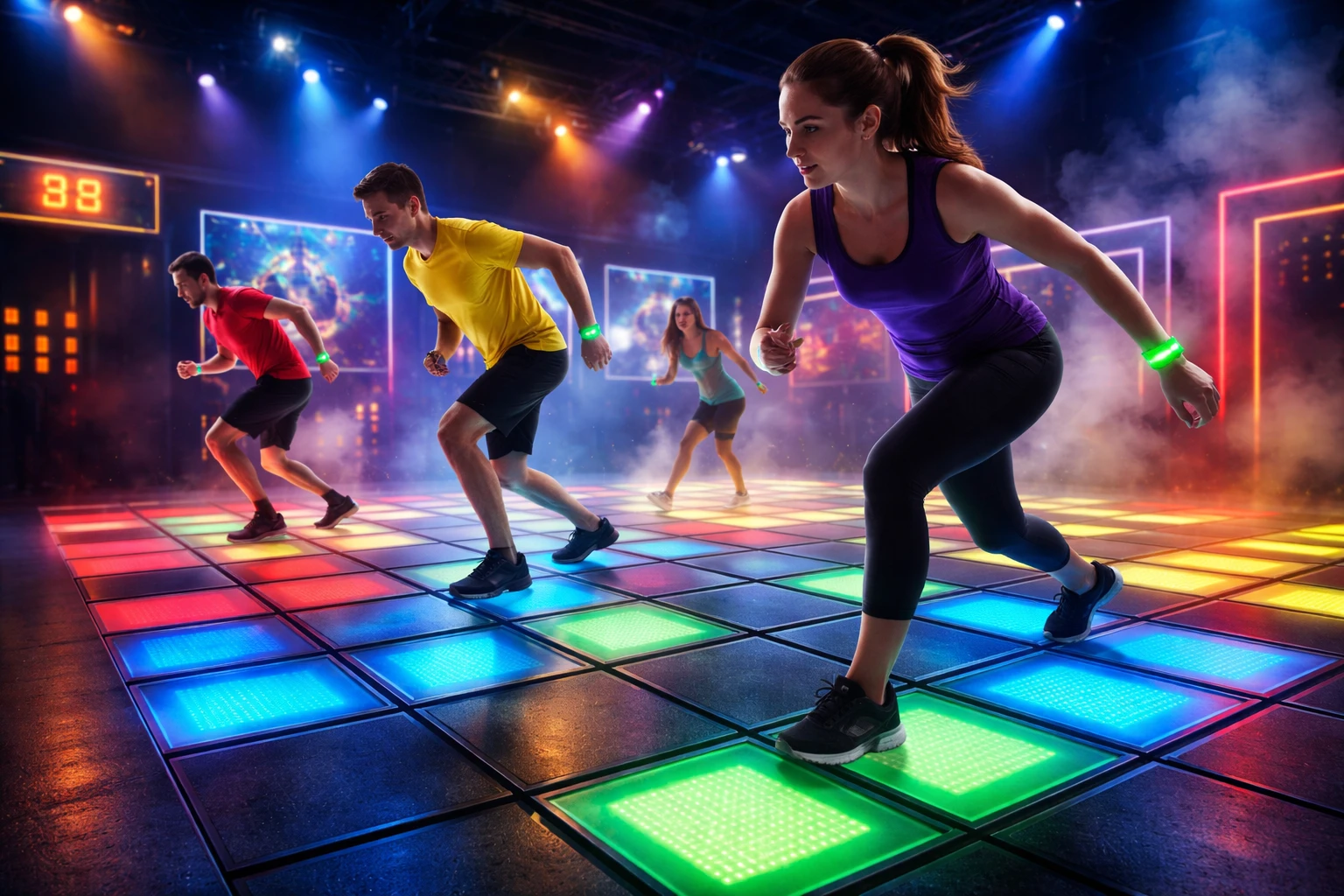
- Pressure-sensitive LED floor tiles
- Central control host (industrial PC)
- Real-time sensor processing module
- Power & data distribution system
- Optional wearable receivers (wristbands)
How Are Interactive LED Floor Tiles Installed and Used in Escape Rooms? 🧩🚪
Escape rooms demand accuracy, synchronization, and narrative logic. LED floor tiles integrate seamlessly when installed correctly.
Installation Workflow
1️⃣ Ground leveling & anti-slip preparation
2️⃣ Tile matrix layout (grid or pathway)
3️⃣ Cable routing under modular frames
4️⃣ System calibration via software
5️⃣ Game logic binding to escape room story
In escape rooms, LED floors often trigger:
- Countdown penalties ⏱️
- Puzzle unlocks 🔓
- Team success/failure states
Which Multiplayer Activation Modes Work Best for Active LED Floor Games? 👥⚔️
Multiplayer activation modes define how players compete. A strong system offers flexibility for different venues.
Most Popular Competitive Modes
🔴 Team vs Team – color-based scoring zones
🔵 Free-For-All – every player for themselves
🟢 Relay Mode – turn-based competition
🟡 Boss Battle – teams fight a shared objective
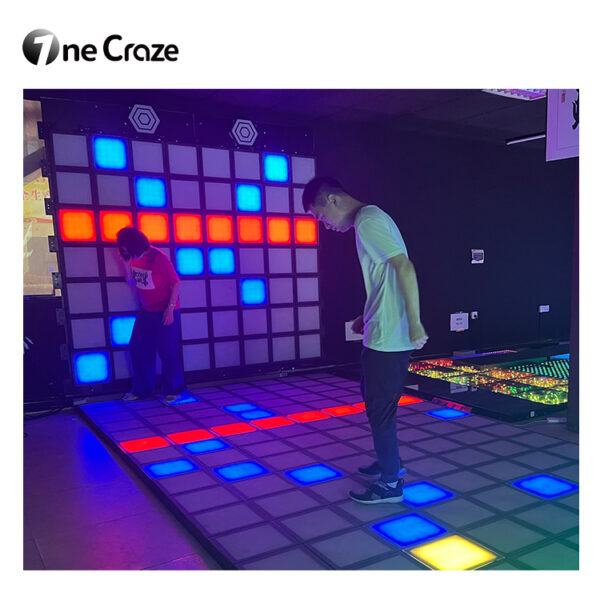
Why Do Players Need Game Wristbands in Competitive LED Floor Systems? ⌚📡
The answer is simple: identity and fairness.
Key Benefits of Wristbands
- Player identification
- Individual scoring
- Team assignment
- Anti-cheat protection
How Does Competitive LED Floor Gameplay Compare to Non-Competitive Systems? 📊
| Feature | Competitive LED Floor Games | Non-Competitive LED Floors |
|---|---|---|
| Player Engagement | ⭐⭐⭐⭐⭐ High | ⭐⭐ Low |
| Replay Value | Very High 🔁 | Limited |
| Revenue Potential | Premium price 💰 | Standard |
| Social Sharing | Strong 📸 | Weak |
| Operator Control | Advanced software | Basic |
| Monetization | Events & tournaments | Walk-in play |
What Role Does Software Play in Competitive LED Floor Grid Games? 💻🚀
Behind every great LED floor game is powerful software.
Software Capabilities
- Real-time score calculation
- Team logic configuration
- Difficulty scaling
- Match history & analytics
- Remote updates (latest game modes)
How Can Operators Monetize Competitive LED Floor Experiences? 💼💡
Competitive gameplay unlocks new revenue streams:
- Tournament tickets
- Time-based play packages
- Corporate team-building events
- Membership plans
Yes. Professional systems support scalable grids and multiple wristbands, making them ideal for large groups and events.
Absolutely. Difficulty levels and game rules can be adjusted via software for all age groups.
With professional systems, new content can be added regularly through software updates from the supplier.