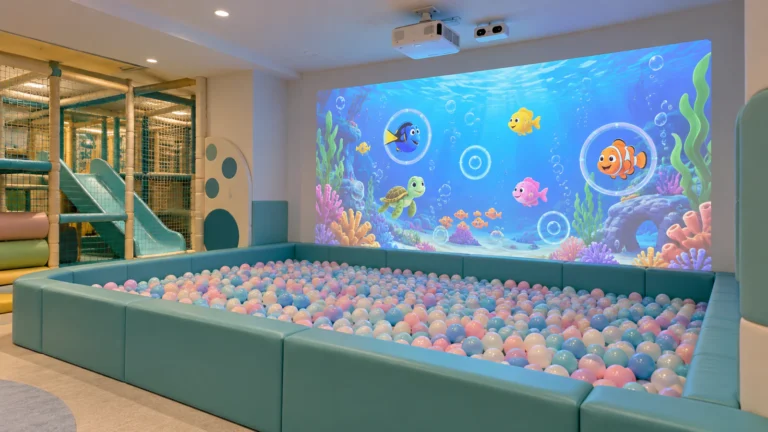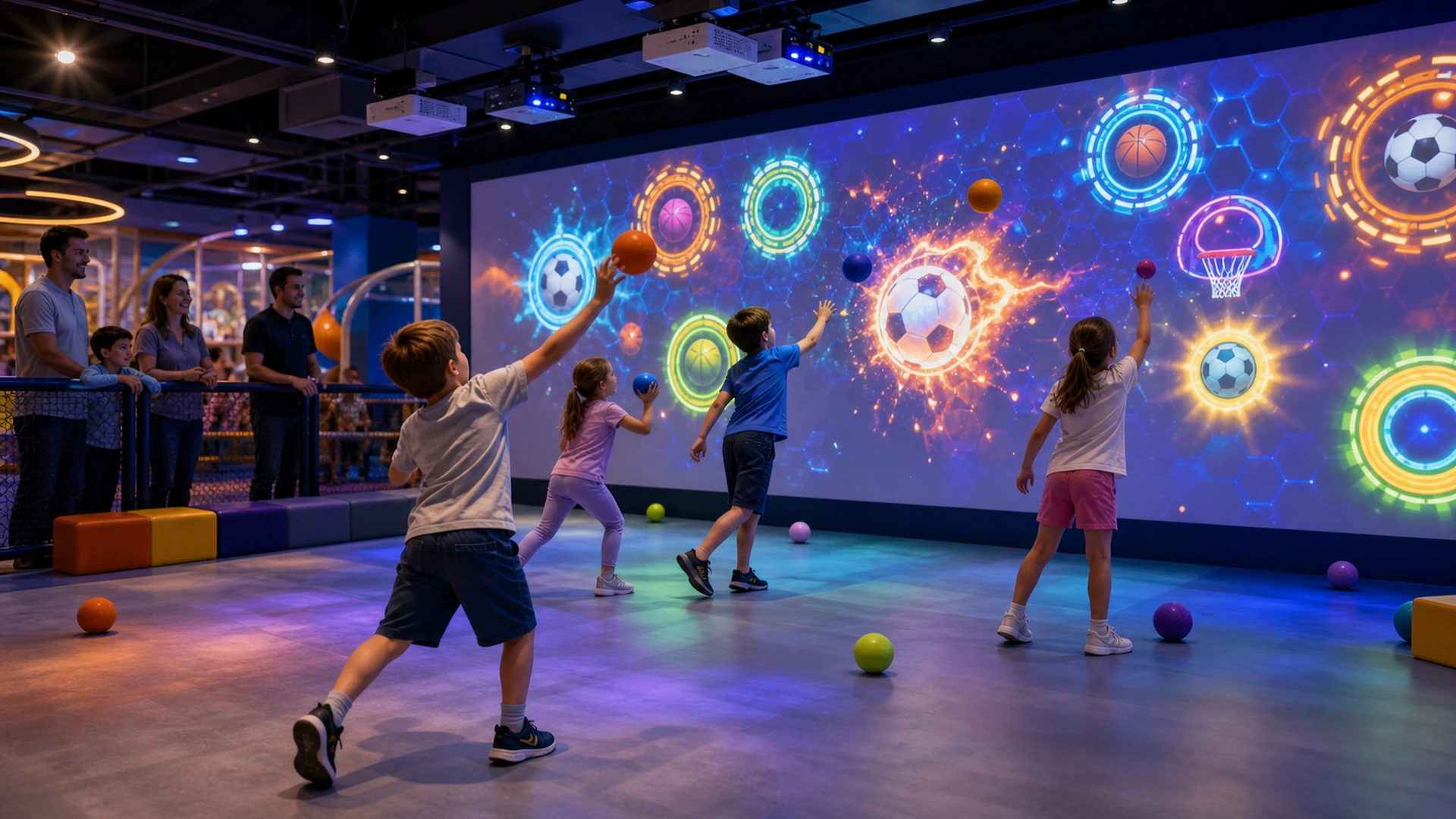
What Are Interactive Wall Projection Games?
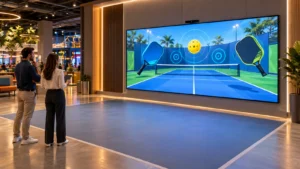
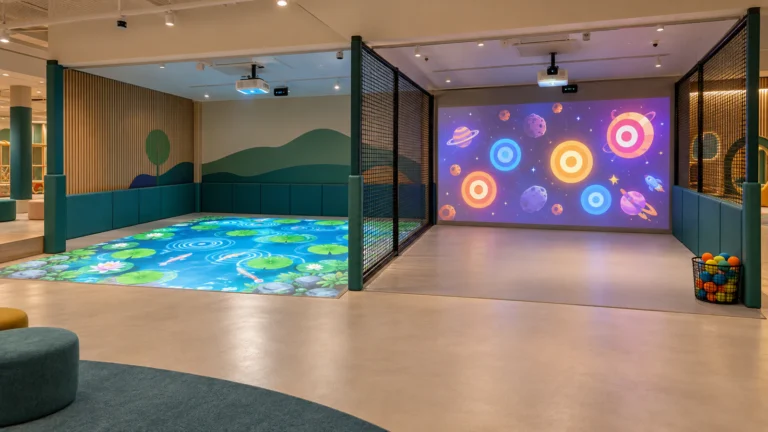
Interactive wall projection games combine a projector, motion sensor or camera, game software, a computer and a safe projection surface. The projector displays the game scene on the wall, while the tracking system detects touches, ball hits or player movement. Then the software responds with animation, sound, scoring and visual feedback.
In an FEC, wall games usually work best when the rules are clear within a few seconds. For example, children can throw balls at monsters, hit moving targets, cut fruit-style objects, protect a goal, complete memory challenges or compete for a high score. If you need a ready-made wall-based product example, see the OneCraze kids Smash Ball interactive projection wall game system.
What Equipment Does an Interactive Wall Projector Need?
A commercial interactive wall system should be planned as a complete attraction, not just a projector mounted in front of a wall. The image must be bright enough, the sensor must respond quickly, the wall must withstand repeated use, and the software must match the age group and business model.
| Component | Main role | FEC buying note |
|---|---|---|
| Projector | Displays the game image on the wall | Choose brightness and lens based on wall size, throw distance and ambient light |
| Motion sensor or camera | Detects ball hits, touch points or body movement | Low latency matters because delayed feedback makes games feel weak |
| Control computer | Runs the game software | Use stable hardware for daily commercial operation |
| Game software | Provides rules, visuals, scoring and modes | Prioritize easy-to-understand games with repeat play value |
| Projection wall | Receives the image and impact | Use a flat, durable and safe surface for throwing games |
| Soft balls or props | Creates physical interaction | Choose safe, lightweight and washable materials |
| Audio system | Adds feedback and excitement | Sound helps players understand hits, wins and time limits |
| Operator control | Starts sessions and switches games | Simple controls reduce staff training pressure |
For smaller venues or temporary events, an integrated system may reduce setup difficulty. OneCraze also offers portable and all-in-one interactive projection options through its interactive projector product category.
Interactive Wall vs Interactive Floor Projection: Which Is Better?
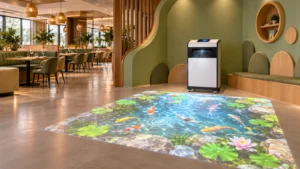
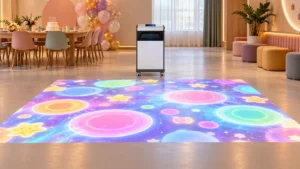
Neither format is always better. Interactive wall projection and interactive floor projection solve different venue problems. A wall system is excellent for throwing games, target games and sports-style challenges. A floor system is better for stepping, running, jumping and group movement. Many FECs can use both if they want a fuller interactive game room.
| Comparison point | Interactive wall projection | Interactive floor projection |
|---|---|---|
| Main interaction | Throwing, touching, hitting targets, body movement | Walking, stepping, jumping, running, full-body movement |
| Best venue area | Wall zone, sports corner, party room, activity room | Open play area, kids zone, immersive room, event space |
| Space advantage | Uses vertical wall space | Creates a strong visual floor attraction |
| Player style | Competitive and target-based | Exploratory, active and movement-based |
| Common games | Ball throwing, reaction targets, sports shooting, monster hit games | Ocean games, stepping effects, treasure hunts, multiplayer floor games |
| Key planning issue | Wall durability, safe ball use and tracking accuracy | Ceiling height, floor surface, shadows and projection coverage |
If your venue is still comparing the two formats, read our related guide on interactive floor projection for FECs. For tracking technology decisions, our article on LiDAR vs IR camera vs depth sensor for interactive projection explains the differences in more detail.
Best Interactive Wall Game Ideas for FECs
The best game mix should serve different visitor moments. A quick target game can attract walk-in traffic, while a timed team challenge can support birthday parties and group bookings. Meanwhile, branded or seasonal games can help the venue promote new events without changing the hardware.
| Game idea | How it works | Best use |
|---|---|---|
| Ball throwing target game | Players throw soft balls at moving targets | FEC sports zones, party rooms and indoor playgrounds |
| Monster hit game | Children hit animated characters to score points | Kids entertainment zones and birthday sessions |
| Reaction training game | Players respond quickly to light-up targets | Older children, teens and team competitions |
| Sports challenge | Basketball, football, goalkeeper or shooting-style games | Sports centers, trampoline parks and school activity rooms |
| Educational wall game | Players match shapes, numbers, animals or words | Museums, schools and parent-child spaces |
| Brand event game | Custom visuals use brand colors, characters or campaign themes | Mall events, product launches and seasonal promotions |
However, operators should avoid choosing games only because they look visually complex. In a busy venue, simple rules, strong feedback and fast replay usually perform better than a beautiful game that needs too much explanation.
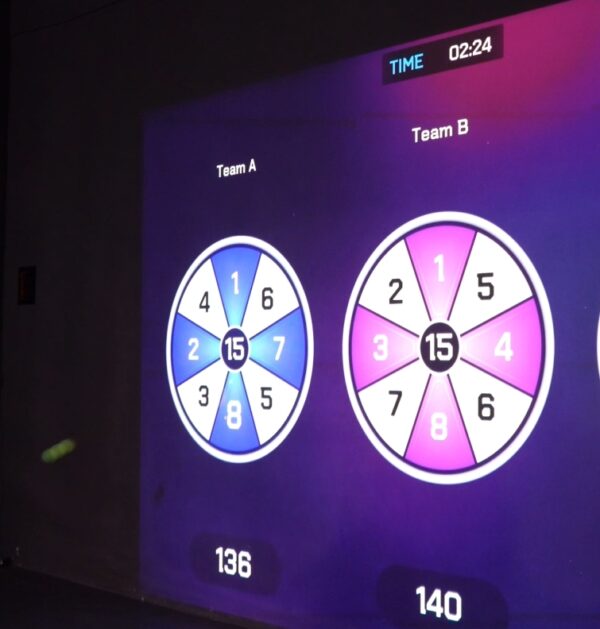
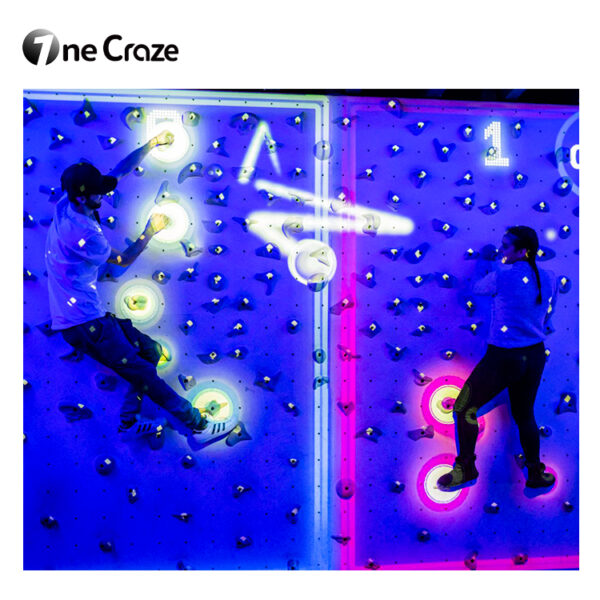
How Much Does an Interactive Wall Projection System Cost?
The cost depends on the wall size, projector brightness, sensor type, software package, installation complexity and custom content. A mobile all-in-one wall projector has a different budget from a fixed multi-projector attraction with custom games and a reinforced throwing wall. Therefore, a site plan is more useful than a generic price list.
| Cost factor | What changes the budget | Practical advice |
|---|---|---|
| Wall size | Larger walls need brighter projection and wider coverage | Start with the number of players and viewing distance |
| Sensor accuracy | Faster and more accurate tracking costs more | Do not compromise if the game depends on ball impact detection |
| Game library | More games and premium content raise value | Choose content that supports daily operation, parties and repeat visits |
| Installation | Mounting, wiring, calibration and wall treatment affect labor | Plan installation before construction finishes if possible |
| Customization | Branded games, local themes or special rules add development cost | Use custom content when it supports marketing or premium packages |
| Support | Updates, spare parts and remote help affect long-term reliability | Ask what happens if the system fails during peak hours |
For operators who want a broader attraction mix, the OneCraze interactive entertainment products page can help compare wall projection, floor projection and immersive projection options.
Installation Checklist for Operators
Before buying an interactive wall projector, check the wall material, viewing distance, ceiling and mounting points, ambient light, power access, player area and spectator area. Also confirm whether guests will throw soft balls, touch the wall directly or interact from a distance. This decision affects wall protection, sensor placement and safety planning.
| Checklist item | What to confirm |
|---|---|
| Wall surface | Flat, bright enough for projection and strong enough for the game type |
| Player distance | Enough space for throwing, movement and safe queue flow |
| Ambient light | Controlled lighting so the image stays vivid |
| Projector position | Safe mounting without blocking players or staff |
| Sensor position | Clear view of the wall and interaction zone |
| Ball safety | Soft, lightweight balls and clear operating rules |
| Staff control | Easy game switching, session timing and restart process |
| Maintenance access | Reachable projector, sensor and computer for service |
Yes, when the system uses soft props, clear play boundaries and a suitable wall surface. Operators should avoid hard balls, exposed cables and crowded throwing zones.
It can, but projector brightness and light control matter. Strong ambient light can reduce contrast, so the design may require a brighter projector, darker surrounding finishes or more controlled lighting.
A projection wall can cover a larger area and support physical games such as throwing and team challenges. A touch screen wall can be useful for precise touch interaction, but it may cost more at large sizes and may not suit ball-impact games.