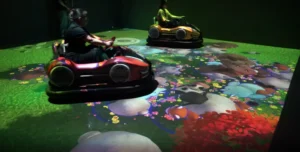
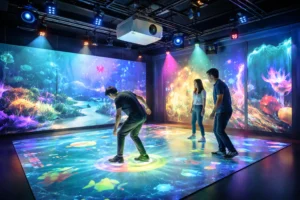
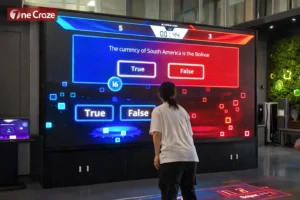
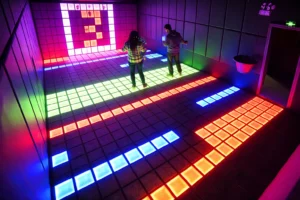
What Hardware Components Make Up Immersive Light Art Installation? 🔧
A successful immersive installation starts with the right hardware ecosystem.
Core Hardware Elements
- High-lumen projectors – Ensure brightness in large or semi-lit spaces.
- Media servers – Power the immersive art venue mapping game software.
- Sensors & controllers – Enable interactivity and motion response.
- Audio system – Adds emotional depth to the visual narrative.
- Mounting & rigging system – Keeps alignment precise and safe.
How Should You Match Projector Type with Different Space Sizes? 📏
Not every space requires the same setup—scale defines strategy.
Small Spaces (Home, Studios, Pop-Ups)
- Use short-throw projectors.
- Focus on edge blending software for seamless walls.
- Keep the price optimized without sacrificing quality.
Medium Spaces (Galleries, Showrooms)
- Choose 5,000–8,000 lumen projectors.
- Combine with interactive mapping software for engagement.
- Ideal for brands looking to buy flexible solutions from a trusted maker.
Large Spaces (Museums, Commercial Venues)
- Deploy laser projectors with 10,000+ lumens.
- Integrate multi-channel system architecture.
- Best for venues that want the latest and hottest immersive experiences.

What Are the Key Application Scenarios for Immersive Light Art Installation? 🌍
Immersive installations are no longer limited to museums. Today, they redefine multiple industries.
Popular Scenarios
- Art exhibitions – Transform static displays into living stories.
- Brand activations – Create memorable consumer touchpoints.
- Retail stores – Increase dwell time and conversion.
- Education centers – Enhance learning with visual immersion.
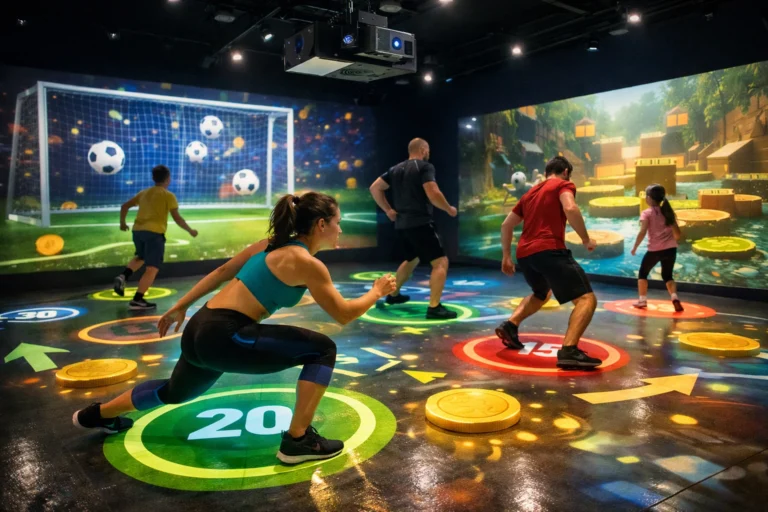
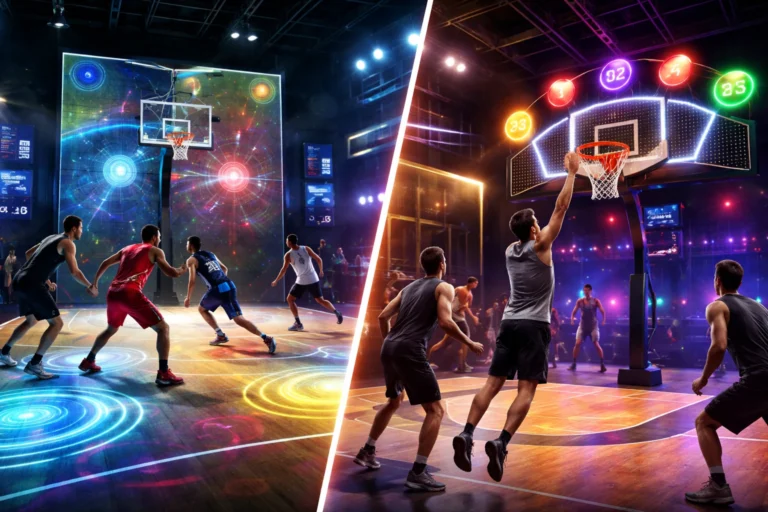
- Entertainment venues – Deliver next-level interactive games.
Can Immersive Art Experiences Be Created at Home? 🏠✨
Absolutely—yes! Home-based immersive art is one of the fastest-growing trends.
How to Build a Home Setup
- Use compact projectors with 1080p or 4K resolution.
- Install basic mapping software.
- Add motion sensors for simple interaction.
Although home systems are smaller, they still deliver emotional impact—perfect for creators, educators, and hobbyists who want to order professional-grade experiences at a reasonable price.
How Does Immersive Art Venue Mapping Game Software Enhance the Experience? 🎮
Hardware creates the canvas—but software brings it to life.
Key Benefits of Mapping Game Software
- Enables real-time interaction.
- Supports multi-surface projection.
- Improves visitor engagement through gamification.
- Simplifies content updates for venues.
Which Projector Setup Fits Your Space Best? 📊
| Space Type | Recommended Projector | Advantages ✅ | Disadvantages ⚠️ | Best Use Case |
|---|---|---|---|---|
| Home Studio | Short-throw LED | Low price, easy setup | Limited brightness | Personal immersive art |
| Gallery | 5,000–8,000 lm DLP | Balanced cost & quality | Needs calibration | Art exhibitions |
| Retail Store | Laser projector | Long lifespan, vivid color | Higher upfront price | Brand activation |
| Museum Hall | Multi-laser system | Maximum impact | Complex installation | Large immersive shows |
They include projectors, media servers, sensors, audio systems, and mounting solutions—working together as a unified system.
Art exhibitions, brand activations, retail stores, museums, schools, and entertainment venues are the most common scenarios.
Yes. With compact projectors and basic mapping software, anyone can build a home immersive art setup.
It synchronizes visuals across surfaces and enables real-time interaction, turning static projection into dynamic experiences.
It depends on space size—short-throw for small rooms, laser projectors for large venues, and multi-channel systems for museums.
Prices vary by scale. Small setups start at affordable levels, while large venues require higher investment. Always request a customized quote.