What Is an LED Activate Pressure Floor Tile System and How Does It Work?
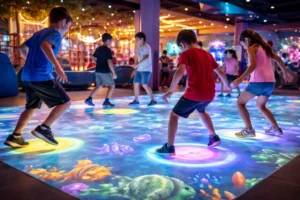
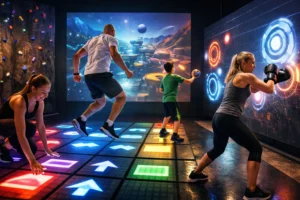
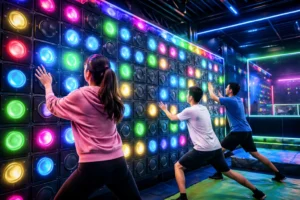
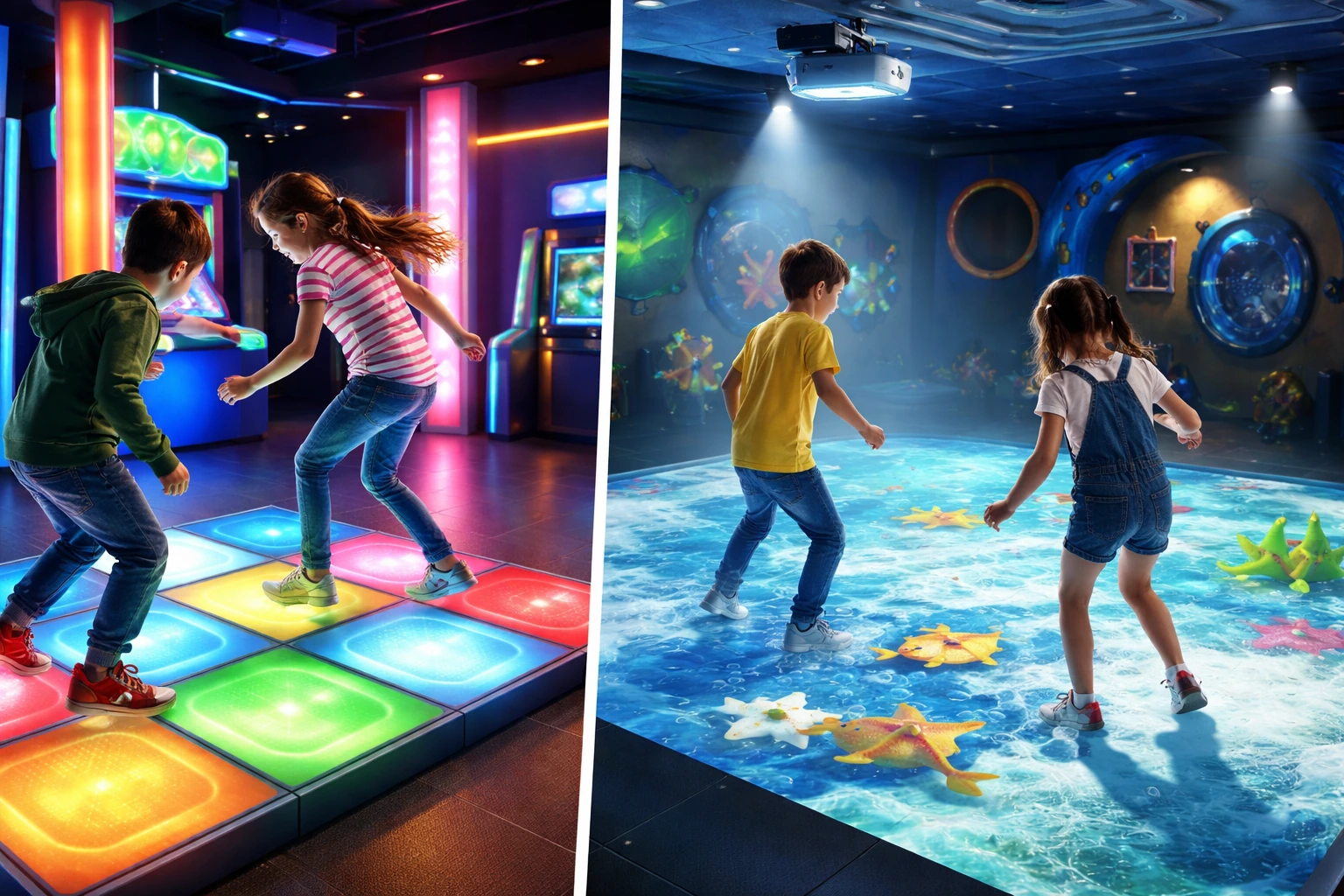
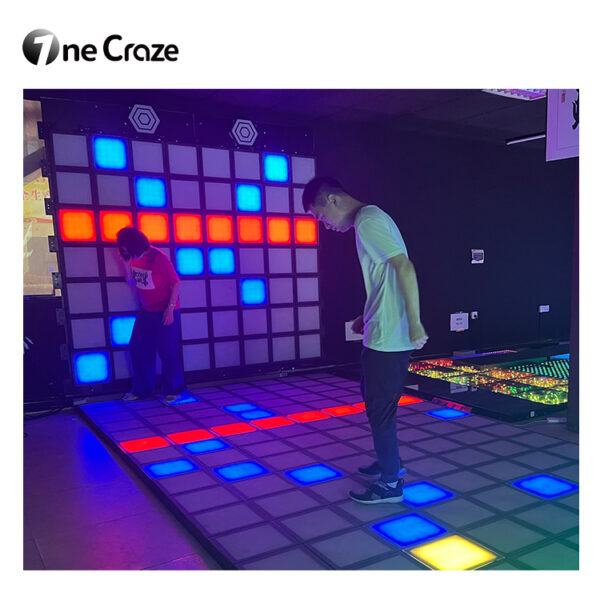
An LED activate pressure floor tile system is a modular interactive flooring solution made of physical panels. Each panel or tile contains built-in lighting and pressure or touch activation components. Once someone steps, jumps, or lands on the surface, the tile immediately reacts.
This reaction can include:
- lighting up in a specific color
- triggering a score-based game action
- activating a sequence path
- supporting rhythm, memory, speed, or sports challenge modes
- connecting with wall units or a central control software platform
Because the response comes directly from the tile, the experience feels immediate and tactile. Users do not just see a reaction; they physically feel that each step interacts with a real active surface.
This type of system is especially popular in:
- active game rooms
- trampoline parks
- challenge zones
- children’s interactive areas
- fitness and agility training spaces
- sports entertainment venues
What Is a Floor Sensor Projector System and Why Is It So Popular?
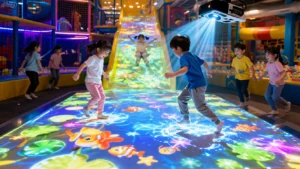
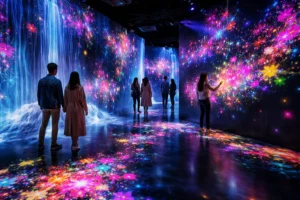
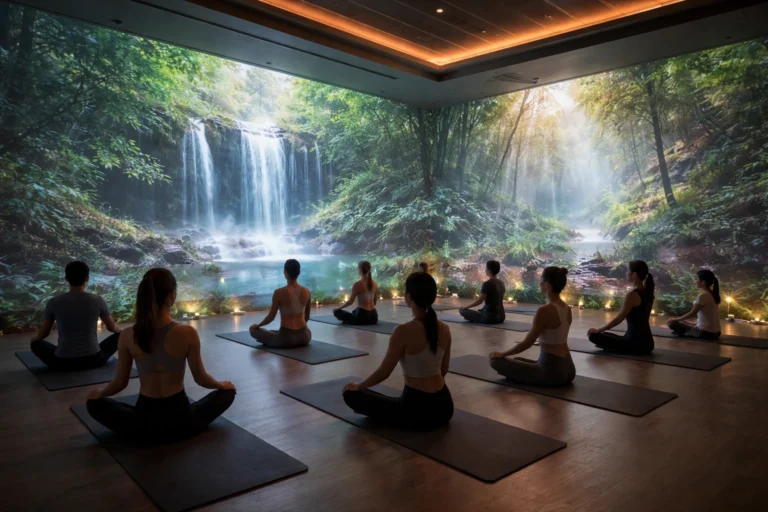
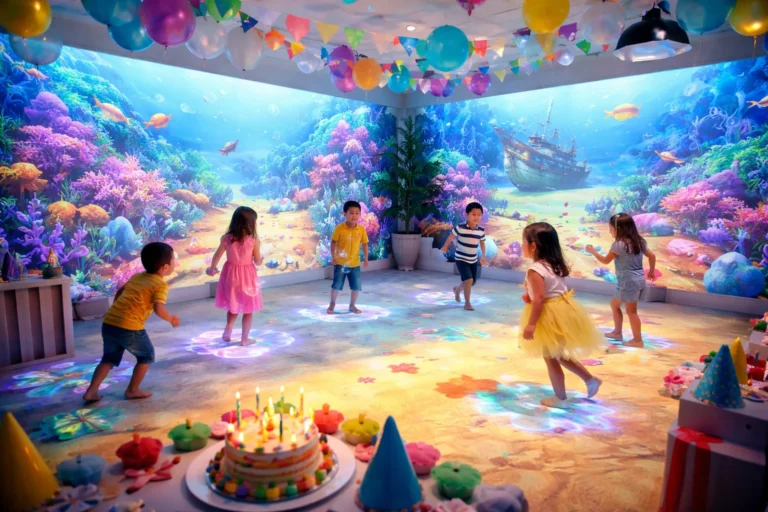
A floor sensor projector system creates interactivity by projecting digital content onto the floor while tracking motion through sensors. Unlike LED tiles, the floor itself usually remains passive. The visual effect comes from above, and the interaction happens through motion recognition.
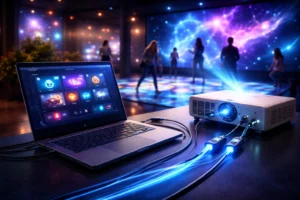
A basic floor projector setup often includes:
- a projector
- motion sensor or infrared sensor
- computer or control box
- interactive software
- mounting structure
When someone walks across the projection area, the system detects movement and changes the projected visuals. For example, fish may swim away, leaves may scatter, lava may crack, or game targets may appear underfoot.
This technology has become popular because it is visually attractive and highly flexible. Operators can switch themes, graphics, and content without rebuilding the floor. That means one projection zone can support many interactive scenes.
This makes projector systems ideal for:
- shopping malls
- museums
- brand activations
- schools
- exhibition booths
- temporary interactive events
- indoor family spaces with lighter traffic
What Are the Main Differences Between LED Pressure Floor Tiles and Floor Sensor Projector Systems?
This is the most important part of the comparison. Although both systems support interactive floor play, the technology, user experience, and operational demands are quite different.
LED Activate Pressure Floor Tiles vs Floor Sensor Projector
| Feature | LED Activate Pressure Floor Tiles | Floor Sensor Projector |
|---|---|---|
| Core technology | Built-in LED panels with pressure activation | Projected visuals with motion/sensor detection |
| Interaction style | Physical step-triggered response | Motion-triggered projected response |
| Floor structure | Active hardware flooring | Passive floor with overhead equipment |
| Durability | High for heavy commercial foot traffic | Moderate, depends on floor condition and projector setup |
| Visual flexibility | Limited by tile design and programmed effects | High, themes can change through software |
| Brightness impact | Strong visibility even in brighter spaces | Best in dim or controlled lighting |
| Installation | More structural and hardware-intensive | Easier in some venues if ceiling mounting is possible |
| Maintenance | Tile module replacement and hardware servicing | Projector calibration, sensor tuning, lamp or device servicing |
| Best use cases | Active game arenas, sports zones, durable play areas | Visual immersive zones, exhibitions, retail, education |
| Price structure | Higher upfront hardware investment | Can be lower for entry-level setups, but varies widely |

How Do Installation, Maintenance, and Long-Term Cost Compare?
LED activate pressure floor tiles usually require a more involved installation process. The flooring structure must be planned properly, the tile layout must be connected, and the power and control system must be integrated. For permanent projects, this is not a problem. In fact, it can be an advantage because the result feels professional and durable.
Projector systems are sometimes easier to deploy, especially in existing venues. If the ceiling height, projection angle, and floor surface are suitable, installation may be quicker. That is why projector systems are often considered for temporary or semi-permanent applications.
Still, maintenance works differently for each option.
LED Floor Tile Maintenance
- replacing individual damaged tiles
- checking wiring and connectors
- updating control software
- cleaning and protecting the tile surface
Floor Sensor Projector Maintenance
- calibrating sensors
- adjusting projection alignment
- maintaining projector brightness
- dealing with ambient light problems
- servicing overhead equipment
Which Businesses Should Choose LED Pressure Floor Tiles and Which Should Choose Floor Sensor Projectors?
Different industries benefit from different strengths.
Businesses That Often Prefer LED Activate Pressure Floor Tiles
- indoor active game centers
- trampoline parks
- sports training venues
- fitness challenge rooms
- durable children’s play zones
- team-building spaces
These businesses usually need strong durability, fast response, and repeatable gameplay. They also benefit from a more physical competitive experience.
Businesses That Often Prefer Floor Sensor Projectors
- shopping malls
- museums
- schools
- exhibitions
- event planners
- brand activation spaces
- temporary promotion zones
Why Does OneCraze Recommend a Needs-Based Comparison Instead of a One-Size-Fits-All Answer?
Because interactive solutions are not identical products. They are tools for different commercial goals.
At onecrazemedia.com, onecraze does not treat every project the same way. A museum, a retail attraction, a school, and an active game arena all need different features. That is why it is important to compare technology, visual expectations, foot traffic, and long-term service requirements before selecting a manufacturer, maker, or supplier.
A needs-based approach helps buyers avoid common mistakes such as:
- choosing a projector system for a space with too much ambient light
- choosing LED tiles when highly changeable visual themes are the real priority
- underestimating maintenance requirements
- focusing only on price instead of lifecycle value
- placing an order without confirming content and control software support
The biggest difference is the interaction method. LED pressure floor tiles respond through built-in hardware and pressure activation, while floor sensor projectors use projected visuals and motion sensing through external equipment and software.
The answer depends on the venue size, installation requirements, and content scope. Some projector systems may have a lower entry price, but LED tile systems may provide better long-term value in high-traffic commercial environments.
LED activate pressure floor tiles are usually better for high-foot-traffic game centers because they are designed for more physical use and durable performance.
Yes. Both systems can often be customized, although projector systems usually offer more visual theme flexibility through software, while LED tile systems focus more on structured gameplay and hardware-linked interactions.