❓What Is a Floor Rising Projector Screen and How Does It Work?
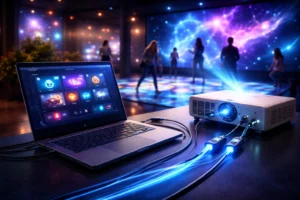
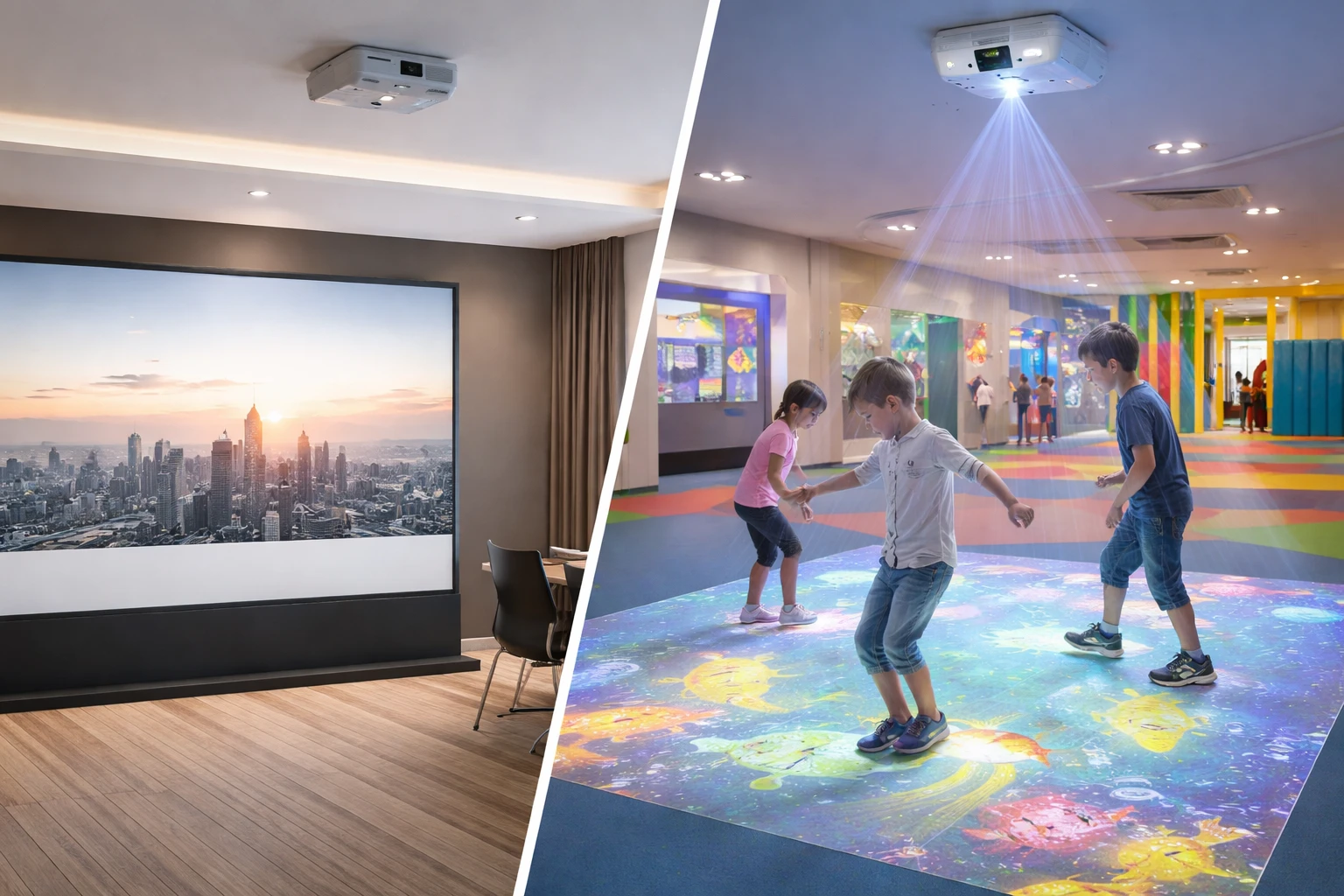
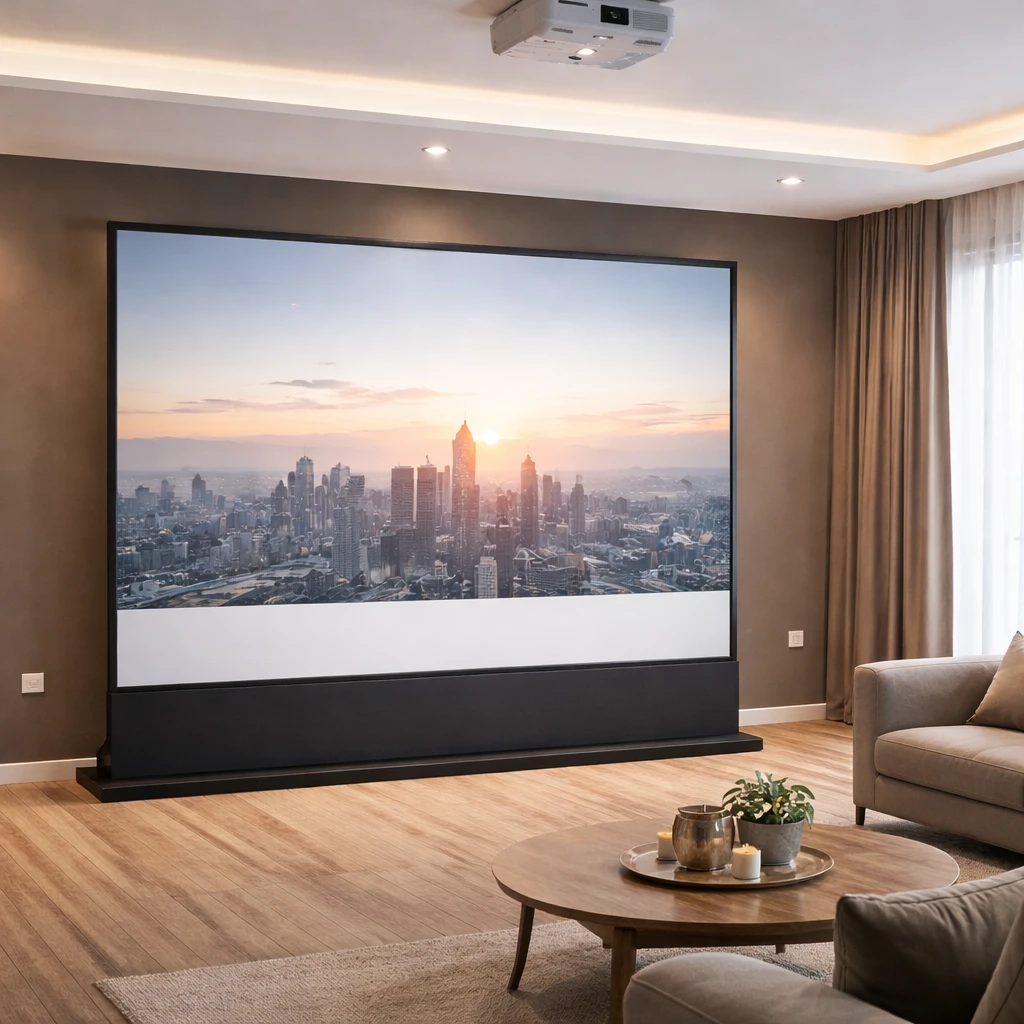
A floor rising projector screen is a motorized display surface that rises vertically from a floor-mounted housing when activated. It pairs with a standard projector to display non-interactive visual content.
🔧 Core System Components
- Motorized floor housing
- Tensioned projection screen
- Standard projector
- Remote or control system
⭐ Key Characteristics
- Passive display system
- No sensing or interaction
- Focused on image clarity
- Clean, minimalist design
This type of system is popular among corporate buyers, luxury home users, and presentation-focused companies looking for a sleek, hidden display solution.
❓What Scenarios Are Floor Rising Projector Screen Suitable For?
Floor rising projector screens are best suited for static visual presentation environments, not interactive games or engagement-driven installations.
📌 Ideal Use Cases
- Corporate meeting rooms
- Executive boardrooms
- High-end home theaters
- Conference centers
- Training and briefing rooms
⚠️ Less Suitable Scenarios
- Children’s play zones
- Interactive museums
- Game-based experience spaces
- Sports or motion-based installations
❓Do Floor Rising Projector Screen Feature Interactive Sensing Effects?
🚫 Short answer: No.
Floor rising projector screens do not include interactive sensing effects. They are display-only systems.
🔍 Why Interaction Is Not Possible
- No motion sensors
- No cameras or radar
- No interactive software
- No real-time data processing
Even if you connect advanced content, the system cannot detect touch, steps, or gestures. Therefore, it is not suitable for interactive game design or experiential marketing.
❓What Is an Interactive Floor Mapping Projector System?
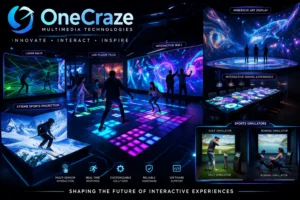
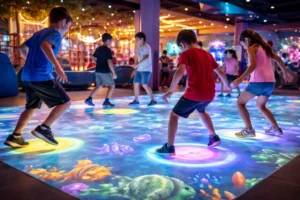
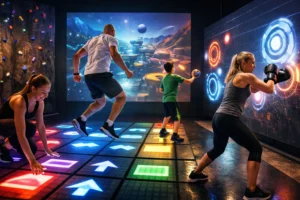
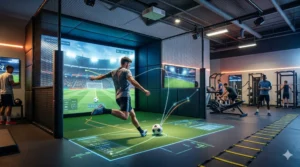
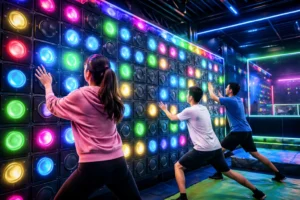
An interactive floor mapping projector is a dynamic system that projects content onto the floor and reacts to human movement in real time.
🧠 Core System Architecture
- High-lumen projector
- Motion sensing devices (camera / infrared / radar)
- Interactive floor software
- Control computer or media server
🎮 What Makes It Different?
- Detects footsteps and gestures
- Triggers visual responses
- Supports multiplayer game logic
- Designed for engagement and immersion
This solution is widely used by entertainment venues, schools, museums, and experience-driven companies looking for the latest and hottest interactive systems.
❓How Do Interactive Floor Mapping Projectors Detect Touch?
Interactive floor mapping projectors do not rely on physical touch. Instead, they use non-contact sensing technology.
🧪 Common Detection Methods
- Infrared motion tracking
- Depth cameras
- Radar-based sensing
- AI-powered image recognition
⚙️ Detection Workflow
1️⃣ Sensor scans the projection area
2️⃣ Movement data feeds into software
3️⃣ Software analyzes position and speed
4️⃣ Visual effects trigger instantly

❓How Can the Projection Range of Interactive Floor Mapping Projectors Be Adjusted?
Projection range flexibility is one of the biggest advantages of interactive floor mapping systems.
🔧 Adjustment Methods
- Lens selection and throw ratio
- Software-defined interaction zones
- Sensor calibration
- Mounting height optimization
🧩 Practical Benefits
- Fits small or large rooms
- Adapts to irregular layouts
- Scales for different game modes
- Supports future upgrades
This makes interactive floor mapping ideal for commercial buyers, system integrators, and project-based installations.
❓What Are the Key Differences Between These Two Systems?
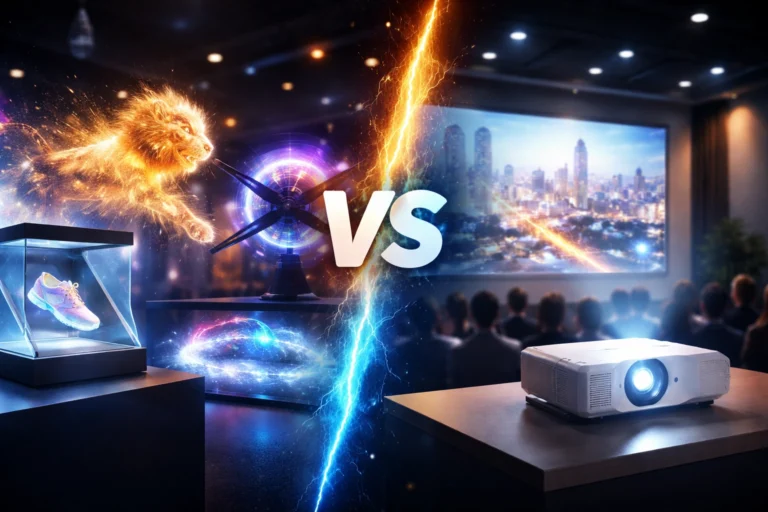
📊 Floor Rising Projector Screen vs Interactive Floor Mapping Projector
| Feature | Floor Rising Projector Screen | Interactive Floor Mapping Projector |
|---|---|---|
| Interaction | ❌ None | ✅ Real-time motion detection |
| Core Purpose | Display | Game & engagement |
| Software | Basic playback | Advanced interactive software |
| Sensors | Not required | Required |
| Installation | Simple | Technical |
| Best For | Meetings & cinema | Entertainment & education |
| System Complexity | Low | High |
| Price Range | Lower | Higher (but scalable) |
❓Which Solution Is Better for Commercial Projects?
The answer depends on your business goal, not just budget 💡.
✔ Choose Floor Rising Projector Screen If:
- You prioritize image quality
- You need a clean presentation setup
- You want minimal maintenance
- You aim for cost control
✔ Choose Interactive Floor Mapping Projector If:
- You want user engagement
- You need game-based experiences
- You operate a public venue
- You plan to monetize interaction
Yes ✅. They are widely used in schools for learning games, physical education, and sensory interaction.
Absolutely. Most systems support content updates, new games, and seasonal themes via software upgrades.
A standard system installation typically takes 1–2 days, depending on space size and calibration complexity.