🍽️ What Are the Key Differences Between Projection Mapping Restaurants and Traditional Restaurants?
When comparing a projection mapping restaurant with a traditional restaurant, the differences go far beyond decoration. The entire operational system, customer engagement model, and brand positioning change dramatically.
🔍 Key Differences Comparison Table
| Aspect | Projection Mapping Restaurant | Traditional Restaurant |
|---|---|---|
| Atmosphere | Fully immersive digital scenes | Static décor |
| Customer Experience | Interactive & story-driven | Functional & routine |
| Technology | Advanced projector + software system | Minimal tech usage |
| Marketing Power | High social sharing potential | Limited visual impact |
| Revenue Model | Premium experience pricing | Standard menu pricing |
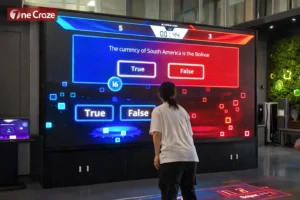
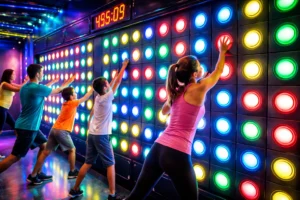
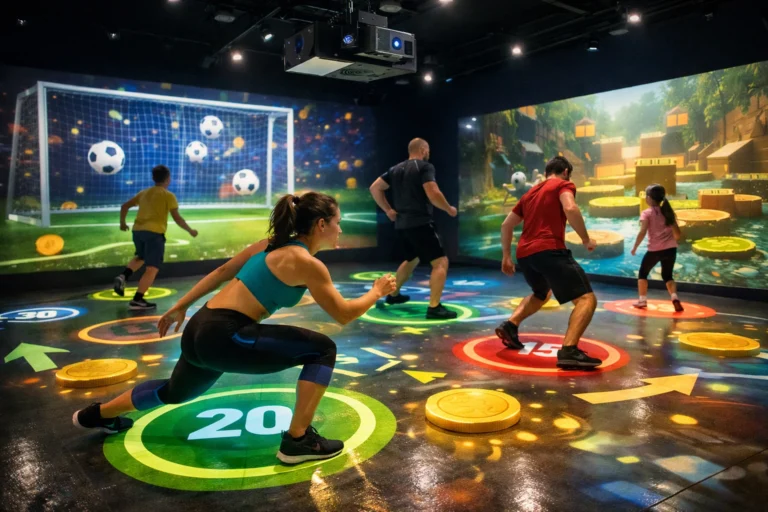
| Engagement | Gamified dining experience | Passive dining |
🎮 How Does the Immersive Dining Experience Offered by Projection Mapping Restaurants Work?
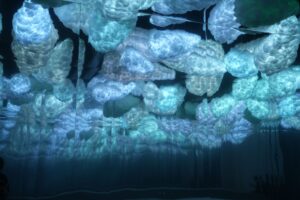
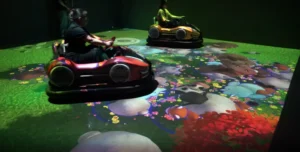
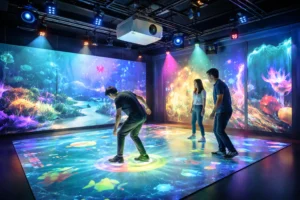
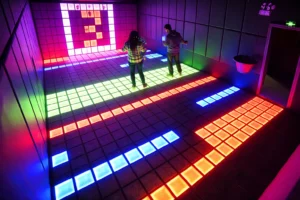
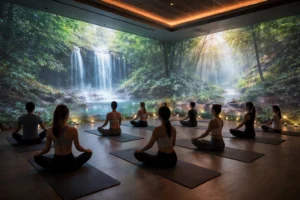
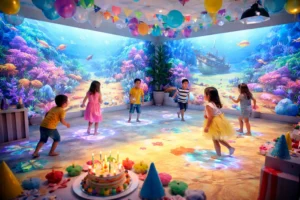
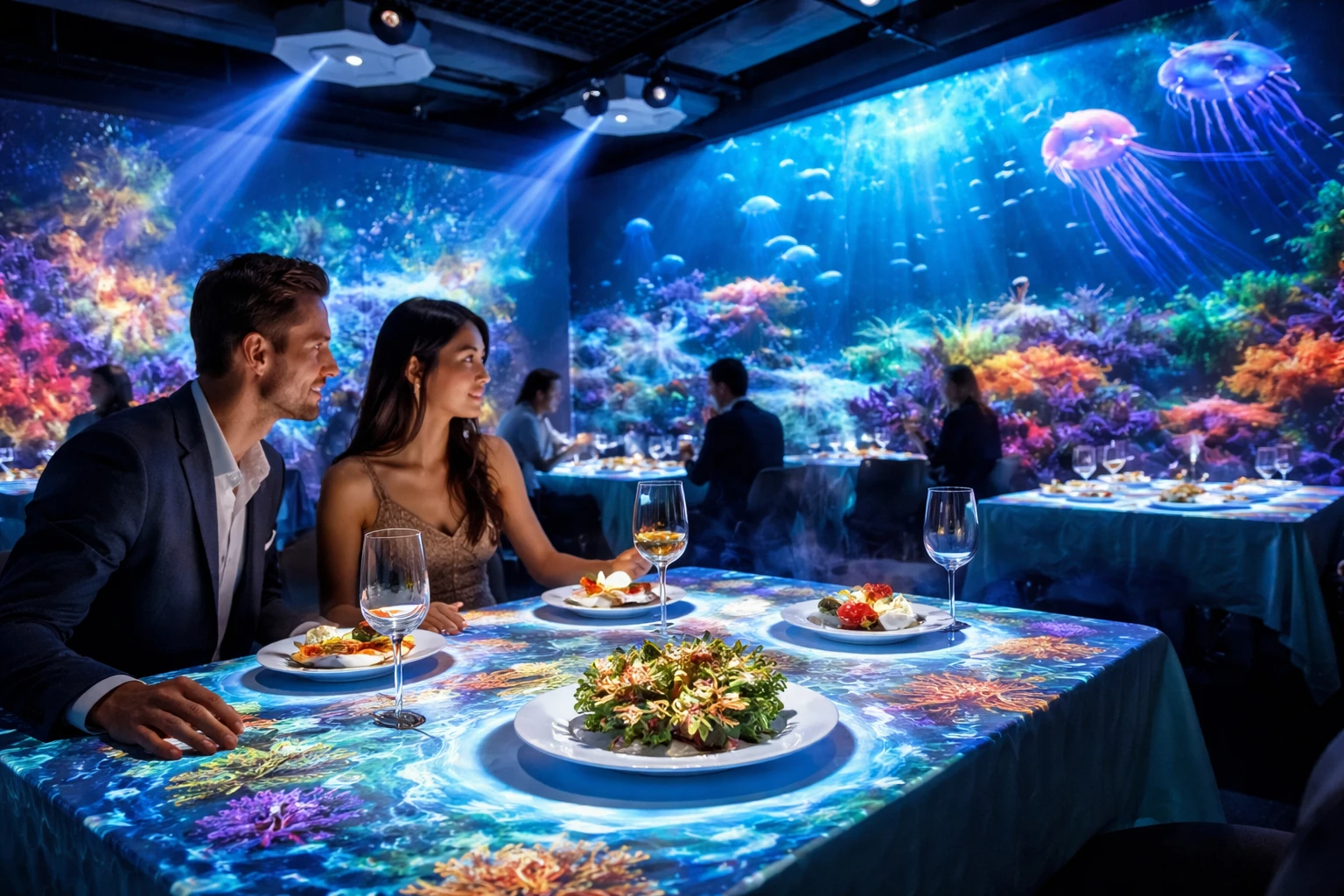
The immersive dining experience is powered by a synchronized system that blends projection mapping, audio design, motion graphics, and interactive storytelling. Diners don’t just eat—they become part of a themed journey.
Imagine this:
- The table becomes an ocean 🌊
- The walls transform into a forest 🌲
- Your dessert arrives as fireworks 🎆
🔧 What Are the Essential Projector Configurations for Projection Mapping Restaurants?
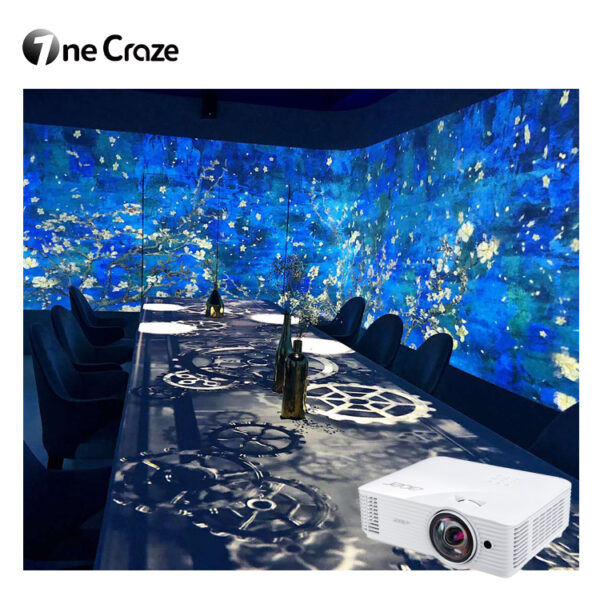
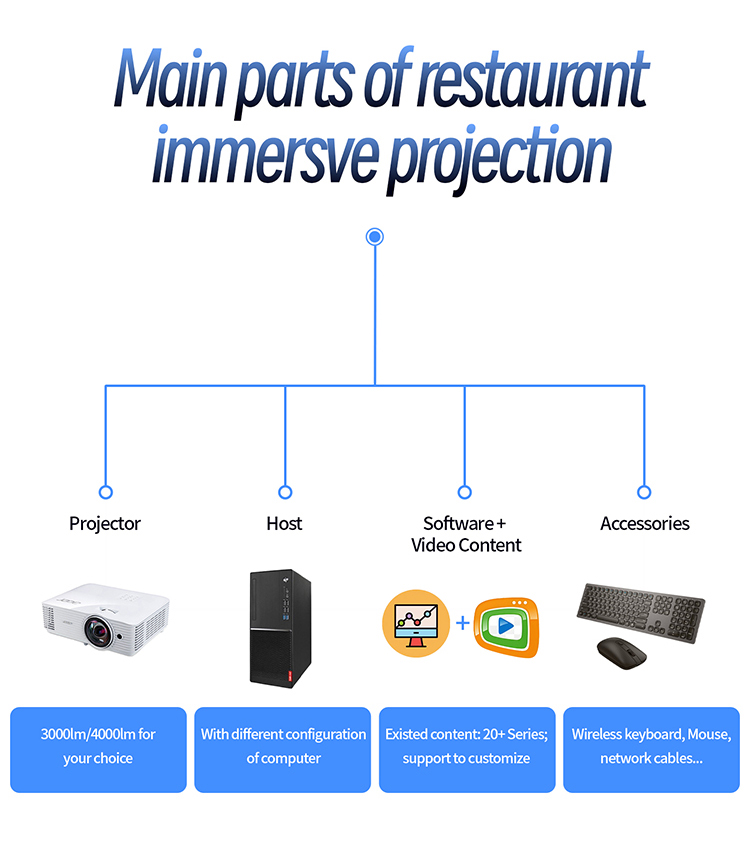
A successful immersive restaurant requires more than just buying a projector. It needs a well-designed configuration system that ensures precision, brightness, and reliability.
🎯 Core Projector Configurations Include:
- Ultra-short throw projectors for table mapping
- High-lumen ceiling projectors for walls & floors
- Edge blending systems for seamless visuals
- Centralized control software for synchronized scenes
- Backup system to avoid downtime during service
💡 Why Is Specialized Projector Software the Real Game Changer?
Hardware alone cannot create magic—the true power lies in the software system behind the scenes.
Specialized projector software enables:
- Real-time content control
- Scene automation
- Interactive triggers
- Multi-zone synchronization
- Data tracking for performance
🚀 How Can Projection Mapping Restaurants Improve Business ROI?
Projection mapping restaurants:
- Charge premium dining prices
- Attract influencers & media coverage
- Increase table turnover
- Drive viral marketing at zero ad cost
🏆 Why Should Restaurants Choose OneCraze as Their Immersive Dining Partner?
At onecraze, we are not just a company selling equipment—we are a solution-driven manufacturer and experience maker.
🔥 What Sets Us Apart?
- Full immersive dining system design
- Custom content development
- Professional installation & training
- Ongoing software upgrades
- Global after-sales support
📊 Advantages vs. Disadvantages of Projection Mapping Restaurants
| Category | Advantages | Disadvantages |
|---|---|---|
| Experience | Highly engaging & memorable | Requires staff training |
| Branding | Strong social media exposure | Higher initial price |
| Revenue | Premium pricing model | Content updates needed |
| Technology | Scalable & upgradable system | Needs reliable supplier |
| Market Position | Trend-leading concept | Limited competition knowledge |
A projection mapping restaurant uses advanced projectors and software to create immersive dining experiences by transforming tables, walls, and floors into interactive visual environments.
The price varies depending on size, projector configurations, and software complexity. Most systems range from entry-level to premium immersive packages.
Yes! With modular system design, even small venues can buy scalable solutions and upgrade later.
Absolutely. Without professional software, hardware alone cannot deliver synchronized immersive effects.
Typically 7–14 days, depending on space size and system complexity.