Why Is Interactive Pickleball Becoming a Popular Play Zone Game? ⭐
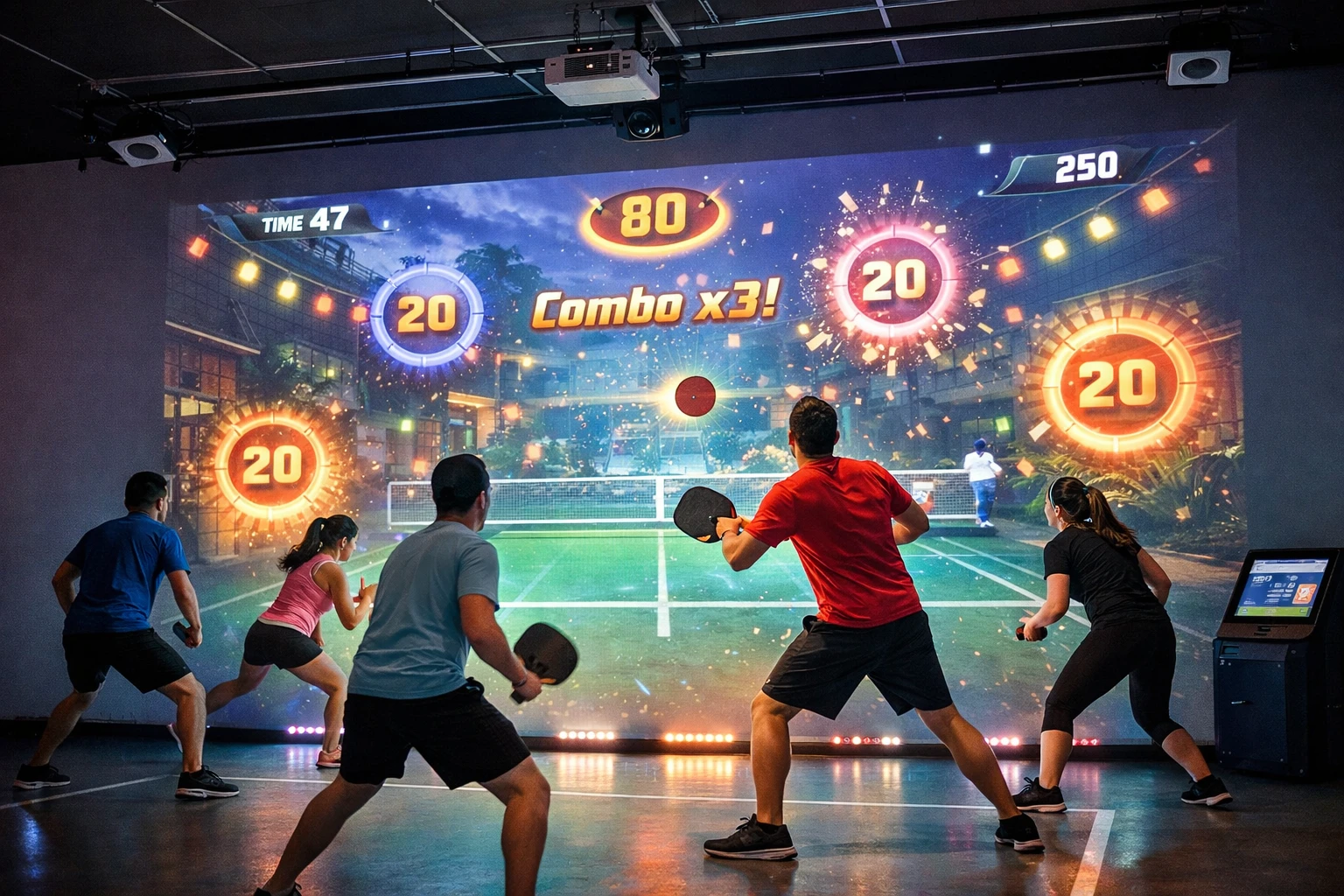
Interactive pickleball blends traditional pickleball mechanics with digital projection, sensors, and real-time software feedback, turning a standard wall or court into a responsive game system.
- Low learning curve
- High replay value
- Multiplayer friendly
- Strong visual impact
As a result, play zones, family entertainment centers, and sports stores can buy once, earn repeatedly, and scale their offerings with latest software upgrades.
How Does Projector Configuration for Interactive Pickleball Play Zone Work? 📽️
What Is the Ideal Projector Setup?
The projector configuration for interactive pickleball play zone determines visual clarity, response accuracy, and overall game quality.
Core configuration includes:
- High-lumen laser projector (5,000–8,000 ANSI)
- Short-throw or ultra-short-throw lens
- Ceiling or truss mounting system
- Edge-blended projection for wide walls
Why Does Configuration Affect System Performance?
Because the game system relies on precise image-to-sensor alignment, improper setup can reduce touch accuracy and visual immersion.
➡️ Professional manufacturers like OneCraze design projector layouts based on:
- Wall size
- Ambient lighting
- Player distance
- Multiplayer field coverage
What Sensory Devices Are Required for Interactive Pickleball Game Projection? 🧠✨
Which Sensors Power the Interaction?
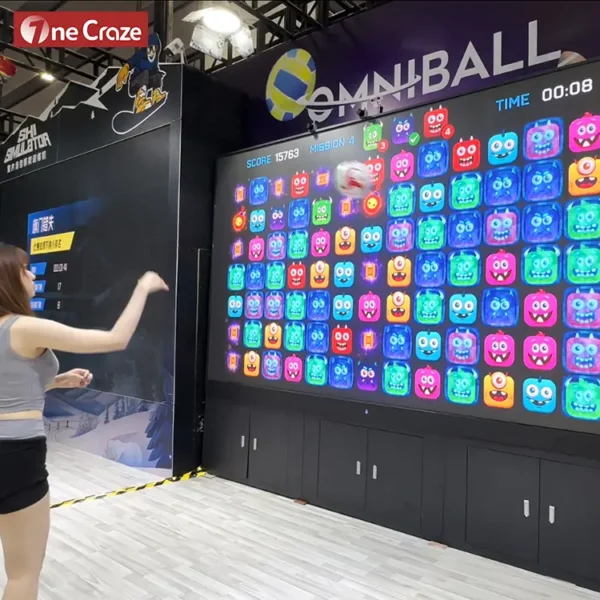
The sensory devices required for interactive pickleball game projection are the invisible backbone of the system.
Common sensor options include:
- Infrared motion sensors
- High-speed depth cameras
- Radar touch modules
- Ball-impact detection sensors
How Do These Devices Enhance Gameplay?
Each hit, bounce, or miss is captured in real time, allowing the software to:
Register accurate scores
Trigger visual effects
Adjust difficulty dynamically
How Does the Touch Response Mechanism of Pickleball Wall Projector Function? ⚡
What Happens When the Ball Hits the Wall?
The touch response mechanism of pickleball wall projector works through real-time signal processing:
1️⃣ Ball contacts the projected wall
2️⃣ Sensor captures impact position
3️⃣ System maps coordinates
4️⃣ Software triggers animation + scoring
Why Is Low Latency Critical?
Even a 0.1-second delay can break immersion. That’s why professional makers focus on:
- GPU-accelerated processing
- Optimized sensor polling rates
- Local (offline) system execution
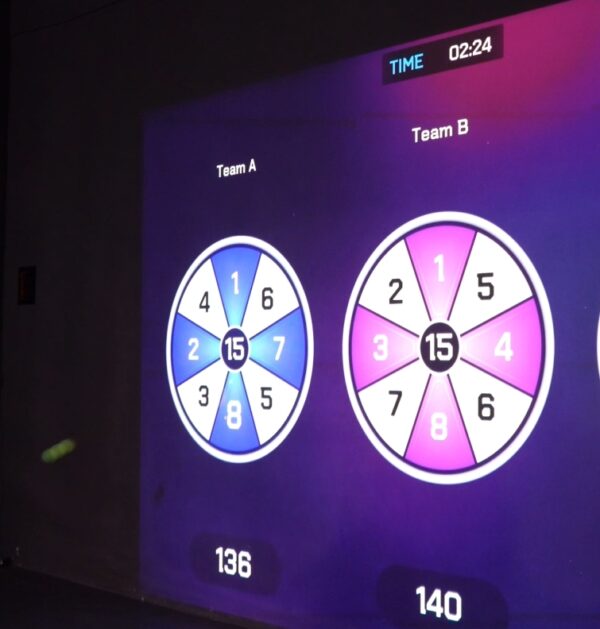
What Makes Indoor Multiplayer Interactive Pickleball Game Software So Powerful? 👥🔥
Why Is Software the Core Value?
The indoor multiplayer interactive pickleball game software defines the experience more than hardware.
Modern software systems support:
- 1v1, 2v2, and team modes
- AI opponents
- Training + challenge levels
- Tournament and ranking systems
What Are the Advantages and Disadvantages of Interactive Pickleball Systems? ⚖️
| Category | Advantages ✅ | Disadvantages ⚠️ |
|---|---|---|
| Engagement | High immersion & repeat play | Requires calibration |
| Space Use | Wall-based, compact footprint | Needs flat wall surface |
| Revenue | Software updates boost value | Higher upfront price |
| Operation | Low staff requirement | Initial training needed |
| Scalability | Easy to expand with new games | Dependent on software support |
Where Are Interactive Pickleball Game Projects Best Applied? 🏟️
Interactive pickleball systems are ideal for:
- Indoor play zones
- Sports training centers
- Shopping mall attractions
- School gymnasiums
- Brand activation events
A minimum wall width of 4–6 meters is recommended for comfortable multiplayer gameplay.
Yes. Most systems allow software upgrades without replacing hardware.
Absolutely. Difficulty levels can be adjusted for different age groups.
High-lumen projectors ensure clear visuals even in semi-lit indoor environments.
Typically 2–5 working days depending on project scale.
Yes. Training modes help improve reaction time, accuracy, and coordination.