❓ Why Do Interactive Museum Require Specialized Projector Specifications?
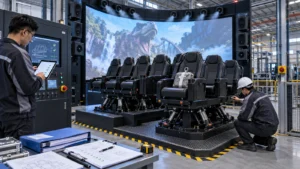
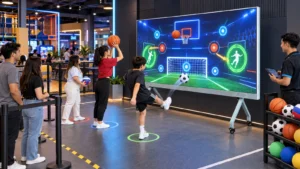
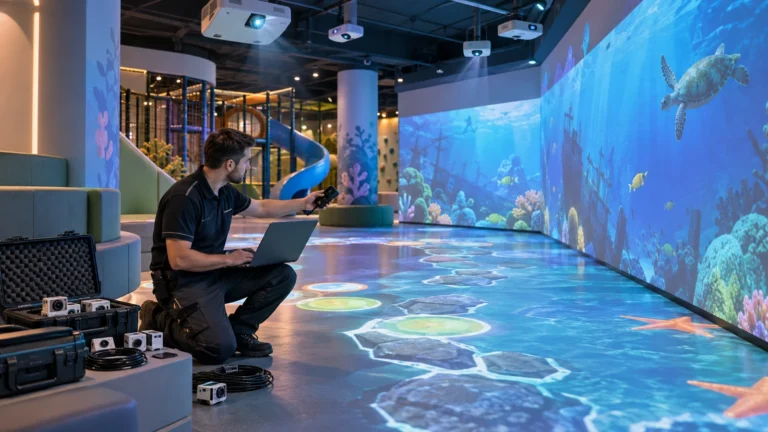
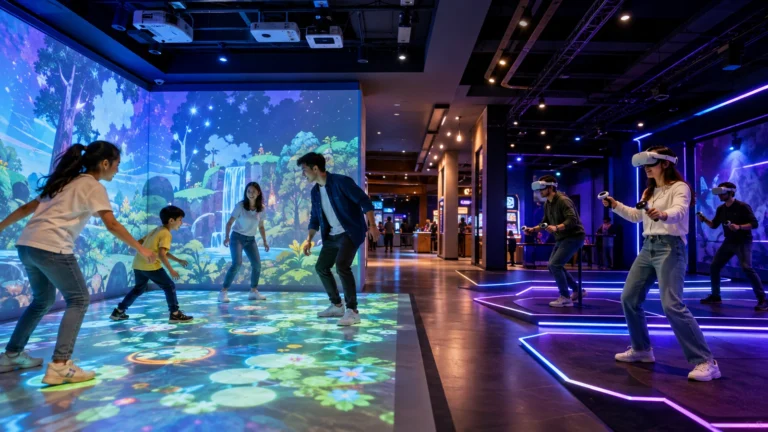
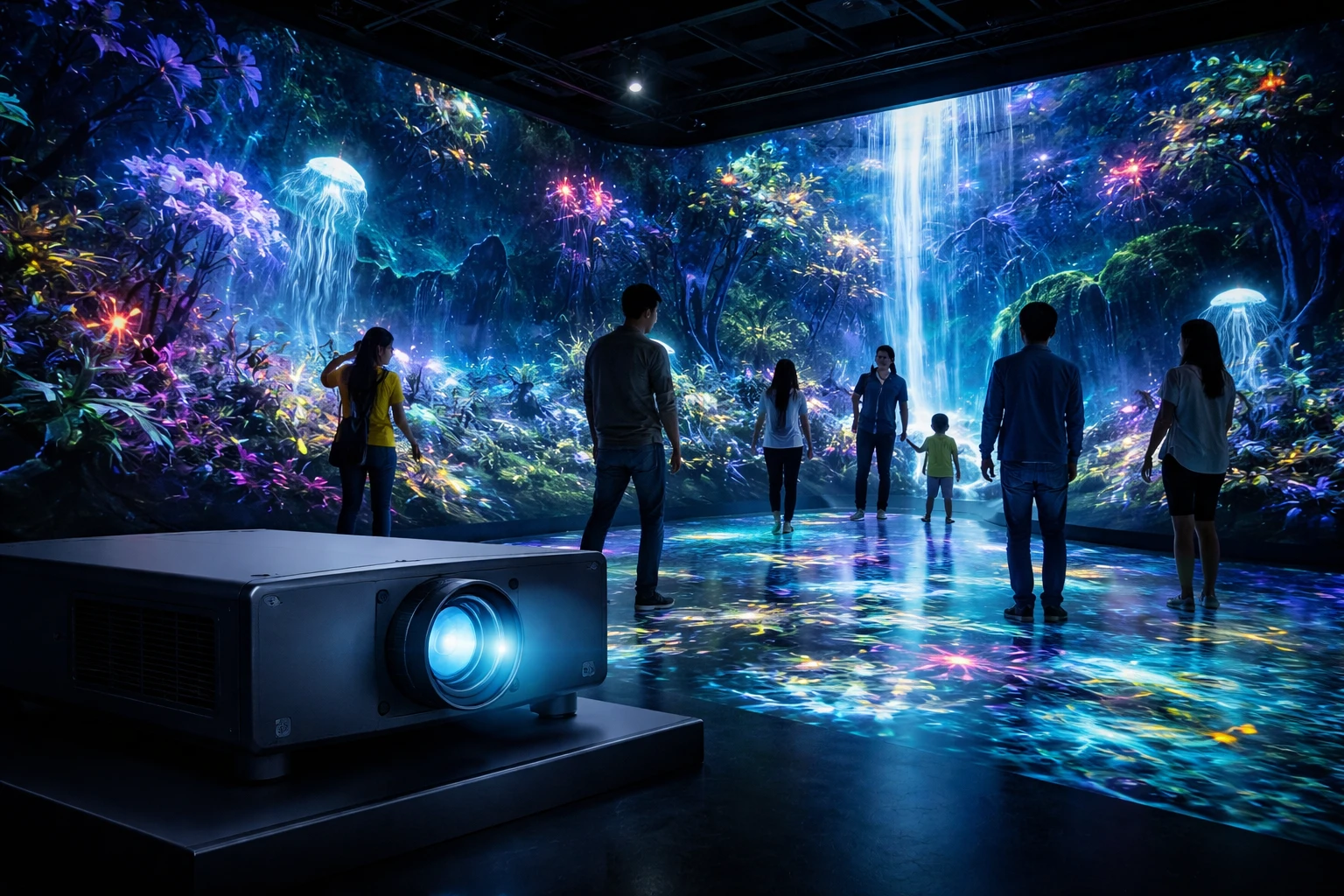
Interactive museum are not traditional cinemas or classrooms. Instead, they rely on real-time interaction, ultra-wide visuals, and multi-surface projection. As a result, standard projectors simply cannot deliver the required performance.
🔍 Key Challenges Interactive Museum Face
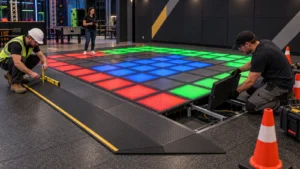
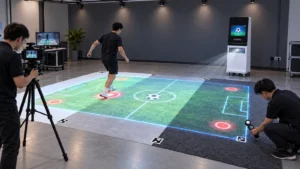
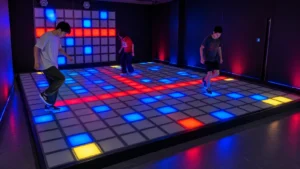
- Large-scale walls, floors, and curved surfaces
- Bright ambient lighting
- Multi-projector edge blending
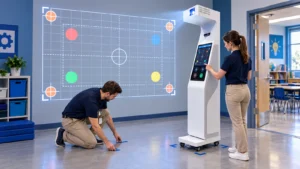
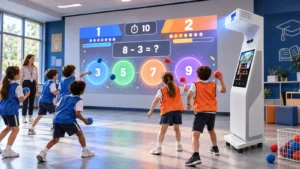
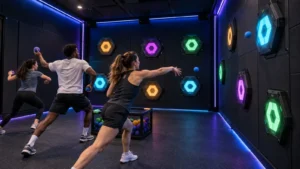
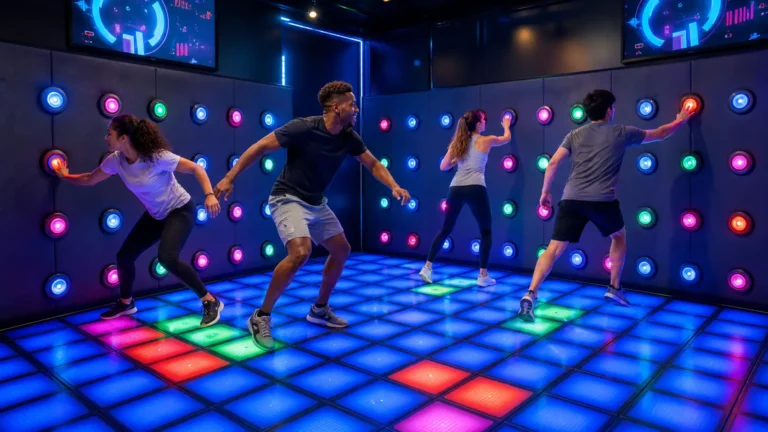
- Interactive games powered by sensors and software
- High visitor traffic and long operating hours
To overcome these challenges, museums must adopt professional-grade projection systems designed for immersive environments, not consumer entertainment.
❓ How Important Is Resolution for High-Definition Immersive Effects?
Resolution directly determines image clarity, realism, and immersion—especially when visitors stand close to projection surfaces.
🎯 Recommended Resolution Standards
- WUXGA (1920×1200) → Entry-level immersive rooms
- 4K UHD (3840×2160) → Best choice for premium immersive museums
- 8K multi-projector systems → Ultra-large immersive halls & digital art museums
💡 Why 4K Is the Sweet Spot
4K projectors deliver:
Sharp textures
Smooth gradients
Zero pixelation at close distance
Professional cinematic impact

❓ What Brightness (Lumens) Do Interactive Museum Projectors Need?
Brightness is critical because most museums operate under controlled but not completely dark environments.
☀️ Recommended Brightness Levels
- 6,000–8,000 lumens → Small to mid-size rooms
- 8,000–12,000 lumens → Standard immersive exhibitions
- 12,000+ lumens → Large halls, domes, floor projection systems
🚨 Low brightness causes washed-out visuals, breaking immersion instantly.
❓ Which Projection Technology Is Best: DLP, LCD, or Laser?
Projection technology impacts color accuracy, maintenance cost, and lifespan—all crucial for museum operators.
📊 Projector Technology Comparison Table
| Technology | Advantages ✅ | Disadvantages ❌ | Best Use Case |
|---|---|---|---|
| DLP Laser | High contrast, sharp images, long lifespan | Higher price | Interactive games & immersive museums |
| 3LCD | Excellent color brightness | Lower contrast | Educational exhibits |
| Laser Phosphor | Low maintenance, 20,000+ hours | Higher upfront price | Long-term museum installations |
❓ Why Is Contrast Ratio Crucial for Immersive Storytelling?
Contrast ratio determines how deep blacks and vibrant highlights appear—essential for emotional storytelling and realism.
🖤 Recommended Contrast Ratios
- 2,000,000:1 or higher for immersive environments
- Dynamic contrast enhances:
✔ Night scenes
✔ Space & underwater exhibitions
✔ Artistic digital installations
❓ How Do Throw Ratio and Lens Options Affect Museum Design?
Interactive museums often deal with limited space and unconventional layouts.
📐 Key Lens & Throw Considerations
- Short-throw lenses → Tight rooms
- Ultra-short-throw → Floor & wall interaction
- Motorized lens shift → Easy alignment
- Interchangeable lenses → Flexible installation
❓ What Role Does Software Play in Interactive Projection Systems?
Hardware alone is not enough. Interactive software drives engagement.
🖥️ Key Software Requirements
- Real-time sensor integration
- Motion tracking
- Multi-touch input
- Game logic & content control
4K UHD is currently the best balance between visual quality, system performance, and price for immersive museums.
Yes. Short-throw and ultra-short-throw projectors are ideal for tight spaces, interactive floors, and wall installations.
Most laser projectors last 20,000–30,000 hours, making them perfect for long-term exhibitions.
Yes. Professional projectors integrate seamlessly with interactive game software and motion-tracking systems.
Some models include it, but advanced installations often require professional third-party software.
Custom-ordered systems from an experienced manufacturer offer better performance and scalability.