What Is a Projector Game System for Interactive Floors and Walls?
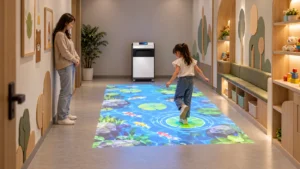
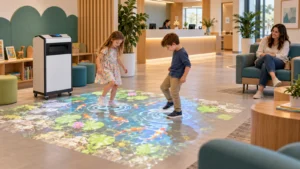
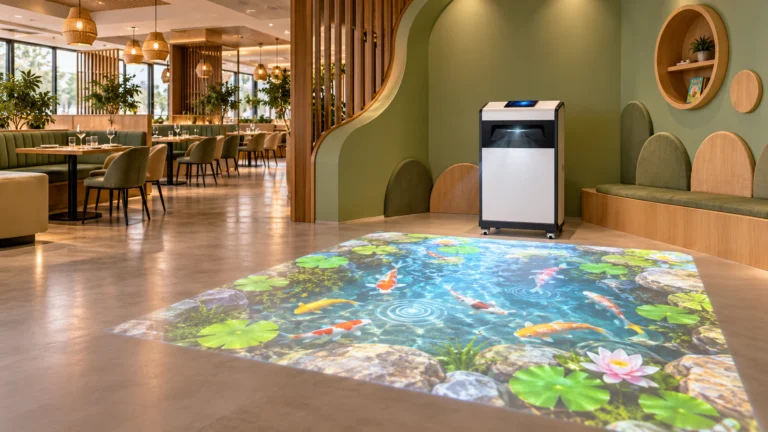
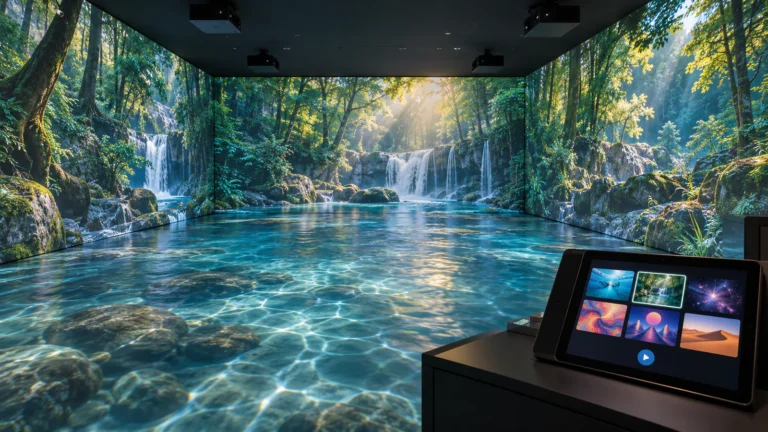
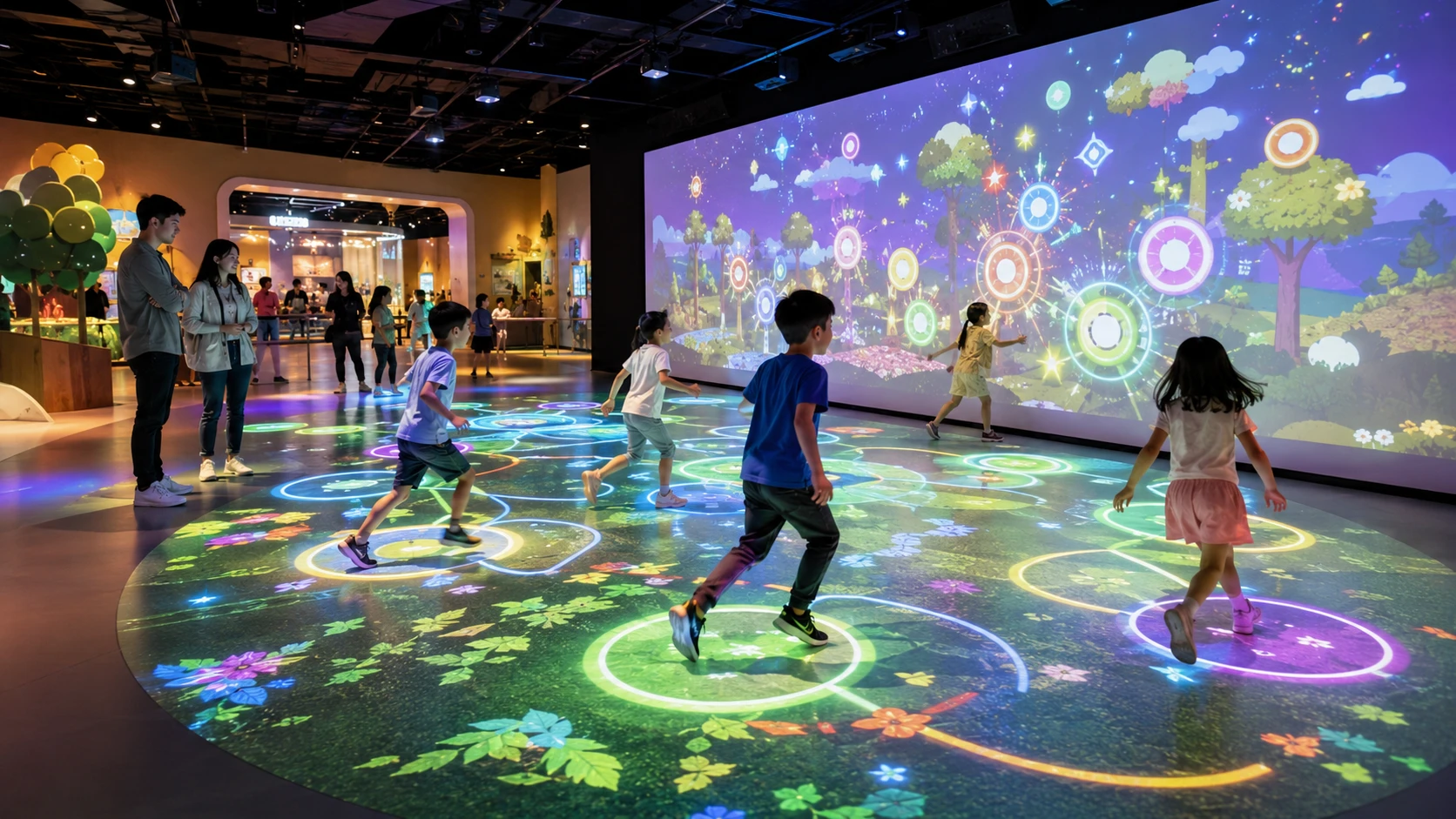
A projector game system turns a flat surface into an interactive play area. The surface can be a floor, wall, table, or custom projection area. Users interact with projected images by stepping, running, jumping, throwing, touching, or moving.
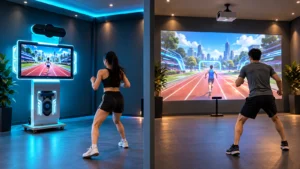
For an interactive floor, children or visitors may step on glowing targets, chase animated objects, complete sports challenges, or play team games. For an interactive wall, users may throw soft balls, hit virtual targets, touch projected content, or join reaction-based competitions.
A complete system usually includes:
| Component | Function |
|---|---|
| Projector or display hardware | Shows the game visuals on the floor or wall |
| Sensor or camera | Detects movement, touch, throwing, or stepping actions |
| Game software | Runs the interactive content and response logic |
| Control host | Manages the system and game operation |
| Calibration tools | Aligns projection area and detection area |
| Game package | Provides different game modes and themes |
| Installation support | Helps the buyer set up and operate the system |
Which Venues Need Interactive Floor and Wall Projector Games?
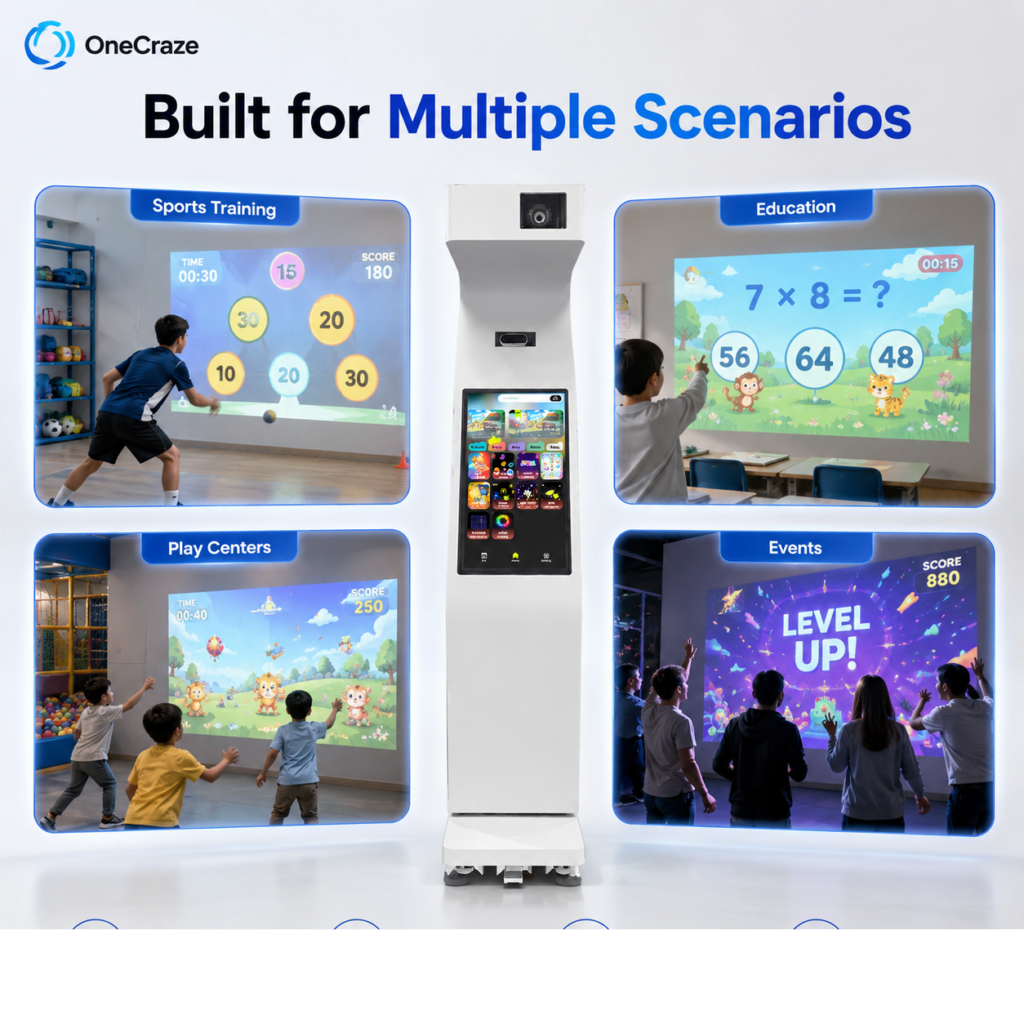
Interactive projector games are useful because they can fit different types of venues. The same technology can support education, entertainment, sports, museum exhibitions, and commercial events.
Schools
Schools can use projector games for PE classes, student activity rooms, after-school programs, and campus events. Interactive floor games encourage students to move, run, and compete. Interactive wall games help with throwing, reaction training, and team challenges.
Museums
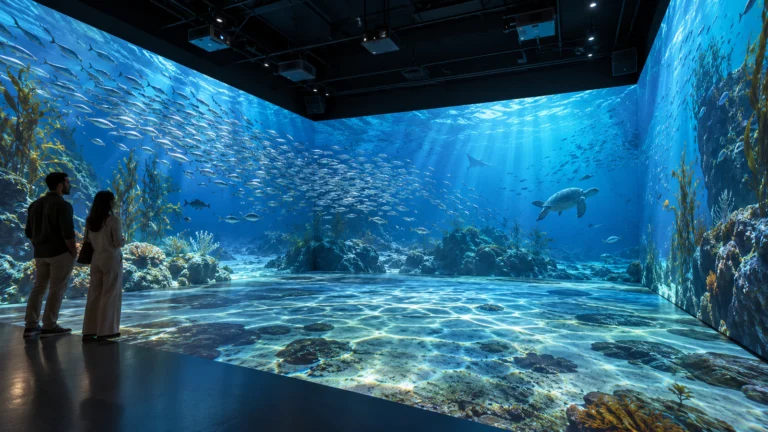
Museums can use projector games to make exhibits more engaging. Visitors can touch projected animals, explore digital maps, trigger historical animations, or play educational discovery games. This helps children and families spend more time inside the museum.
Family Entertainment Centers
FECs need attractions that are fun, repeatable, and easy to operate. Projector games can create flexible activity zones without large mechanical rides. Operators can run different games for different age groups and events.
Gyms and Sports Activity Rooms
Sports venues can use interactive floor and wall games for reflex training, coordination practice, ball-throwing games, agility drills, and group competitions. This fits your current product direction very well because sports-based interaction has stronger commercial demand.
Shopping Malls and Event Spaces
Malls can use projector games for weekend activities, brand events, family zones, and temporary installations. Portable or all-in-one systems are especially useful for these spaces.
How Do Interactive Floor Games and Interactive Wall Games Compare?
Many buyers are unsure whether they should choose floor games, wall games, or both. The answer depends on the venue size, target users, and business purpose.
| Type | Main Interaction | Best For | Typical Venues |
|---|---|---|---|
| Interactive Floor Games | Running, stepping, jumping, chasing | Full-body movement and group play | Schools, gyms, indoor play centers, museums |
| Interactive Wall Games | Throwing, touching, hitting, aiming | Reaction training and competitive scoring | FECs, sports rooms, malls, schools |
| Floor + Wall Combined System | Movement + throwing + teamwork | Larger attraction zones and multi-game venues | FECs, museums, school gyms, sports centers |
| Portable Projector Game System | Flexible movement and temporary setup | Events and multi-purpose rooms | Schools, malls, exhibitions |
| Custom Projector Game System | Theme-based interaction | Branded or special projects | Museums, commercial events, theme venues |
What Makes a Good Projector Games Manufacturer in China?
The best manufacturer should not only provide equipment. It should help buyers choose the right system for their venue.
A good projector games manufacturer should provide:
- Stable Hardware
The projector, sensor, control host, and accessories should support daily commercial use. - Reliable Software
The software should be easy to operate, quick to start, and stable during long-term use. - Useful Game Content
Games should match real venue needs, such as school PE, children’s play, museum learning, sports training, or FEC entertainment. - Accurate Motion Tracking
The interaction should respond quickly and accurately. Delay can damage the user experience. - Installation Guidance
Global buyers need clear installation manuals, wiring instructions, calibration support, and remote technical help. - Customization Capability
Some buyers need custom themes, languages, scoring rules, brand elements, or special game content. - After-Sales Support
A reliable company should provide software updates, spare parts, troubleshooting, and technical communication after delivery. - Clear Price Advice
The manufacturer should explain what affects the price instead of only offering the cheapest package.
How Do Different Chinese Projector Game Suppliers Compare?
Here is a useful comparison for global buyers:
| Supplier Type | What They Usually Provide | Advantages | Possible Limitations |
|---|---|---|---|
| Projector Store | Basic projector equipment | Easy to buy, fast quotation | Usually no interactive game software |
| Trading Company | Multiple product options | Quick communication, flexible sourcing | May not control hardware or software deeply |
| Software Developer | Game design and interactive content | Strong game logic | May depend on third-party hardware |
| Hardware Manufacturer | Projector machine, sensor, structure | Better control of product quality and price | Game content may be limited |
| Local Installer | On-site installation service | Convenient local setup | May not own the original system |
| Turnkey Solution Company | Hardware, software, games, installation support | Complete project solution | Usually not the cheapest option |
| OneCraze | Interactive floor and wall projector game systems from China | Integrated system, games, software, customization, and project support | Best for buyers who need a complete solution, not only a cheap projector |
What Projector Games Can Be Used on Interactive Floors and Walls?
Different venues need different games. A school needs safe and educational activities. A museum needs storytelling. An FEC needs fun and repeat play. A gym needs sports and training value.
Common projector game categories include:
Interactive Floor Games
- Running target games
- Footstep reaction games
- Ocean adventure games
- Sports agility games
- Team challenge games
- Children’s movement games
- Educational floor games
- Balance and coordination games
Interactive Wall Games
- Ball throwing games
- Food Cutting Knife Throwing Game
- Monster hit games
- Target shooting-style games without weapons
- Reaction training games
- Sports scoring games
- Touch wall learning games
- Team competition games
Why Choose OneCraze as a Projector Games Manufacturer in China?
OneCraze focuses on interactive projection systems for schools, museums, FECs, sports venues, indoor playgrounds, and commercial entertainment spaces.
For interactive floors and walls, OneCraze can provide:
- Interactive floor projector systems
- Interactive wall projector systems
- Projector game software
- Sports projector games
- School activity games
- Museum interaction games
- FEC entertainment games
- Food Cutting Knife Throwing Game
- Ball throwing wall games
- Motion tracking system
- Installation guidance
- Remote technical support
- OEM and ODM customization
- Project layout suggestions
OneCraze is suitable for buyers who want a complete solution from China. Instead of only selling a projector, OneCraze helps buyers match the right system, game package, installation method, and application scenario.
A projector games manufacturer provides interactive projection game systems, including projector hardware, sensors, game software, control equipment, installation guidance, and technical support.
They can be used in schools, museums, FECs, indoor playgrounds, gyms, sports rooms, shopping malls, science centers, exhibitions, and commercial activity spaces.
Interactive floor games focus on running, stepping, jumping, and movement. Interactive wall games focus on throwing, touching, aiming, hitting, and reaction-based challenges.