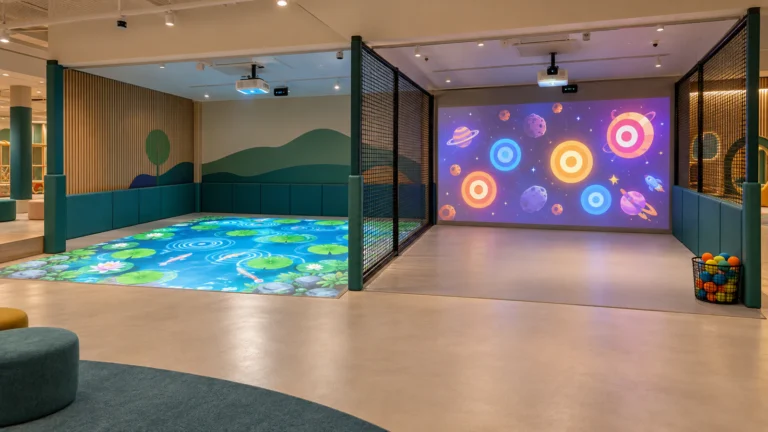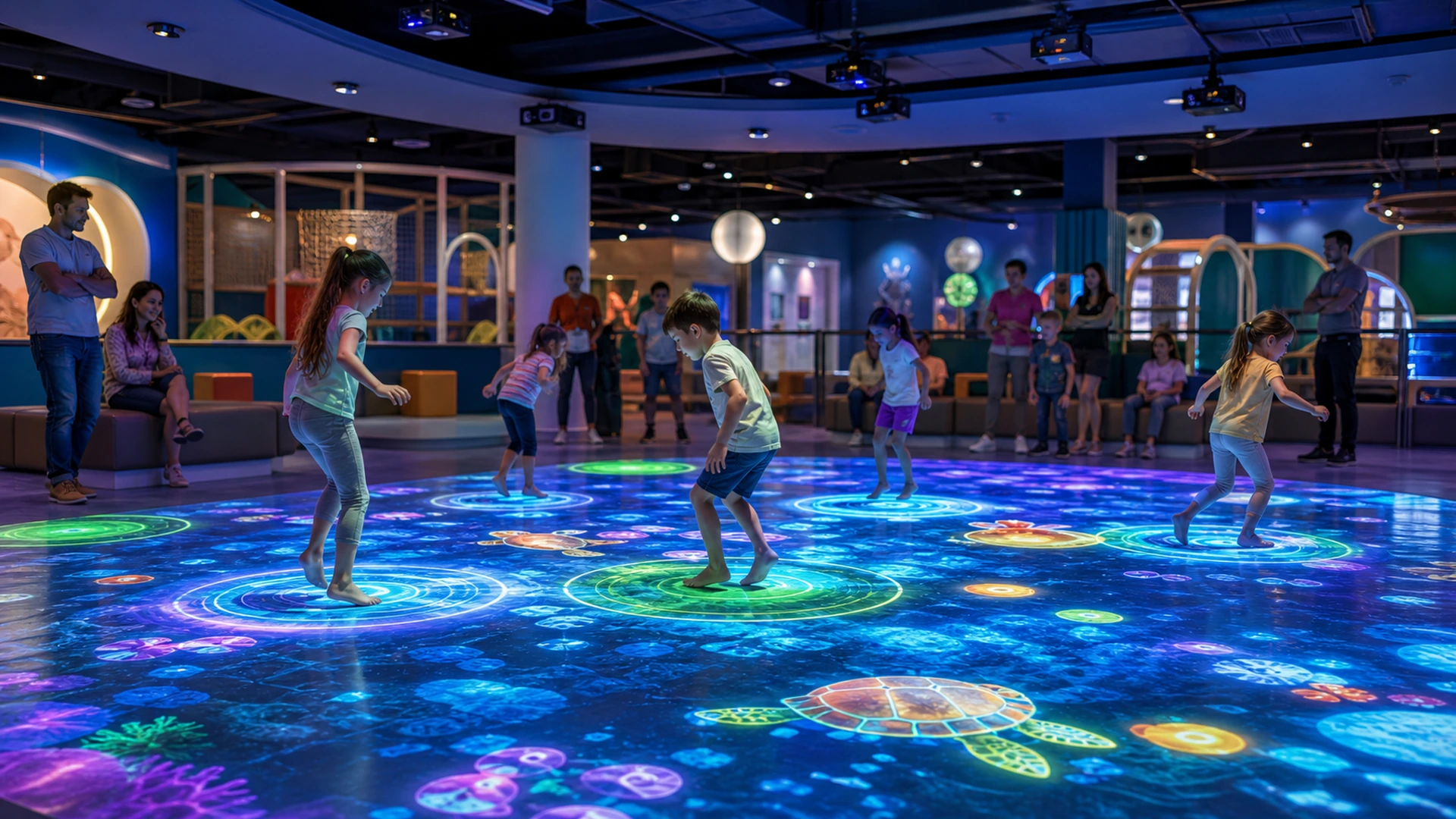
What Is an Interactive Floor Projection System?
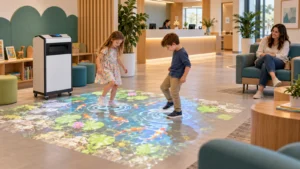
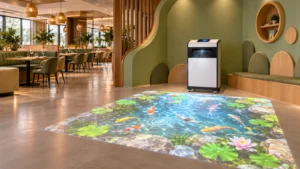
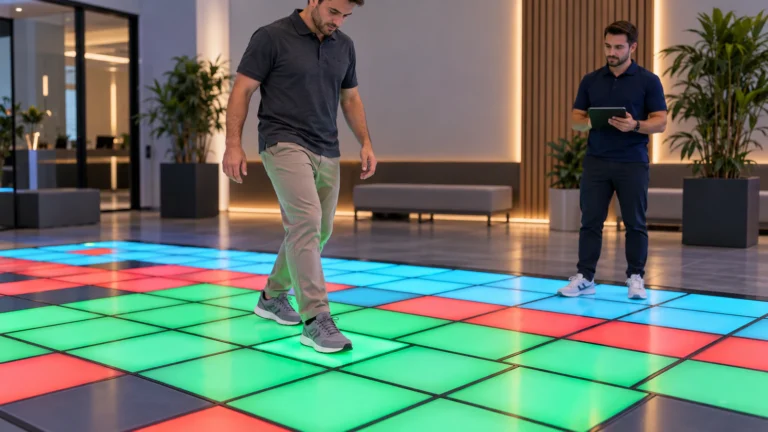
An interactive floor projection system combines projectors, sensors, software and a control computer to turn a normal floor into a responsive game surface. When visitors walk, jump or wave over the projected image, the tracking system detects their movement and sends that data to the game software. Then, the content reacts in real time with animations, scoring, sound or multiplayer effects.
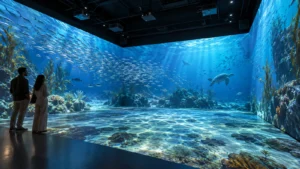
For FECs, the main advantage is flexibility. One system can support active games, educational content, party modes, holiday themes, competitive challenges and ambient visual effects. If your venue already uses immersive attractions, you can also connect the floor concept with larger environments such as an immersive floor projection mapping system.
How Much Does Interactive Floor Projection Cost?
There is no honest one-price answer because the final cost depends on the installation scale, projector brightness, sensor type, content package and site conditions. A small portable system for light use has a very different budget from a permanent multi-projector attraction inside a busy family entertainment center.
Instead of asking only for the cheapest hardware, operators should compare what the quote includes. The table below shows the main factors that affect the final investment.
| Cost factor | What it affects | Why it matters for FECs |
|---|---|---|
| Projection size | Number and brightness of projectors | Larger play zones need stronger coverage and better image blending |
| Ceiling height | Lens choice, mounting position and shadow control | Low ceilings may limit coverage or create more shadows |
| Tracking sensor | Accuracy, latency and multi-user performance | Busy venues need stable detection when several children play together |
| Game software | Content variety and replay value | More suitable games can increase repeat visits and party bookings |
| Installation | Mounting, calibration, wiring and testing | A clean installation reduces downtime and daily staff issues |
| Custom content | Branding, seasonal themes or venue-specific games | Custom games can support marketing campaigns and premium packages |
| Support and maintenance | Updates, troubleshooting and spare parts | Commercial venues need fast recovery when equipment fails |
Therefore, the better question is not “How much is an interactive floor projector?” but “What system size and content plan will generate enough use in my venue?” If you need a compact integrated solution, the interactive projection all-in-one system can be a practical starting point.
What Equipment Do FECs Need?
A commercial interactive floor setup usually includes a projector, motion sensor, computer, game software, audio, mounting hardware and control interface. For larger spaces, the system may also use multiple projectors, edge blending, dedicated servers and stronger tracking hardware.
| Component | Basic role | Buying note |
|---|---|---|
| Projector | Displays the game surface | Choose brightness and lens based on venue light and throw distance |
| Sensor or camera | Tracks player movement | Match the sensor to foot tracking, object tracking or full-body interaction |
| Control computer | Runs the software | Use commercial-grade performance for stable daily operation |
| Game software | Provides playable content | Prioritize games that match age group, queue flow and repeat play |
| Audio system | Adds feedback and atmosphere | Good sound makes the attraction feel more complete |
| Mounting and cabling | Keeps hardware safe and tidy | Secure installation is essential in public venues |
| Operator interface | Lets staff start, stop and switch games | Simple controls reduce training time |
If you are comparing sensors, read our guide on LiDAR vs IR camera vs depth sensor for interactive projection before finalizing the tracking design.
Which Interactive Floor Games Work Best for FECs?
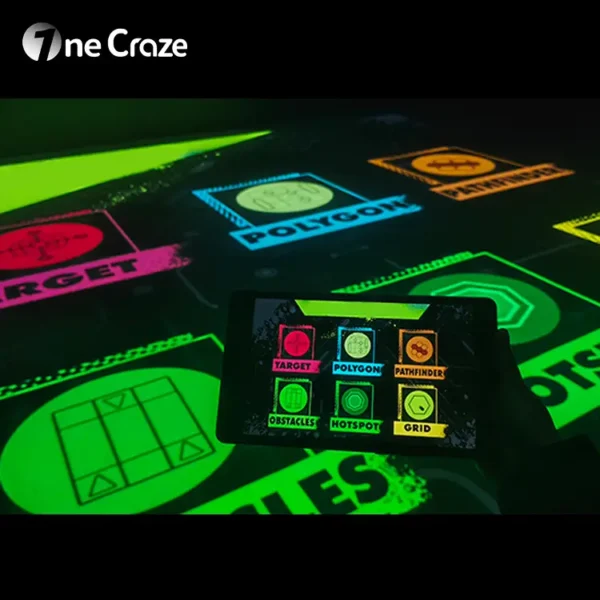
The best games are easy to understand within a few seconds. Children should not need long instructions, and parents should immediately see the value. For that reason, FECs often perform well with movement-based games, competitive challenges, cooperative team games, animal or ocean themes, sports effects, treasure hunts and party modes.
| Game type | Best use | Operator benefit |
|---|---|---|
| Quick reaction games | Open play zones and walk-in traffic | Easy for new guests to join |
| Multiplayer scoring games | Birthday parties and group sessions | Creates competition and replay value |
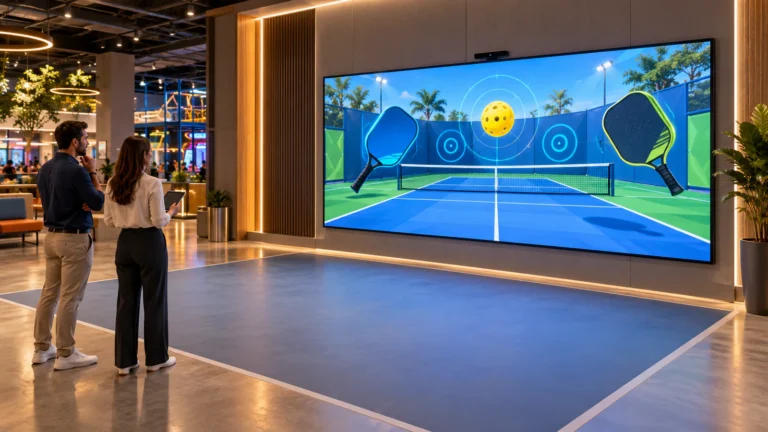
| Sports-style games | Active play and older children | Encourages movement and longer engagement |
| Educational games | Kids’ zones, museums and school visits | Adds learning value for parents and groups |
| Seasonal themes | Holidays and marketing campaigns | Keeps the attraction fresh without rebuilding |
| Custom branded games | Mall events, sponsors and premium packages | Supports differentiation and higher perceived value |
How Should You Plan Installation and Daily Operation?
Before installation, measure the clear floor area, ceiling height, ambient light, nearby traffic flow, power access, mounting points and possible shadows. Then, plan where guests enter, where parents watch, where staff control the session and how people leave after playing. This step matters because even a strong projection system can underperform if guests cannot see it, reach it or understand how to start.
After installation, daily operation should be simple. Staff should know how to start games, switch modes, clean the floor, restart the system and report technical issues. Moreover, the venue should schedule content updates so regular visitors see something new. If you are building a larger interactive attraction mix, compare related OneCraze systems on our interactive entertainment products page.
Installation checklist for FEC operators
| Checklist item | What to confirm |
|---|---|
| Floor size | Enough clear space for safe movement and queue flow |
| Ceiling | Safe mounting points and suitable projector distance |
| Lighting | Controlled brightness to protect image contrast |
| Surface | Flat, clean and not overly reflective |
| Traffic flow | Clear entrance, exit and spectator area |
| Staff control | Easy access to start, stop and switch content |
| Safety | No exposed cables, trip hazards or blocked exits |
| Maintenance | Easy access to projector, sensor and computer |
How Can Interactive Floor Projection Improve ROI?
Interactive floor projection can support ROI in several ways. First, it creates a visual “stop effect” that attracts guests from nearby areas. Second, it increases dwell time because children can play repeated rounds. Third, it fits party packages, group bookings, holiday events and themed promotions. Finally, because the physical space can reuse different digital content, operators can refresh the attraction without replacing the whole structure.
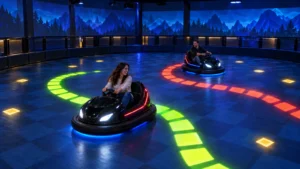
To measure performance, track session count, average play time, party package use, repeat visits, nearby food and beverage sales, and staff time required per session. These numbers give a clearer picture than simply counting how many people step on the floor once. For a venue with vehicles or larger game zones, you may also want to review how projection can upgrade interactive karting and bumper car attractions.
Yes, but the system should match the available space and visitor flow. A small FEC may benefit from a compact system with quick games, simple staff controls and strong visual appeal near a high-traffic area.
The required space depends on the number of players, game type and projection size. A small children’s zone needs less space than a multiplayer attraction. Before quoting, OneCraze should review the floor plan, ceiling height, lighting and traffic route.
It can work, but brightness control matters. Strong ambient light can reduce contrast, so the design may require brighter projectors, better placement, darker floor treatment or partial light control.