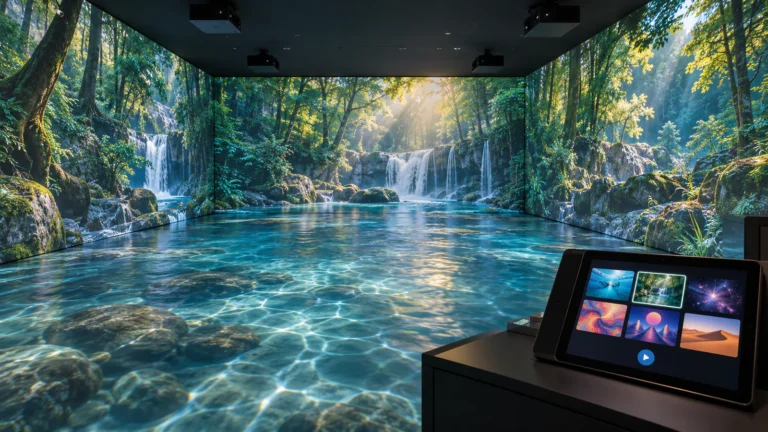
What Does It Mean to Build Interactive Floor Projection Rooms?
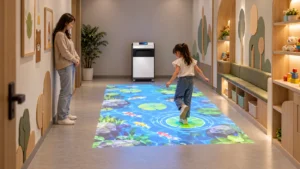
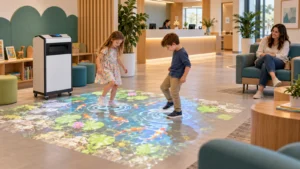
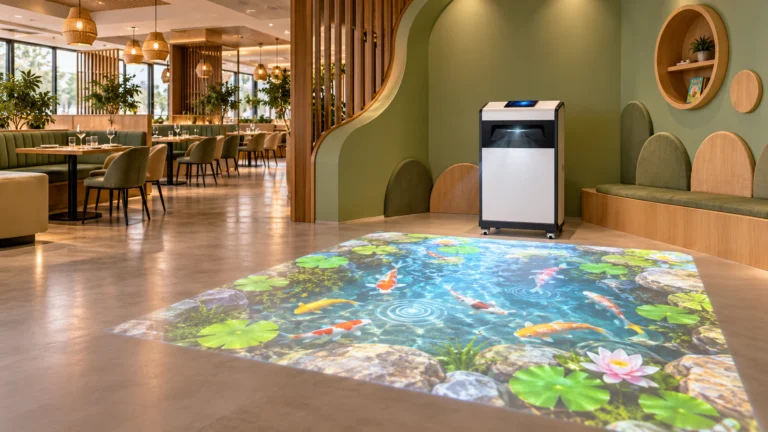
To Build Interactive floor Projection rooms, you need more than a projector. A complete interactive floor projection system usually includes a projector, computer, motion sensor or camera, interactive software, floor surface, audio system, installation frame, and game content. Each part affects the final experience.
A complete interactive floor projection room may include:
- High-brightness projector
- Short-throw or ultra-short-throw lens
- Motion tracking sensor
- Gaming computer or media server
- Interactive floor software
- Game content library
- Durable projection floor surface
- Audio speakers
- Lighting control
- Safety padding or soft floor material
- Control panel or operator interface
How Are LED Game Rooms Different from Projection Game Rooms?
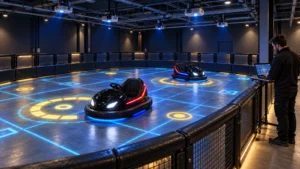
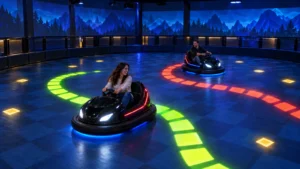
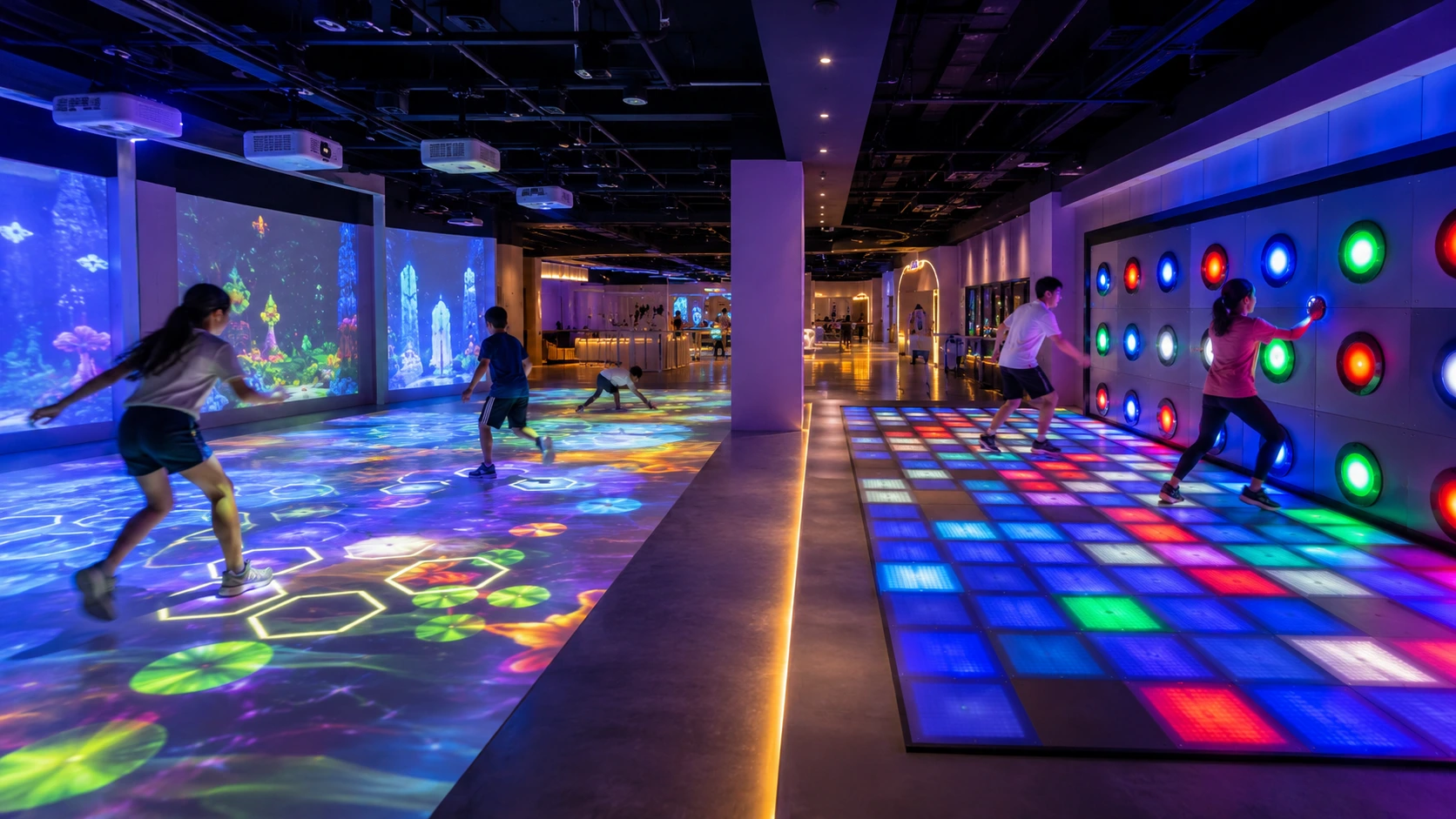
LED game rooms use LED floor tiles, LED wall panels, light-up buttons, sensors, or illuminated grids to create a physical-digital game environment. Unlike projection systems, LED systems generate light directly from the floor or wall surface. Therefore, they usually perform better in brighter rooms and can create strong visual impact.
Interactive Floor Projection vs LED Game Room
| Feature | Interactive Floor Projection Room | LED Game Room |
|---|---|---|
| Visual Style | Rich graphics, animations, themes | Bright lights, grids, targets, patterns |
| Best For | Immersive scenes, kids games, education, storytelling | Competitive games, reaction challenges, team play |
| Surface | Projection floor or wall | LED floor, LED wall, or button panels |
| Content Flexibility | Very high | Medium to high |
| Bright Room Performance | Needs light control | Stronger in brighter spaces |
| Maintenance Focus | Projector, sensor, software calibration | LED tiles, wiring, controller, impact protection |
| Player Experience | Visual immersion | Physical challenge and fast reaction |
What Equipment Do You Need to Build Interactive Floor Projection Systems?
The equipment list depends on the room size and application. However, most projects need a stable combination of projection, sensing, computing, and software. A weak component can reduce the whole experience. For example, a bright projector cannot solve poor motion tracking. Similarly, powerful software cannot perform well if the computer is too slow.
Therefore, onecraze recommends selecting equipment as a complete system. This approach improves compatibility and reduces installation problems. It also helps operators receive better after-sales support, because the supplier understands the whole solution instead of only one device.
Essential equipment for interactive floor projection
- Projector
The projector must match the room size, brightness level, and projection distance. Short-throw projectors often work well for floor projection because they reduce shadows and fit smaller spaces. - Motion sensor or camera
The sensor detects player movement and sends data to the software. Good tracking creates fast and accurate interaction. - Computer or media server
The computer runs the interactive software and game content. It should have enough graphics performance for real-time effects. - Interactive software
The software controls game rules, visual reactions, scoring, and content management. - Projection floor surface
The floor should support clear image quality, player safety, and long-term durability. - Audio system
Sound effects improve immersion and make games feel more responsive. - Mounting and wiring system
A clean installation protects equipment and improves the professional appearance of the room.
What Equipment Do You Need for LED Game Rooms?
LED game rooms require a different equipment structure. Instead of projecting visuals onto the floor, the system usually uses LED panels, pressure sensors, touch buttons, wall targets, or light-up modules. These components must handle repeated stepping, jumping, touching, and impact. Therefore, durability becomes a top priority.
In addition, LED game rooms need reliable controllers and game software. The controller sends commands to LED modules, reads sensor input, and synchronizes lighting effects with game rules. When the system works well, players see instant feedback. For example, a tile may turn red when it becomes dangerous, green when it becomes safe, or blue when it becomes a scoring target.
Common LED game room components
- Interactive LED floor tiles
- LED wall panels
- Touch target buttons
- Pressure-sensitive sensors
- Control cabinet
- Game control software
- Audio system
- Safety flooring around the play zone
- Protective wall panels
- Score display screen
- Operator control interface
How to Build Interactive Floor Projection and LED Game Rooms for Different Venues
For example, an indoor playground may need soft flooring, cartoon visuals, and simple game modes. However, a team-building venue may need competitive scoring, timed challenges, and multi-player missions. In contrast, a museum may need quieter interaction, storytelling content, and visual consistency with the exhibition theme.
Recommended solutions by venue type
| Venue Type | Recommended System | Main Goal |
|---|---|---|
| Indoor Playground | Interactive floor projection + soft floor | Children’s engagement |
| Family Entertainment Center | Projection games + LED challenge room | Revenue and repeat visits |
| School | Educational interactive floor projection | Learning and activity |
| Shopping Mall | Portable projection or LED game zone | Traffic attraction |
| Museum | Projection storytelling room | Immersive interpretation |
| Team-Building Venue | LED grid room + scoring software | Competition and collaboration |
| Trampoline Park | LED reaction wall or floor game | Active entertainment |
| Hotel or Resort | Interactive projection room | Guest experience upgrade |

Why Choose onecraze for Interactive Game Room Solutions?
onecraze focuses on interactive multimedia technologies for entertainment, education, exhibitions, and commercial venues. Instead of offering only one device, onecraze can support complete project planning, system design, equipment selection, software integration, and installation guidance. Therefore, venue owners can build more reliable interactive floor projection and LED game rooms.
onecraze can support
- Interactive floor projection systems
- LED game rooms
- Interactive wall games
- Motion-sensing game software
- Custom game content
- Immersive room design
- Multi-player challenge rooms
- School and museum interactive solutions
- Indoor entertainment venue planning
The best room size depends on the number of players, projection area, and game type. Small children’s rooms can use compact projection zones, while commercial venues often need larger spaces for multi-player games.
Neither is always better. Interactive floor projection works well for rich graphics and immersive themes, while LED game rooms work well for reaction games, speed challenges, and bright competitive environments.
Yes. onecraze can support customized interactive floor projection systems, LED game rooms, game software, content design, and project solutions for schools, malls, museums, indoor playgrounds, and entertainment venues.