🧠 How Do Interactive Projectors Work in Fitness Game Rooms?
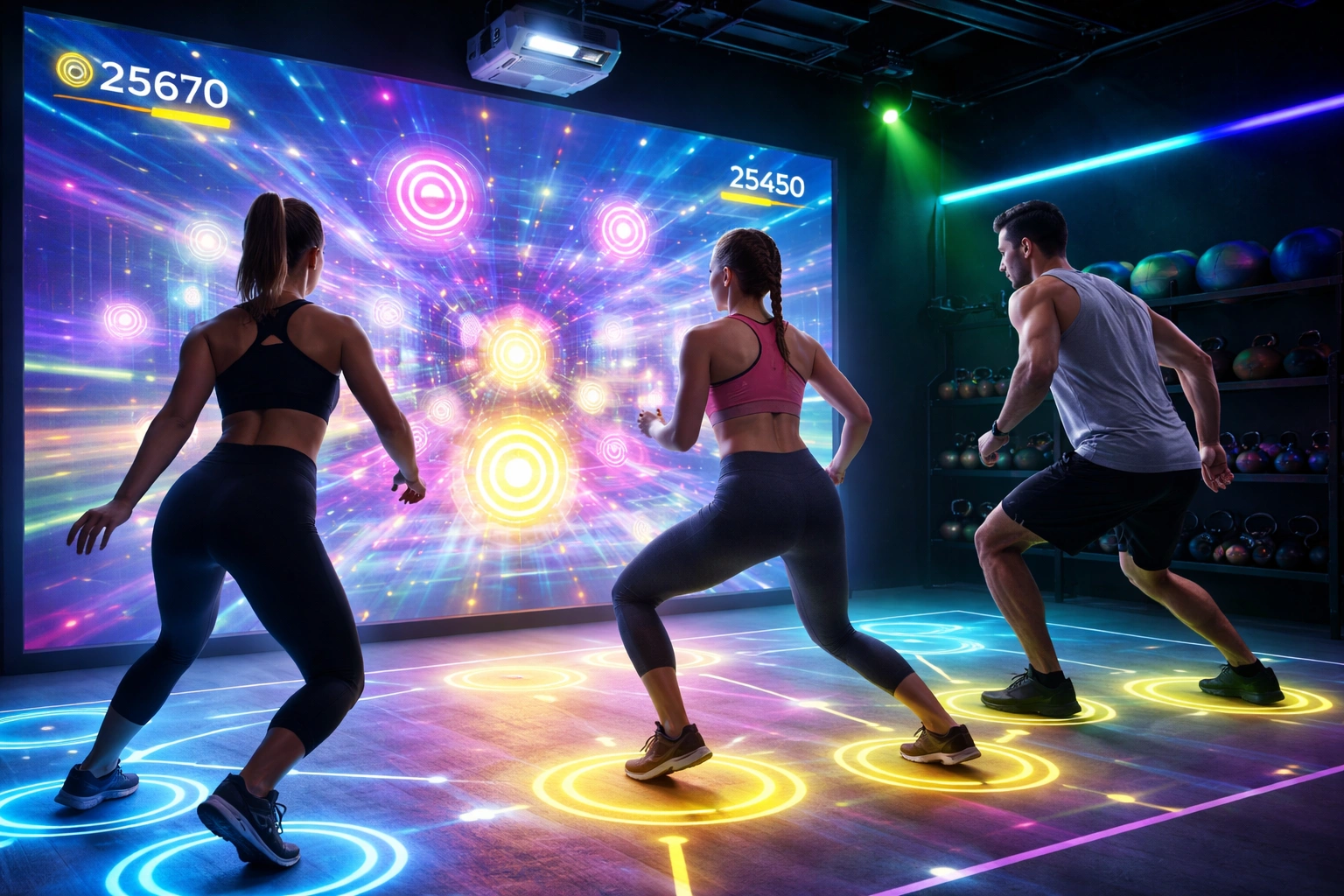
Interactive projector fitness rooms rely on a fully integrated system, rather than a single device.
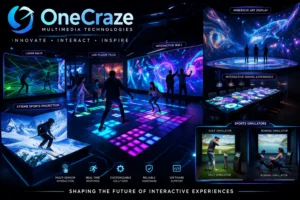
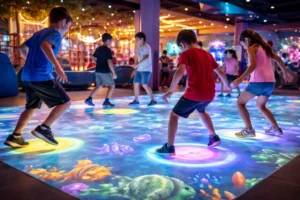
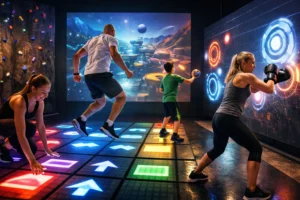
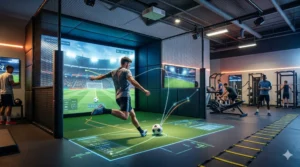
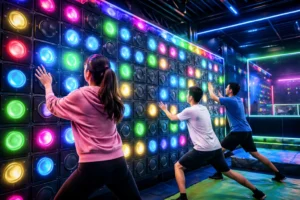
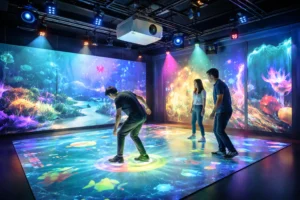
At the core, a projector displays real-time visuals on the floor or wall, while motion sensors detect body movement. Meanwhile, intelligent software processes actions instantly, turning exercises into interactive games 🎮.
Key Functional Components Include:
- Real-time motion detection
- Visual and audio feedback
- Score tracking and performance analytics
- Multiplayer and competitive game modes
- Adaptive difficulty levels
⚙️ What Are the Hardware Requirements for Fitness Projection Systems?
When planning an interactive fitness room, understanding the hardware requirements for fitness projection systems is essential.
✅ Core Hardware Setup:
- High-lumens projector (short-throw or ultra-short-throw)
- Motion sensors (infrared, depth cameras, or radar)
- Industrial-grade CPU or mini PC
- Shock-resistant mounting brackets
- Anti-slip projection surface or flooring
- Audio output system
Below is a clear comparison table to guide buyers and decision-makers 👇
📊 Hardware Comparison Table: Fitness Projection System Components
| Component | Purpose | Recommended Spec | Impact on Performance |
|---|---|---|---|
| Projector | Visual output | 4,000–6,000 lumens | Clarity & immersion |
| Motion Sensor | Movement tracking | Multi-point detection | Accuracy of workouts |
| Computer Unit | System processing | i5 or above | Game smoothness |
| Software | Game logic | Licensed fitness software | Engagement level |
| Mounting System | Stability | Ceiling or wall mount | Safety & durability |
🏋️ How Are Modern Projection Fitness Rooms Different from Traditional Gyms?
The differences between modern projection fitness rooms and traditional gyms go far beyond aesthetics.
Traditional gyms focus on static equipment, while projection fitness rooms emphasize interactive movement, instant feedback, and gamification.
🔍 Key Differences at a Glance:
| Aspect | Traditional Gym | Projection Fitness Room |
|---|---|---|
| Training Style | Repetitive | Game-based & dynamic |
| Motivation | Self-driven | Visually stimulated 🎯 |
| User Group | Adults | Kids, teens, adults |
| Data Feedback | Limited | Real-time analytics |
| Space Usage | Equipment-heavy | Open & flexible |
🎮 Can Interactive Projector Fitness Rooms Deliver Effective Workouts?
This is the most frequently asked question—and the answer is yes ✅.
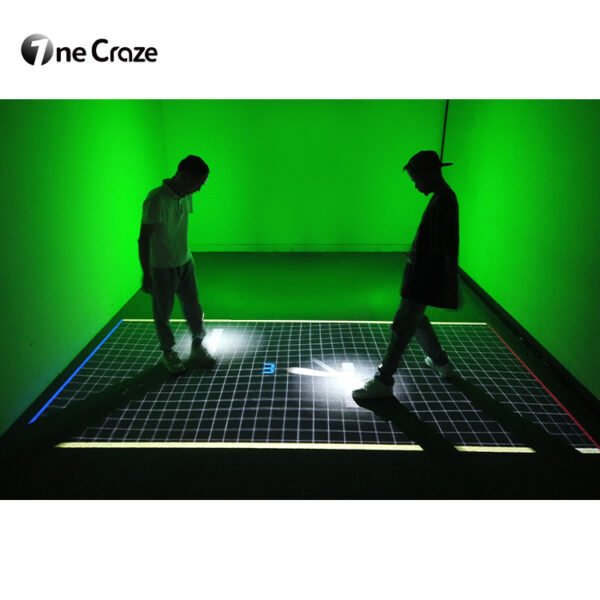
Interactive projector fitness rooms deliver effective workouts by combining:
- High-intensity interval training
- Functional movement patterns
- Reaction speed drills
- Cardio-based game mechanics
Unlike passive exercise routines, these systems demand continuous engagement, ensuring higher calorie burn and better adherence.
🏢 Who Should Invest in Interactive Fitness Game Rooms?
Interactive projection fitness rooms are ideal for:
- Fitness clubs & studios
- Family entertainment centers
- School gyms & training rooms
- Rehabilitation centers
- Shopping mall fitness zones
Because these systems appeal to all age groups, they allow operators to expand their market reach while offering something truly latest and best.
Yes. Most systems are designed for compact rooms and require minimal floor area.
Absolutely. Many software packages allow branding, difficulty adjustment, and custom game modes.
Typically 1–3 days, depending on room size and system complexity.
Yes. The system promotes natural movement and avoids heavy equipment.
Yes, but updates are usually included when you order from a professional supplier.
Yes. Advanced software supports user profiles and performance tracking.