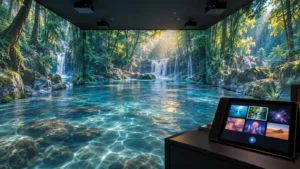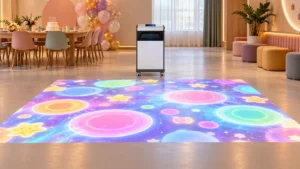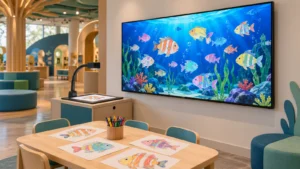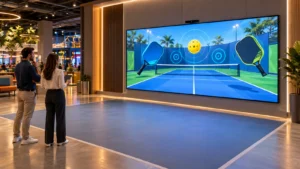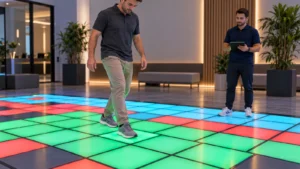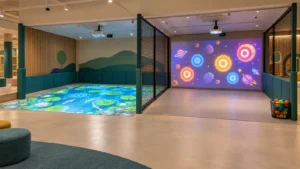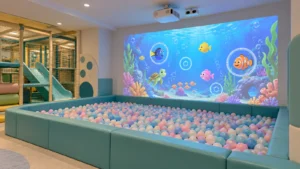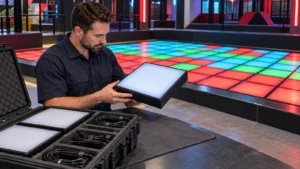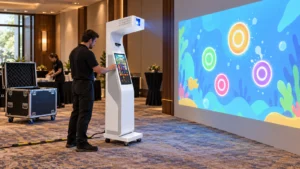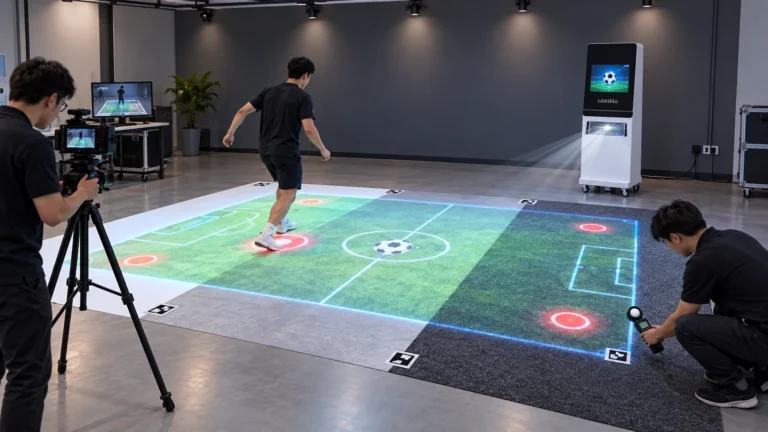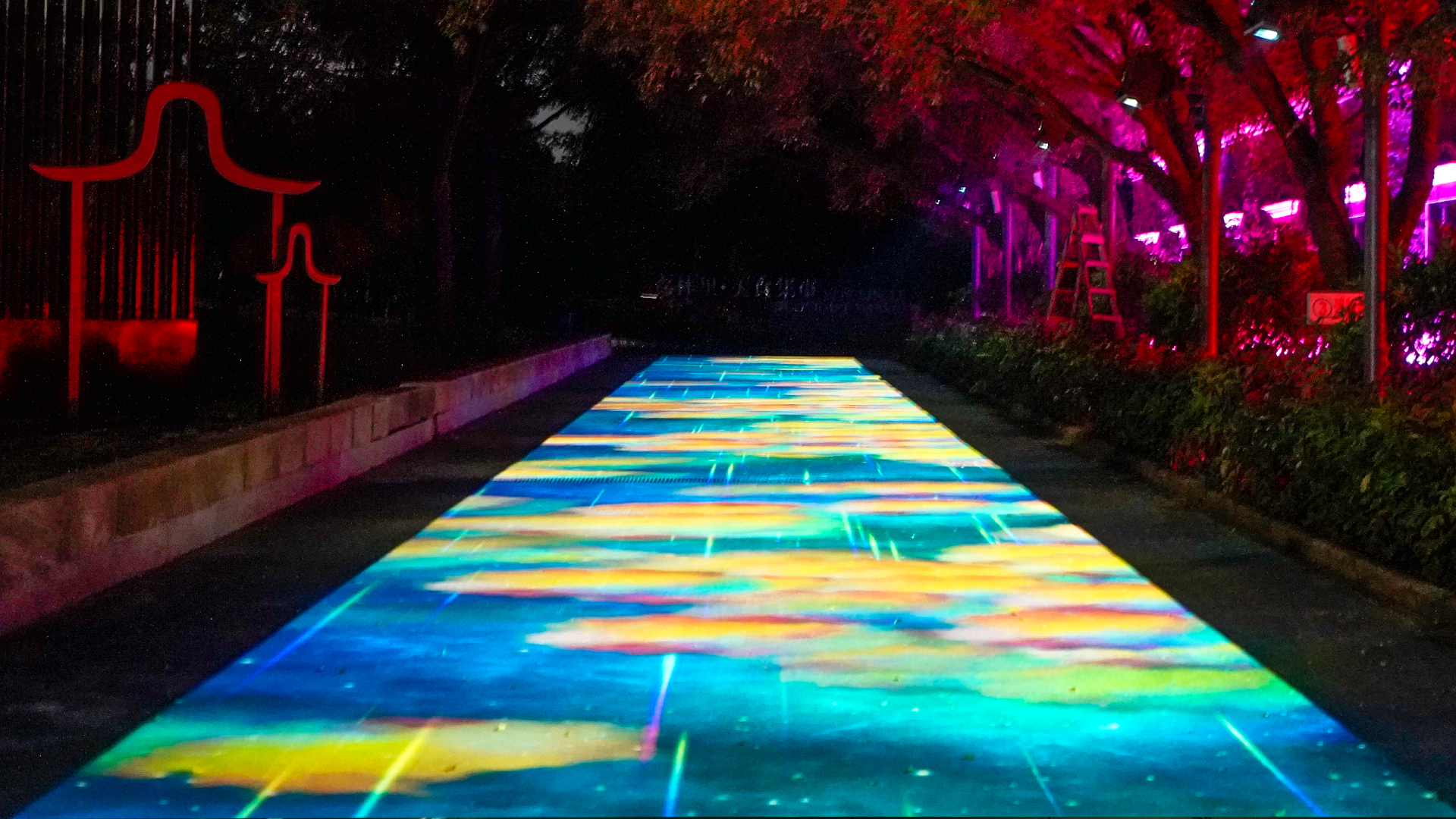
A motion sensor interactive projector, often referred to as an interactive projection system.
Is a technology that combines a standard projector with motion sensing capabilities to create an interactive and immersive experience. This type of system can be used in various applications, including education, entertainment, advertising, and interactive art installations. Here’s how it typically works:
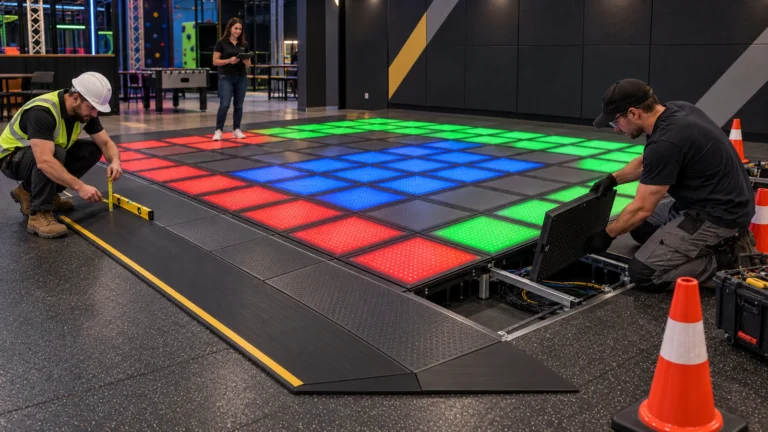
- Projection: The system includes a standard projector that displays images or content on a surface, such as a wall, floor, or tabletop.
- Motion Sensing: A motion sensing technology is integrated into the system to detect the movements of users or objects within the projection area. Common motion sensing technologies used include infrared sensors, cameras, or depth-sensing cameras (e.g., Microsoft Kinect or similar devices).
- Interactive Software: Specialized interactive software processes the input from the motion sensors and overlays interactive elements on the projected content. These elements can include virtual buttons, menus, games, or any other interactive elements that respond to user movements and gestures.
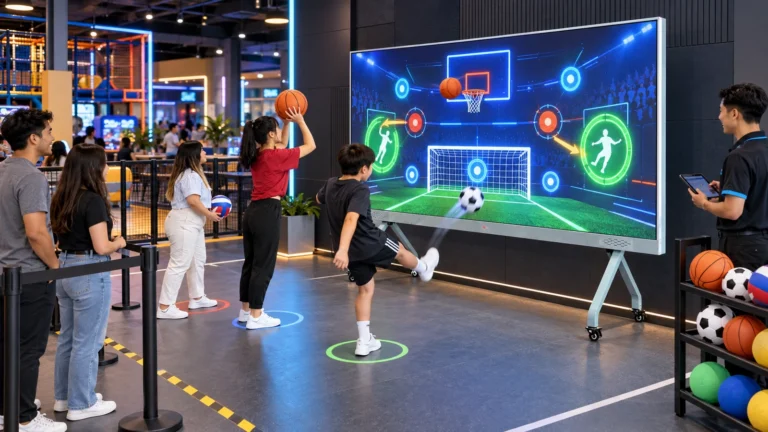
- User Interaction: Users can interact with the projected content by simply moving or gesturing within the projection area. For example, they can touch virtual buttons, manipulate objects, or play games by using their hands or other objects.
- Real-time Tracking: The system continuously tracks the users’ movements and gestures in real time, allowing for dynamic and interactive responses based on their actions.
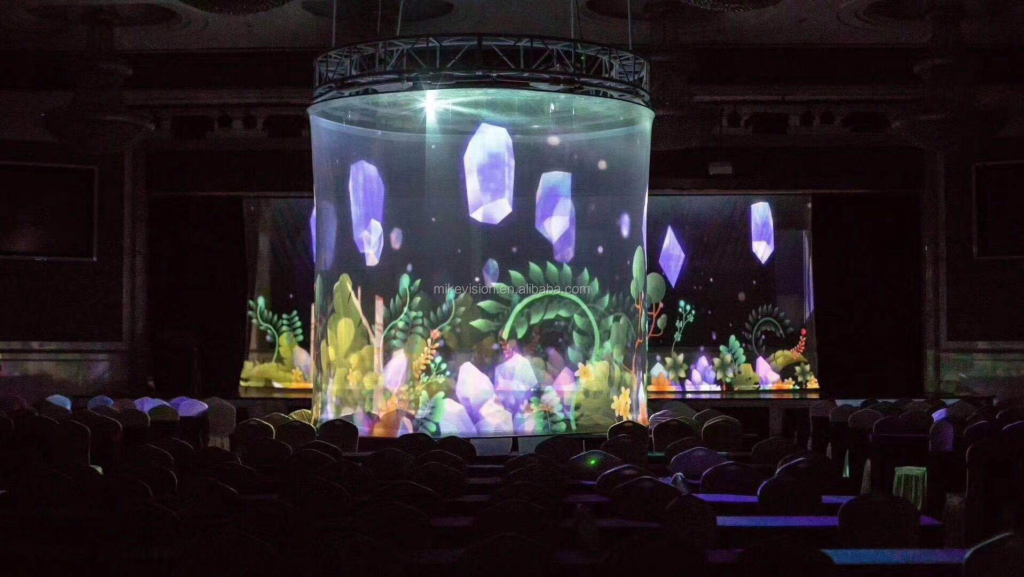
Applications of motion sensor interactive projectors include:
- Education: Interactive projectors are commonly used in classrooms and educational settings to make learning more engaging. Teachers and students can interact with digital content and educational applications through gestures and touch.
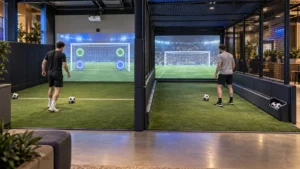
- Entertainment: Interactive projectors are used in entertainment venues, such as museums and theme parks, to create immersive and interactive exhibits and installations.
- Advertising and Marketing: Businesses use interactive projectors for interactive advertising campaigns and marketing activations, allowing customers to engage with branded content.
- Training and Simulation: They are used for training simulations in various industries, including aviation and healthcare, where hands-on training is essential.
- Gaming: Interactive projectors can also be used to create unique gaming experiences, where players can physically interact with the game environment.
- Art and Installations: Artists often use interactive projectors to create interactive art installations that respond to viewers’ movements and gestures.
When considering a motion sensor interactive projector, it’s important to choose the right hardware and software combination to suit your specific needs and budget. Additionally, the accuracy and responsiveness of the motion sensing technology play a crucial role in the overall user experience. The choice between infrared, camera-based, or depth-sensing technology depends on the specific requirements of your application.