What Is a Walk-Through Holographic Fog Curtain System?
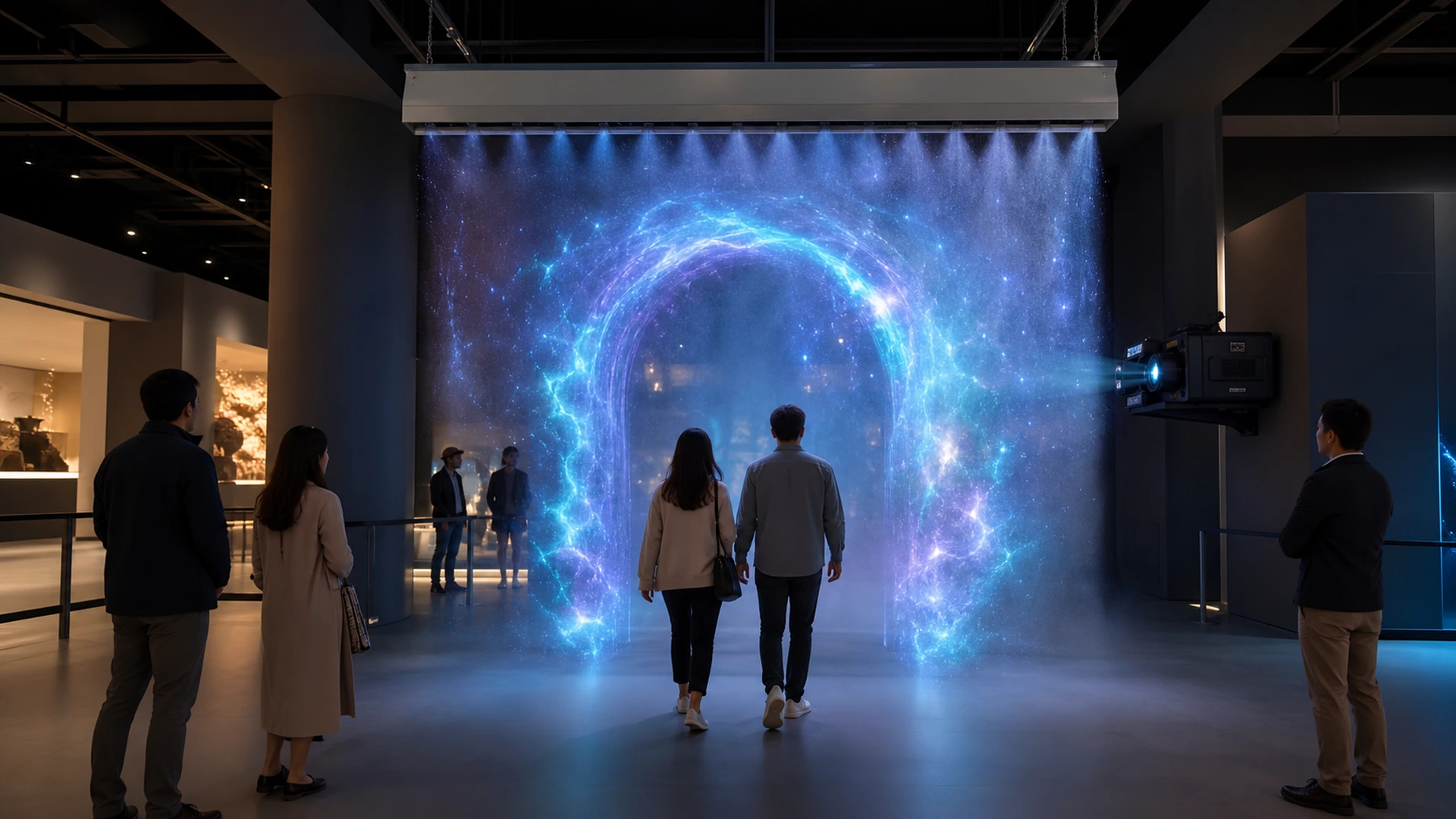
A fog curtain system normally uses ultrasonic atomizers or another fine-water atomization method to create a dense layer of small droplets. Fans and shaped air outlets then guide the mist into a more stable vertical plane. When a projector sends light onto this plane, the droplets scatter the image toward the audience while preserving part of the transparency behind it.
The result is often marketed as a hologram, although it is technically a projected illusion rather than a true volumetric hologram. This distinction helps buyers set realistic expectations. A fog curtain produces a striking floating screen, but its contrast and stability depend on mist density, airflow, room lighting, projector selection and installation geometry.
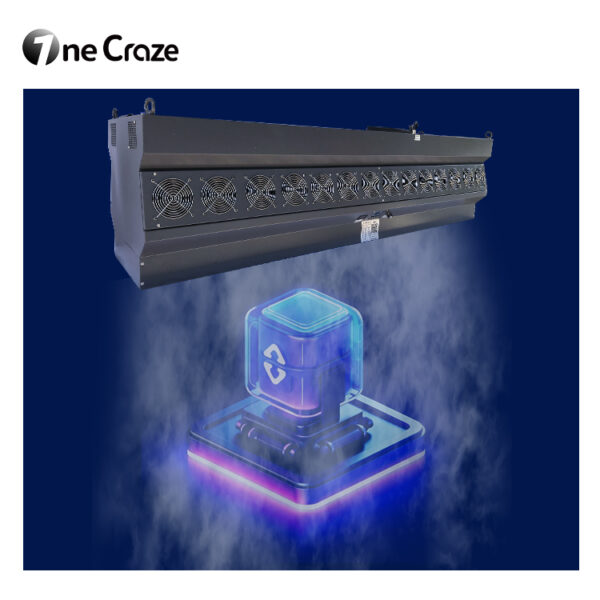
The OneCraze 3D hologram fog screen display machine can form the center of a customized commercial installation. Buyers can also read how the technology works in the OneCraze article on 3D fog screen projection and water-vapor displays.
What Should a Complete Fog Screen Supplier Provide?
A buyer should first define whether the quotation covers only the fog generator or the entire attraction. Hardware-only pricing may look lower, but the buyer still needs to source the projector, lens, media server, rigging, water system and technical integration. A turnkey package should identify every included item and list exclusions clearly.
| System module | Main function | Details the quotation should confirm |
|---|---|---|
| Fog curtain generator | Creates and shapes the mist projection surface | Width, atomization method, output adjustment, fans and enclosure material |
| Water system | Supplies clean water and manages the reservoir | Direct connection, portable tank, filtration, filling, level control and drainage |
| Control system | Starts, stops and adjusts fog and airflow | Local panel, remote control, DMX512, relay, RS232, RS485 or API options |
| Projection system | Displays content on the mist curtain | Projector model, ANSI lumens, resolution, lens, throw ratio and projection distance |
| Media server | Plays and maps video content | Output resolution, scheduling, remote management and supported formats |
| Interaction system | Detects visitors and triggers content | Camera, infrared, depth camera, radar or LiDAR tracking area |
| Suspension and safety | Supports the ceiling-mounted equipment | Lifting points, brackets, safety cables, ceiling load and installation drawings |
| Water and floor protection | Controls leakage and moisture below the screen | Drain pan, leak sensor, floor protection and recommended drainage |
| Content and software | Creates the visible experience | Standard loops, branded content, interactive scenes and customization scope |
| Support package | Protects daily commercial operation | Training, remote diagnostics, warranty, spare parts and maintenance plan |
OneCraze can discuss hardware-only, complete projection and turnkey interactive configurations. The final bill of materials should follow the venue measurements, performance target and required operating schedule instead of using one package for every installation.
How Do Screen Size, Airflow and Projector Selection Affect the Result?
Fog generator width does not automatically equal the full usable image area. The mist needs enough height, density and laminar airflow to keep the screen visible. Cross-drafts from doors, HVAC diffusers, escalators or busy visitor movement can bend or break the curtain. Therefore, the supplier should state the stable screen width and height under defined indoor air conditions.
Room lighting affects image contrast as much as generator performance. A brighter projector can help, but high ambient light will still reduce the depth of black areas and make the floating effect less convincing. Rear projection often keeps equipment out of the visitor path and reduces shadows, although it requires sufficient throw distance and protected projector space.
Projector selection should consider the screen width, aspect ratio, ambient illuminance, lens throw ratio, projection direction and content style. The official Epson projector brightness guide explains that required brightness depends on the room environment and ambient light. Consequently, buyers should request a site calculation or demonstration instead of accepting one universal lumen recommendation.
For a 2.5- to 3-meter generator, buyers often evaluate high-brightness laser projectors, but the exact 8,000-, 10,000- or 12,000-lumen class should remain a project decision. The quotation must name the projector and lens rather than describe them only as “high lumen” or “4K compatible.”
What Does Dry Fog Mean, and What Should FAT Testing Measure?
The phrase dry fog generally describes very small droplets intended to minimize surface wetting. An early fog screen patent discusses smaller particle sizes for a walk-through display and describes the use of controlled air curtains to protect the fog sheet. However, a patent or marketing label does not prove how a specific commercial machine performs.
Atomizer condition, water output, air velocity, room humidity and operation time can all change the result. Therefore, buyers should request measured particle-size information and a factory acceptance test, or FAT, using the actual machine configuration.
| FAT test | Recommended method | Result to record |
|---|---|---|
| Continuous operation | Run the complete system for 60 minutes or longer | Curtain stability, alarms, shutdowns and temperature |
| Walk-through moisture | Perform repeated passes with a white cotton shirt or test cloth | Before-and-after mass and visible moisture |
| Floor condition | Inspect the zone below and around the curtain | Photographs, moisture-pad mass and drainage performance |
| Water consumption | Use a calibrated flow meter or weigh the supply tank | Liters consumed per hour at each output level |
| Noise | Measure at one meter with a calibrated sound meter | A-weighted dBA with atomizers and fans operating |
| Humidity change | Record room temperature and relative humidity | Baseline, 30-minute and 60-minute readings |
| Screen size | Measure the stable visible curtain | Effective width and height, not only machine dimensions |
| Airflow resistance | Apply or measure controlled cross-air movement | Maximum air velocity before the screen becomes unstable |
| Projection quality | Use the quoted projector, lens and sample content | Ambient lux, throw distance, image brightness and visibility |
| Safety functions | Trigger low water, leak detection and emergency stop | Response time, alarm status and safe recovery |
| Interaction | Test tracking while visitors approach and cross the fog | Detection range, latency, occlusion and recovery |
The supplier and buyer should approve the FAT checklist before production. Original video should show the instruments, readings and full machine rather than only edited close-up footage.
How Should a Ceiling-Mounted Fog Screen Be Installed and Controlled?
A downward-flow curtain normally hangs above the visitor route, so structural engineering and secondary suspension are essential. Installation drawings should show the machine dimensions, center of gravity, net operating weight, water weight, lifting points, service clearances and safety cables. The venue must confirm that the ceiling or truss can support the complete dynamic and static load.
The design should separate electricity from possible leakage and provide accessible drainage. Useful safety options include a drain pan, leak detector, low-water shutoff, emergency stop, overload protection and automatic shutdown when airflow or water supply moves outside the approved range. The floor below the curtain should remain level, cleanable and slip resistant, with additional protection if the acceptance test identifies measurable deposition.
Control options depend on the operating model. A museum may need scheduled startup, media-server synchronization and integration with show control. An event company may prefer remote control and a portable tank. A permanent attraction may request DMX512, relay, RS232, RS485 or API communication with a central control or building management system.
Interactive projects add another layer. A depth camera or LiDAR can detect when a visitor approaches, then open a virtual doorway, change the scene or trigger audio and light. The sensor should be tested with the fog operating because water droplets, projected light and visitor occlusion can affect some tracking methods.
Which Venues and Commercial Packages Fit Fog Projection?
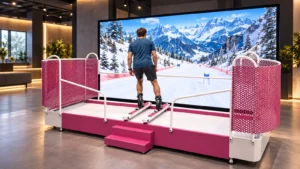
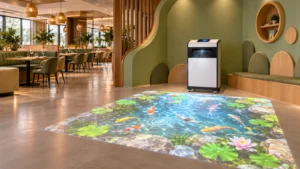
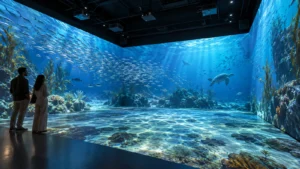
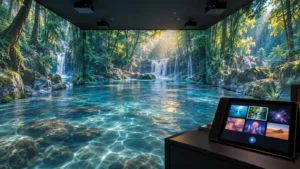
Fog screens work best in indoor spaces with controlled airflow and manageable ambient light. Museums can use them as story portals, while hotels and events can turn them into branded entrances. Shopping malls can create temporary campaigns, and themed attractions can connect the screen with sound, lighting and interactive content.
Outdoor fountain-style water screens belong to a different product category. They use pumps, nozzles and a much larger water flow, and they require separate wind, drainage, waterproofing and projection engineering. Buyers planning an outdoor installation should request an independent water-curtain holographic projection solution rather than assuming that an indoor fog generator can perform the same job.
For pricing, OneCraze can structure a quotation around three commercial levels:
- Hardware only: fog generator, local controls and basic water accessories.
- Complete projection system: generator, projector, lens, media player, tank or water connection, rigging and standard content.
- Turnkey interactive system: complete projection package plus tracking sensor, interactive software, customized content, commissioning and training.
Buyers requesting one pilot system and future quantities of five or ten systems should receive separate unit pricing, production lead time, packaging data, spare-parts options and shipping terms. FOB China and CIF pricing can usually be calculated from a confirmed package. DDP pricing requires the final delivery address, HS classification, customs requirements and installation scope.
Why Work With a Fog Curtain Manufacturer and Solution Provider?
A fog curtain is sensitive to integration. If the generator, projector and venue layout are selected independently, the image may appear weak, the curtain may drift, or the installation may require expensive changes. A solution provider should review the complete visitor experience before confirming production.
OneCraze can help define the screen size, generator configuration, projection direction, projector and lens, content system, interaction method, rigging and project support. Depending on the order, the team can also discuss OEM or ODM customization, stainless-steel enclosure requirements, electrical configuration, control interfaces and branded content.
The buyer should provide floor plans, ceiling height, ceiling load, ambient-light readings, HVAC layout, expected cross-air velocity, water and drainage locations, operating hours, audience profile and delivery country. These details allow OneCraze to prepare a technical-compliance matrix and identify any deviations before quotation.
Healthcare buyers should also review the separate OneCraze guide on whether a walk-through fog screen can be used in a hospital lobby. The facility’s infection-control and water-management teams must approve any aerosol-generating water feature, and a no-water display may be the safer alternative.
A properly configured low-wetting system is designed for walk-through use, but the buyer should verify performance with a continuous FAT. Measure fabric moisture, floor deposition and humidity instead of relying only on the term dry fog.
Provide the required visible opening, ceiling height, visitor route, stable image height, operating airflow and installation structure. The machine width alone does not define the usable projected screen.
Rear projection often reduces shadows and hides equipment from visitors, but it requires sufficient protected space. Front projection may work when the rigging and visitor path prevent beam interruption. The final choice depends on the site layout and lens calculation.