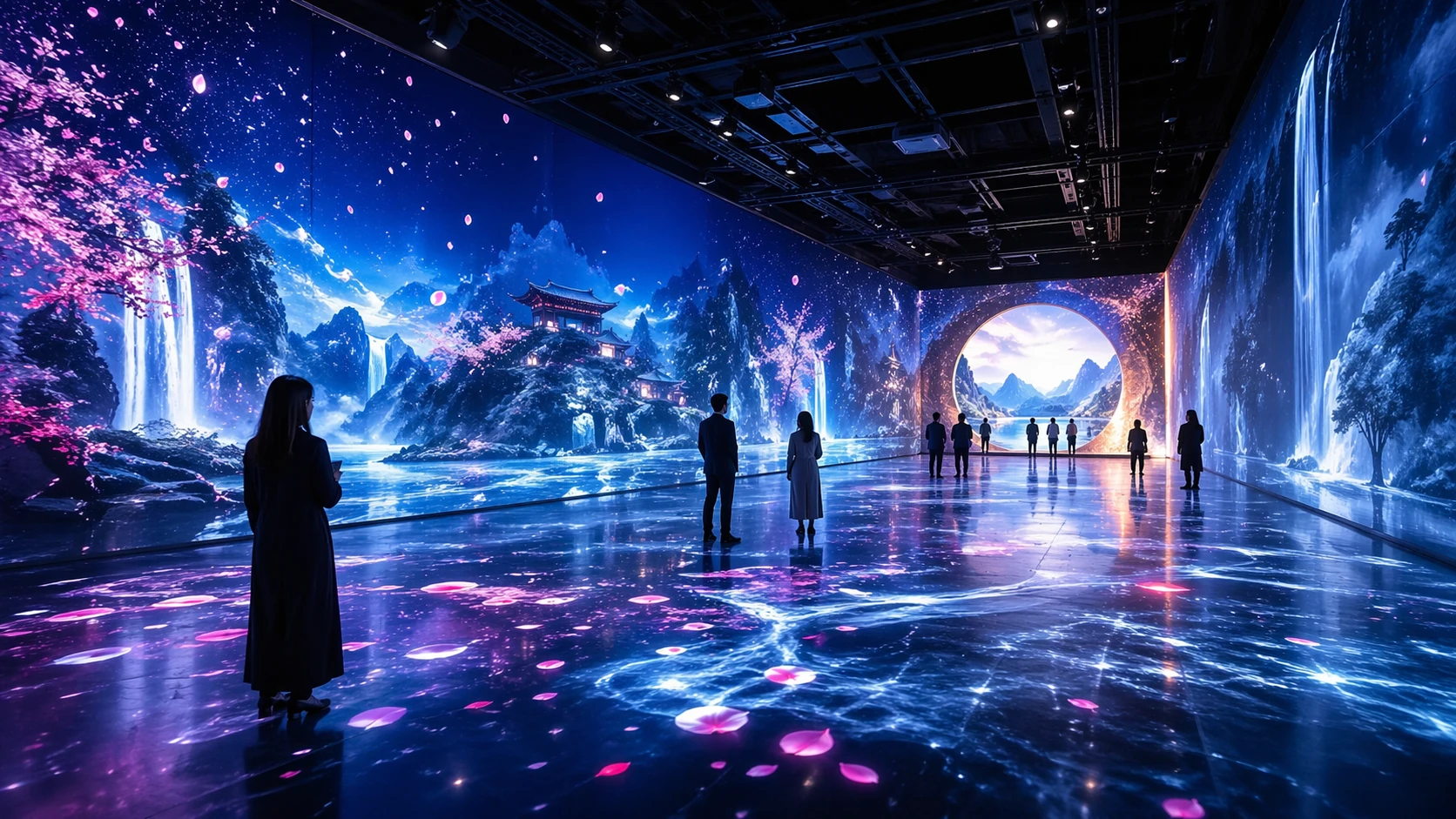
The Immersive Economy Is Growing Fast, and Buyers Want More Than Equipment
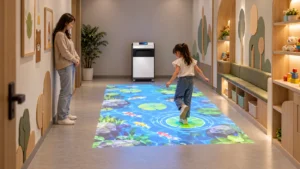
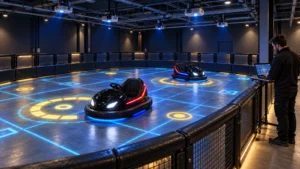
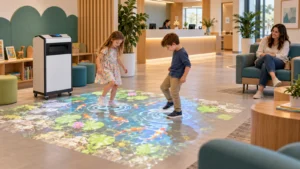
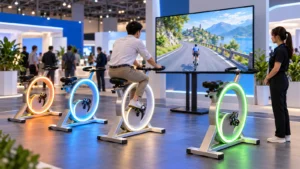
Immersive rooms are no longer niche installations. Today, brands, museums, family entertainment centers, schools, retail venues, and themed attractions all want spaces that do more than display content. They want rooms that surround visitors with light, sound, motion, and story. That shift matters because immersive technology works best when it blends the digital and physical worlds into one active experience, not a passive screen-based presentation. Onecraze’s current guidance frames immersive technology in exactly that way: as an experience that encourages people to move, react, and explore.
Therefore, buyers rarely search for a single projector or a single LED wall anymore. Instead, they search for a complete immersive room solution company that can plan the room, specify the hardware, integrate the software, install the system, and support the project after launch. In other words, the market now values integration over isolated products. That is why the phrase Top Immersive Room Solutions Company in China has strong commercial intent: it speaks to decision-makers who want a capable partner, not just a catalog.
What Defines a Top Immersive Room Solutions Company in China?
A top immersive room solutions company in China should offer more than a beautiful rendering or a low quote. First, it should understand the difference between an eye-catching demo and a stable, commercial-grade installation. Second, it should know how to match projection, LED, audio, sensors, media servers, and control logic to the client’s actual use case. Onecraze’s recent analysis of projection versus LED for immersive visuals makes this point clearly: the right visual technology depends on narrative goals, environment, and feasibility, not trend-chasing alone.
More importantly, a serious company should help the client answer practical questions early. For example:
- What is the room size and ceiling height?
- Will the room use projection, LED, or a hybrid approach?
- How much ambient light will affect performance?
- Does the project need interactivity, motion tracking, or touch response?
- Will the content loop continuously, or change by event and season?
- Who will maintain the system after installation?

Core Capabilities Buyers Expect From an Immersive Room Solutions Partner
A company that wants to rank for Top Immersive Room Solutions Company in China should show full-stack capability. In most successful immersive spaces, the vendor is expected to deliver a package that includes technical planning, hardware recommendation, system integration, content coordination, and service support. Onecraze’s own solution positioning for projection-based experiences reflects this end-to-end model by emphasizing projectors, processing, software tools, content management, and support as one connected ecosystem.
Projection, LED, or Hybrid: Which Immersive Room Solution Works Best?
Not every immersive room should use the same display method. In fact, Onecraze notes that projection and LED each shape storytelling, aesthetics, and feasibility in different ways. Projection often performs strongly when a project must wrap walls, ceilings, or irregular architecture with seamless visuals. By contrast, LED usually excels in high-brightness environments that demand strong contrast and punchy visuals.
Therefore, the best immersive room solutions company in China should not push one technology blindly. Instead, it should recommend the right system after evaluating room conditions, budget, content goals, and operating schedule. For many commercial projects, a hybrid system is ideal: projection creates spatial depth and environmental storytelling, while LED handles focal zones, signage, or ultra-bright anchor visuals. Onecraze’s recent coverage of 360° projection mapping also supports the idea that projection remains central to many immersive storytelling environments, especially where the visual content must envelop the audience.
Choosing the Right Immersive Display Strategy
| Solution Type | Best For | Main Strength | Main Limitation | Ideal Buyer Intent |
|---|---|---|---|---|
| Projection-Based Immersive Room | Museums, themed rooms, immersive dining, art spaces | Covers walls and irregular surfaces elegantly | Sensitive to ambient light and geometry planning | Buyers seeking projection mapping and room transformation |
| LED-Based Immersive Room | Retail, branded activations, bright venues, premium showcases | High brightness and strong contrast | Higher cost for large enveloping spaces | Buyers prioritizing brightness and visual impact |
| Hybrid Immersive Room | Large commercial venues, exhibitions, premium experience rooms | Combines seamless atmosphere with bright focal points | Requires stronger integration capability | Buyers seeking high-end custom immersive room solutions |
How to Evaluate a Chinese Immersive Room Supplier Before You Buy
First, ask the supplier to show projects that match your own application, not just general demos. A company that builds immersive museum rooms may not be the best fit for immersive dining, and a company that installs LED-heavy showrooms may not excel at projection mapping in irregular architecture. ProjectorCentral’s current buying guidance makes it clear that room-specific geometry and throw-distance planning matter. In other words, system suitability is never universal.
Next, check whether the company can explain both creative and engineering decisions. A trustworthy supplier should be able to discuss brightness, projection angles, blending, content resolution, aspect ratio, media-server synchronization, and maintenance planning in plain language. If the team only talks about visuals, the project may suffer later. Likewise, if the team only talks about hardware, the final experience may feel technically correct but emotionally flat.
Here is a practical checklist you can add to your buying process:
- Ask for similar completed case studies
- Request a room-planning workflow
- Confirm whether the company handles content adaptation
- Check if the team supports auto-alignment and warping tools
- Review after-sales service terms
- Verify whether remote diagnostics are available
- Ask how the system performs under ambient light
- Confirm expansion options for future phases
You should look for a company that can provide complete immersive room solutions, including design planning, hardware selection, software integration, installation, and after-sales support. In addition, it is important to check whether the company has experience with projection mapping, LED systems, interactive technology, and customized room layouts for museums, exhibitions, entertainment venues, or branded spaces.
The better choice depends on your project goals, room conditions, and budget. Projection-based immersive rooms are often ideal for large-scale storytelling, artistic environments, and flexible surface mapping. By contrast, LED immersive rooms are better for bright spaces that require strong contrast and vivid visual impact. In many cases, a hybrid solution offers the best balance for commercial immersive room projects.