What Is Interactive Floor Projector Software?
Interactive floor projector software is the control system that turns a normal floor projection into a motion-responsive experience. In other words, it connects visual content, motion detection, and interaction rules into one working system. When users step, run, jump, or move across the projection area, the software detects those actions and triggers a visual response.
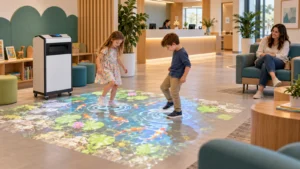
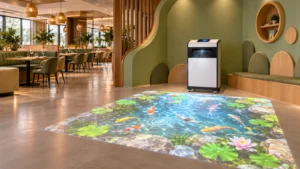
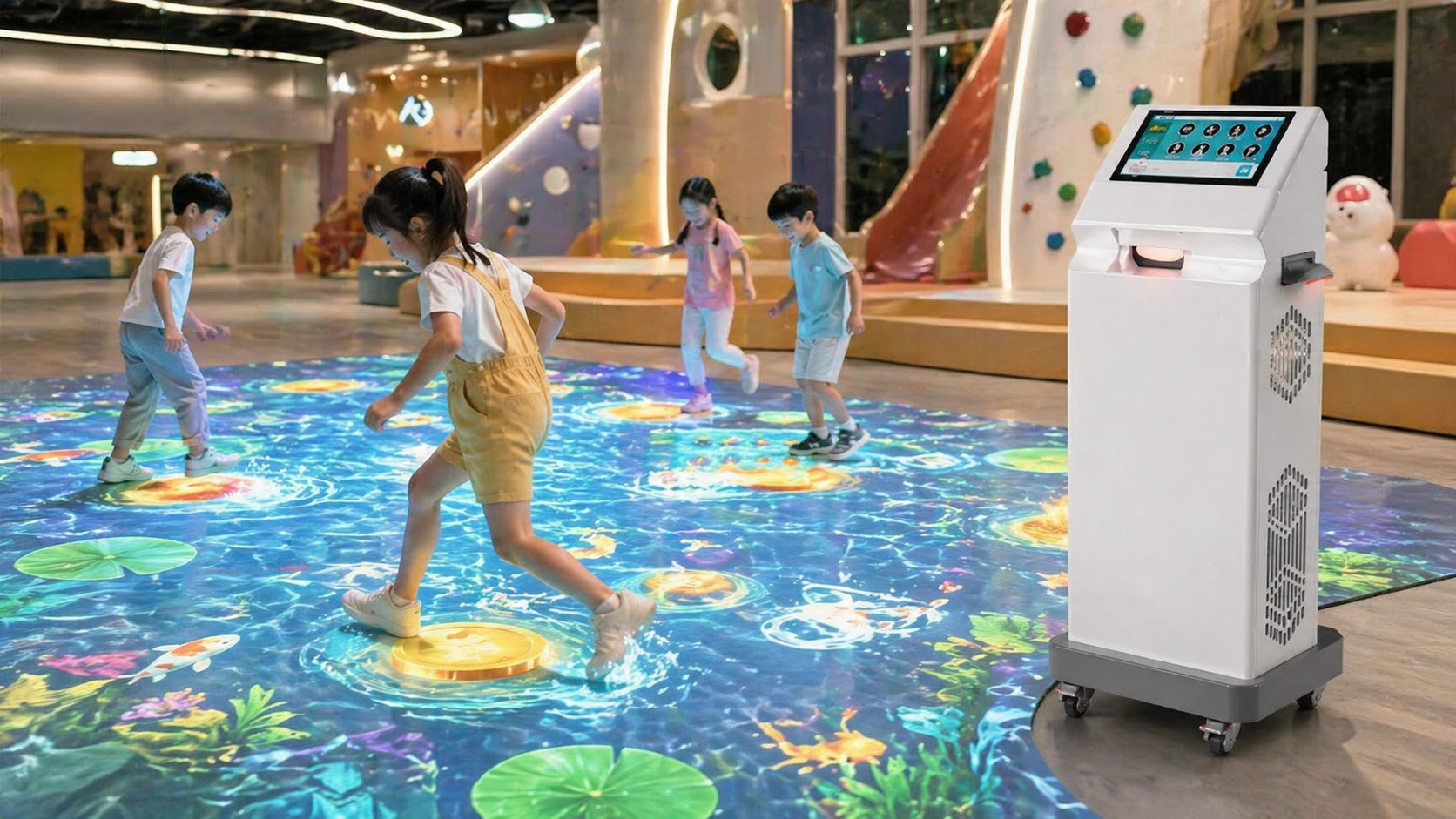
For example, a child may step on a projected fish and see ripples spread across the floor. In another setting, visitors may play a floor game where the software tracks movement and updates points in real time. Without the software, the floor would only display static images. However, with the right software, the floor becomes an immersive and reactive digital environment.
Core functions of interactive floor projector software
- Motion detection and response
- Game control and logic
- Visual theme switching
- Multi-scene content management
- Sound and animation synchronization
- User engagement tracking
- Interactive activity control
How Does Interactive Floor Projector Software Work?
The system usually works through coordination between the projector, motion sensor, camera, computer, and content engine. First, the projector displays visual content onto the floor. Then, a sensor or tracking device detects movement within the projection zone. After that, the software interprets the movement and triggers the correct response, such as animation, scoring, sound, or scene changes.
This process happens quickly, so users feel like the floor is reacting in real time. That speed is important because even a small delay can reduce immersion. Therefore, reliable interactive floor projector software must process movement smoothly and maintain accurate trigger zones. If the tracking is unstable, the experience becomes frustrating instead of exciting.
Typical workflow of an interactive floor system
- The projector displays the visual scene
- A user enters the detection zone
- sensor captures movement
- software analyzes the motion
- content responds with animation or gameplay
- system updates in real time

Where Can Interactive Floor Projector Software Be Used?
Common application scenarios
- Schools and kindergartens – learning games and classroom engagement
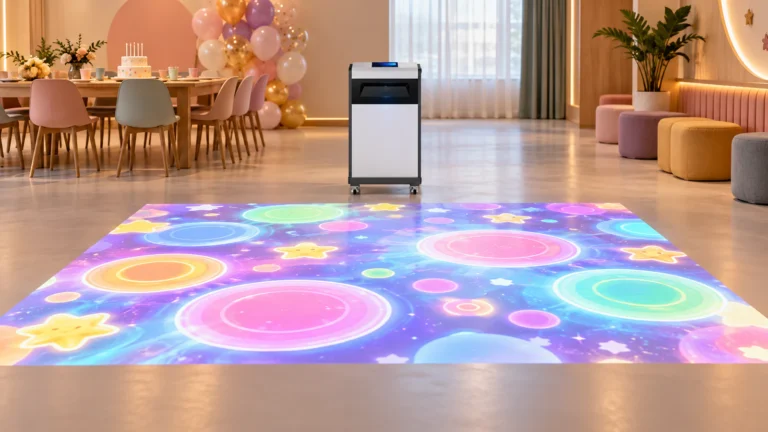
- Indoor playgrounds – active play and floor competition games
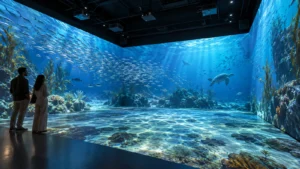
- Museums and exhibition halls – immersive storytelling and themed interaction
- Shopping malls – promotional interaction and visitor attraction
- Hotels and resorts – family-friendly entertainment spaces
- Sensory rooms – gentle motion-based activities
- Events and activations – portable engagement experiences
- Sports and gaming venues – reaction training and challenge zones
Interactive Floor Projector Software vs Hardware: Which Matters More?
Software vs Hardware
| Factor | Software | Hardware |
|---|---|---|
| Controls interactivity | Yes | No |
| Affects brightness | No | Yes |
| Determines gameplay | Yes | No |
| Supports content updates | Yes | Limited |
| Shapes user experience | Strongly | Partly |
| Influences installation quality | Partly | Strongly |
| Impacts replay value | Strongly | Limited |
What Types of Content Can Interactive Floor Projector Software Support?
Content diversity is one of the strongest selling points. The more flexible the software is, the more value the venue gets from the system. For example, a children’s activity center may want animal games, ocean themes, fruit games, and color-based challenges. Meanwhile, a commercial venue may want branded campaigns, seasonal effects, and custom promotional interaction.
Popular content categories
- Educational floor games
- Animal chase games
- Water ripple effects
- Sports challenge games
- Puzzle and reaction games
- Holiday themed scenes
- Brand activation content
- Interactive storytelling scenes
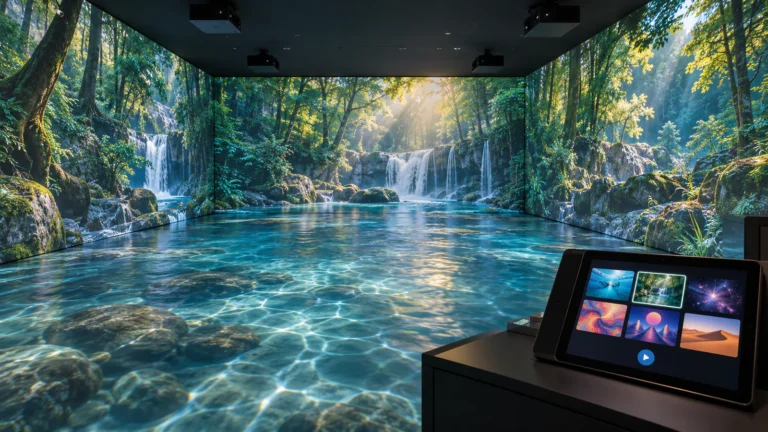
- Sensory and calming visual content
- Team competition floor games
Interactive floor projector software is used to control motion-responsive floor projection experiences in schools, playgrounds, museums, retail spaces, events, and other immersive environments.
Yes. Many systems support custom branding, content updates, theme changes, and project-specific game development depending on the supplier’s capabilities.
Both matter, but the software controls interaction, content variety, and replay value. In many cases, software has a bigger impact on user engagement than hardware alone.