Why supplier selection matters so much
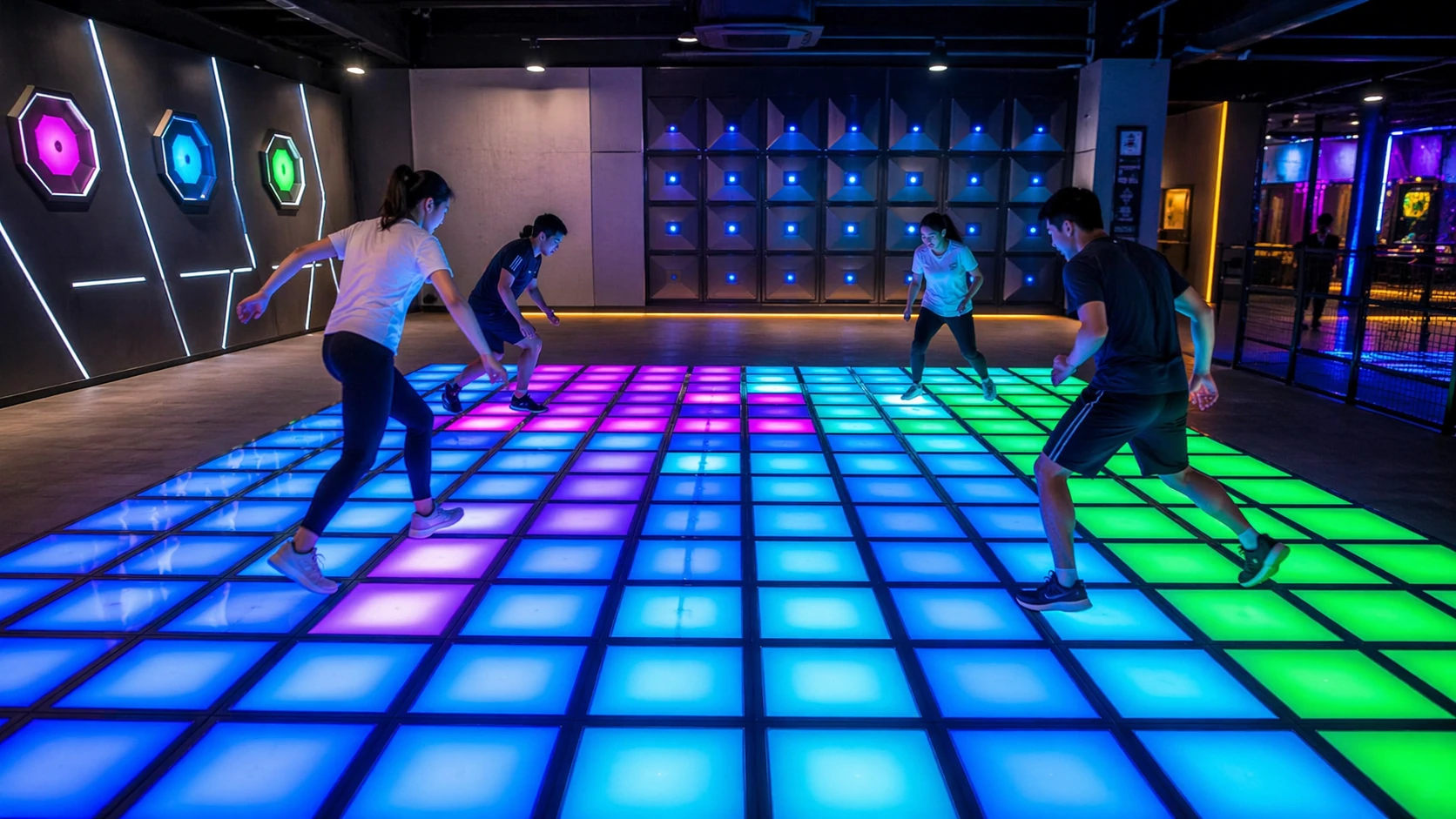
An LED Super Grid Game is not a simple standalone machine. It is usually part of a larger commercial solution that includes LED floor modules, sensors, control systems, software, content logic, and often room planning or installation guidance. Supplier pages in this category consistently market these systems as turnkey or one-stop venue solutions rather than basic off-the-shelf products.
That matters because your real purchase is not just equipment. You are buying:
- gameplay quality
- system reliability
- update potential
- maintenance support
- venue compatibility
- long-term return on investment
If the supplier cannot support those areas, the initial savings can quickly disappear through downtime, repairs, or poor player experience.
First, understand what a real LED Super Grid Game supplier should provide
Before comparing factories, define what you are actually buying. Public pages for Super Grid-style systems describe them as immersive games built around interactive LED lights, sensors, and software logic, often designed for multiplayer challenge play. Comparable operator-facing descriptions also emphasize short challenge loops, increasing difficulty, and physical plus mental coordination.
A serious supplier should therefore provide more than hardware. Look for a package that includes:
- interactive LED floor tiles
- responsive sensing or trigger logic
- game-control software
- game modes or difficulty settings
- installation guidance
- after-sales support
- replacement-part availability
Check whether the supplier truly understands commercial active game venues
The best supplier is not necessarily the one with the cheapest factory quote. It is the one that understands how the system will work inside a real venue. Supplier solution pages in this niche often present Super Grid as part of a modular active game room lineup for bars, amusement venues, shopping centers, or family entertainment centers.
That means you should ask:
- Have they built systems for FECs, trampoline parks, or challenge rooms?
- Can they recommend room size and player flow?
- Do they understand turnover rate, replay value, and daily wear?
- Can they help integrate the game into a broader venue concept?
Evaluate the game software, not just the LED hardware
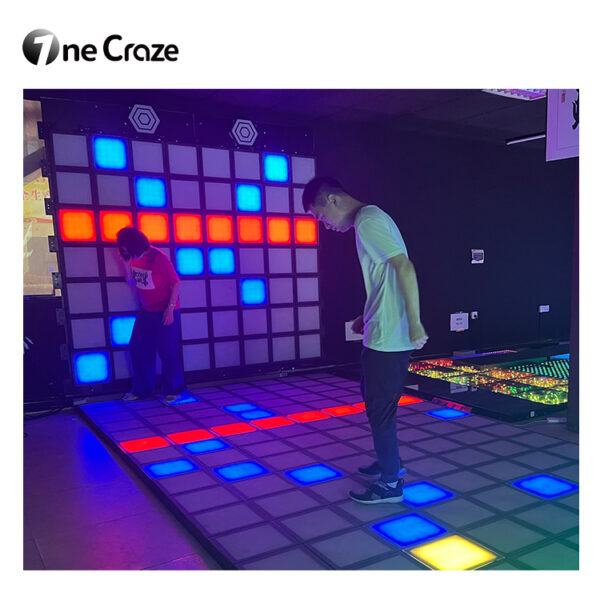
This is one of the biggest mistakes buyers make. Many people focus on tile brightness, cabinet design, or screen appearance. Yet public descriptions of this product category repeatedly emphasize that the experience is driven by software logic, interaction design, and real-time response. Onecraze’s product page says the system integrates LED lights and sensors through software design, while Activate’s room pages highlight challenge rules, reaction-based goals, and progressive gameplay.
Ask every supplier:
- How many game modes are included?
- Can difficulty levels be adjusted?
- Is multiplayer supported?
- Can the content be updated later?
- Does the system track scoring, timing, or player performance?
- Are new games or custom themes available?
Pay close attention to durability and maintenance
LED Super Grid systems are high-contact, high-frequency attractions. Players run, stop, jump, and pivot across the floor repeatedly. So durability is not a small detail; it is central to your business model. Supplier pages in this market often emphasize commercial use, one-stop deployment, and active challenge environments, which implies the hardware must withstand repeated public use.
Ask practical questions such as:
- Are the floor modules commercial-grade?
- Is the surface anti-slip?
- How are damaged tiles replaced?
- How long does maintenance usually take?
- Which parts fail most often?
- Are spare tiles and control components stocked?
Look for proof beyond product photos
Many suppliers have polished websites. Fewer have real proof. You want evidence that the company can actually deliver.
Ask for:
- installation case studies
- customer videos
- testing videos
- software demo footage
- production photos
- export or packaging photos
- after-sales process documents
Red flags that should make you walk away
Do not ignore these warning signs:
- no clear software demonstration
- no maintenance explanation
- only renderings, no real installation proof
- no spare-parts plan
- no export or project experience
- unusually low price with unclear scope
- slow or inconsistent technical replies
It is an interactive game system built around light-up floor tiles, sensors, and software-driven challenge logic. Public examples in the market describe it as a multiplayer active game with LED floor interaction, and some versions also add wall-button tasks.
Many Chinese companies in this niche position themselves as manufacturers or turnkey solution providers for active game rooms, amusement systems, and interactive sports attractions. Buyers often look to China for broader customization and integrated project support.
Both matter, but software often determines replay value, difficulty progression, and long-term attraction freshness. Public product descriptions in this category consistently link the experience to software-driven interaction rather than lights alone.