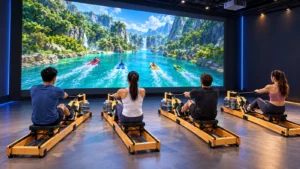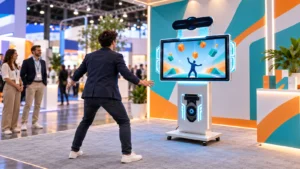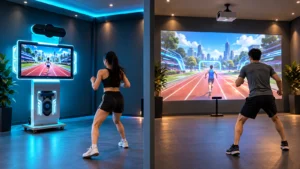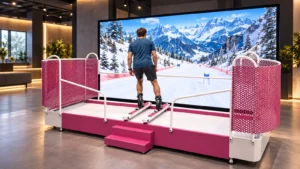
What Are Interactive Trampoline Games?
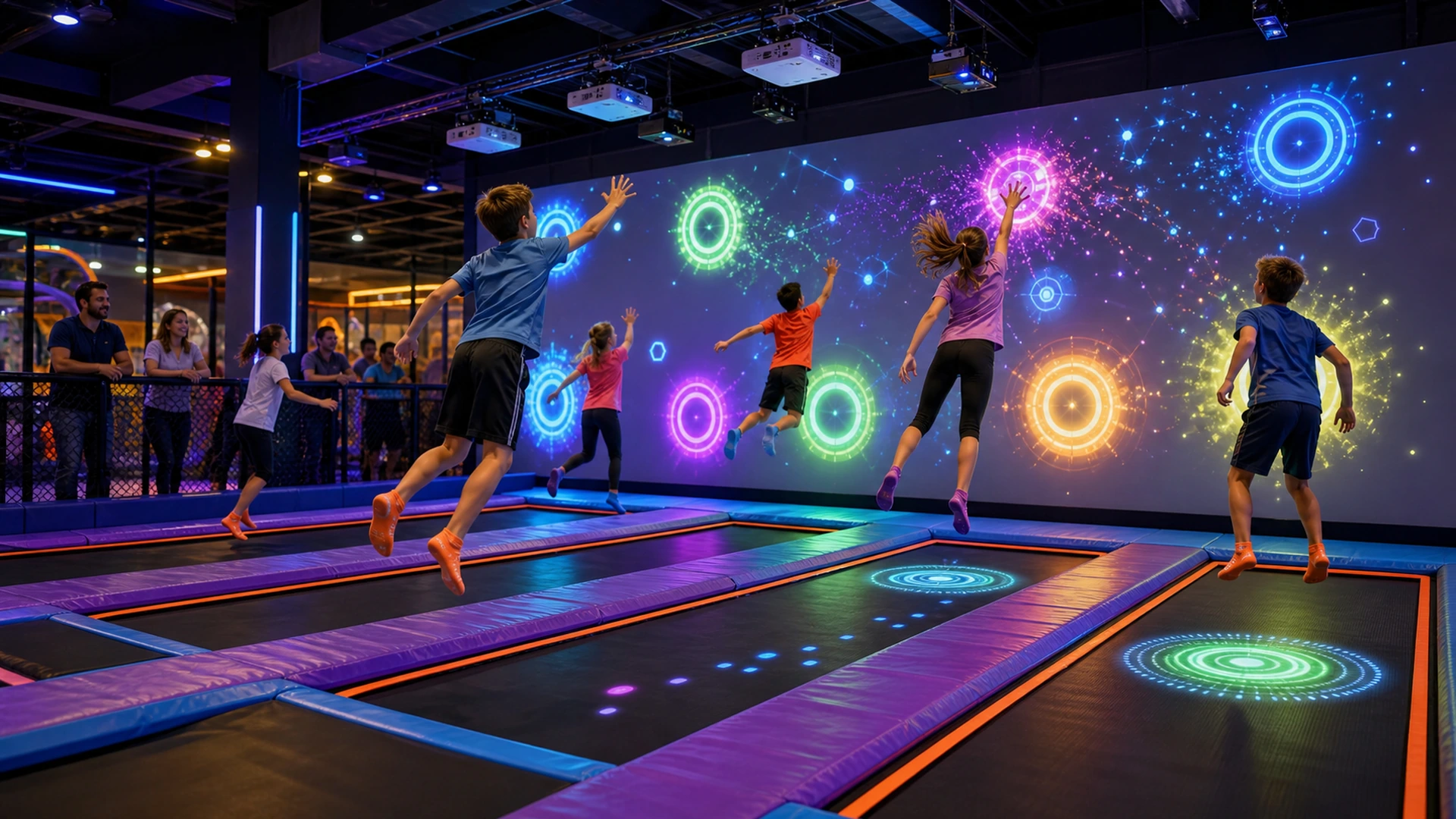
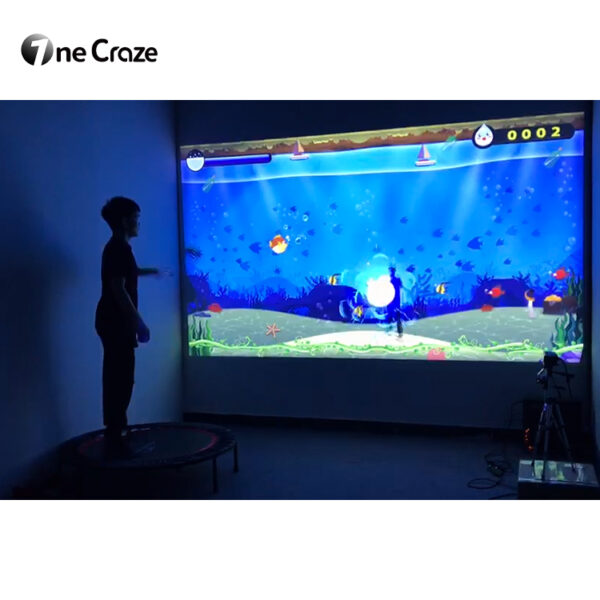
Interactive trampoline games are digital attractions that react to a player’s jumps, body movement or landing position. Depending on the design, the system may project game visuals onto a trampoline surface, show a game on a display wall, or combine a trampoline court with sensors and large-screen feedback. When the player jumps, touches a zone or completes a movement, the software triggers animation, scoring and sound.
This format works especially well for trampoline parks because it gives guests a clear goal. They are no longer only jumping for free play; they can chase points, beat a timer, compete with friends or unlock new effects. If you want to see a product-oriented example, review the OneCraze interactive trampoline games system.
How Do Interactive Trampoline Games Work?
Most interactive trampoline systems use a combination of sensors, software and visual output. The tracking layer detects the player’s movement, the software converts that movement into game actions, and the projection or screen shows instant feedback. Because jumping is fast, low latency is important. If the game reacts too slowly, players feel disconnected from the experience.
| System layer | What it does | Why it matters |
|---|---|---|
| Trampoline court | Provides the physical jump area | Must match the game format and local safety rules |
| Motion sensor or camera | Detects jumping, movement or touch events | Accurate tracking creates a stronger game feel |
| Projector or display | Shows the game environment and score feedback | Bright, clear visuals help players understand goals |
| Control computer | Runs the game software and tracking logic | Stable hardware reduces downtime during busy hours |
| Game software | Provides rules, scoring, visuals and modes | Good content improves repeat play and party value |
| Audio feedback | Adds sound effects and timing cues | Players respond faster when hits and scores are obvious |
| Operator interface | Lets staff start and manage sessions | Simple controls make daily operation easier |
Some systems focus on screen-based gameplay, while others use projection mapping on trampoline areas or nearby walls. For a broader explanation of projection-based trampoline experiences, you can also read OneCraze’s guide to interactive trampoline projection games.
Interactive Trampoline Games vs Traditional Trampoline Attractions
Traditional trampoline areas are still valuable, but digital interaction changes how guests use the space. It adds goals, scoring and visual feedback, which can help operators create timed sessions, group competitions and premium activity zones.
| Comparison point | Traditional trampoline zone | Interactive trampoline game zone |
|---|---|---|
| Guest motivation | Free jumping and physical play | Scores, missions, challenges and competition |
| Replay value | Depends mainly on physical activity | Content updates and new game modes can refresh the attraction |
| Staff operation | Usually open play monitoring | May support timed sessions, party formats and game switching |
| Marketing angle | Fitness, fun and group activity | Digital sports, active gaming and immersive entertainment |
| Best use | Large jump courts and open activity areas | Premium zones, party rooms, challenge lanes and active game rooms |
| Key planning issue | Court design and safety monitoring | Safety plus tracking, display, lighting and software reliability |
Best Interactive Trampoline Game Ideas for Parks and FECs
The best game ideas are easy to understand, physically active and short enough for repeated play. Guests should know what to do within a few seconds, and staff should be able to explain the game quickly during a busy session.
| Game idea | How it works | Best venue use |
|---|---|---|
| Jump score challenge | Players jump to hit digital targets or reach timing goals | Trampoline parks, FECs and birthday parties |
| Reaction training | The system lights up targets that players must hit quickly | Teen zones, sports centers and team competitions |
| Virtual obstacle game | Players avoid digital hazards while jumping or moving | Premium activity areas and active game rooms |
| Team battle mode | Two or more players compete for points in a timed round | Group bookings and party packages |
| Projection ball challenge | Players combine jumping with throwing or hitting targets | Trampoline parks with wall projection zones |
| Fitness challenge | The game tracks movement, speed or jump count | Sports training, school activity rooms and wellness events |
| Custom brand game | The content uses venue characters, campaign themes or sponsor visuals | Mall events, seasonal promotions and chain venues |
If your venue also wants wall-based throwing games, compare this concept with OneCraze’s article on interactive wall projection games for FECs. Many parks can combine both formats to create a stronger active entertainment zone.
What Equipment and Site Conditions Should You Check?
Before installation, operators should review the trampoline layout, court structure, ceiling height, lighting, mounting points, power access, network needs and guest flow. The design team also needs to know whether the game uses projection on the trampoline surface, a display wall, a sensor frame or a combination of several interaction methods.
| Checklist item | What to confirm |
|---|---|
| Court layout | Clear jump area, entry point, exit point and spectator position |
| Ceiling height | Enough clearance for jumping, projection throw and safe mounting |
| Lighting | Controlled light so screens or projections remain visible |
| Sensor view | Clear detection zone without blocked cameras or blind spots |
| Mounting points | Secure locations for projectors, screens, sensors and cabling |
| Safety padding | Protected edges, frames and nearby structures |
| Staff access | Easy access to start games, switch modes and handle restarts |
| Maintenance access | Reachable hardware for cleaning, inspection and service |
The installation should also avoid exposed cables and hardware in jump zones. In addition, operators should plan how guests queue, how staff brief players and how parents watch without blocking the play area. For multi-attraction venues, OneCraze’s interactive entertainment products page can help compare trampoline games, floor projection, wall projection and immersive projection systems.
How Much Does an Interactive Trampoline Game System Cost?
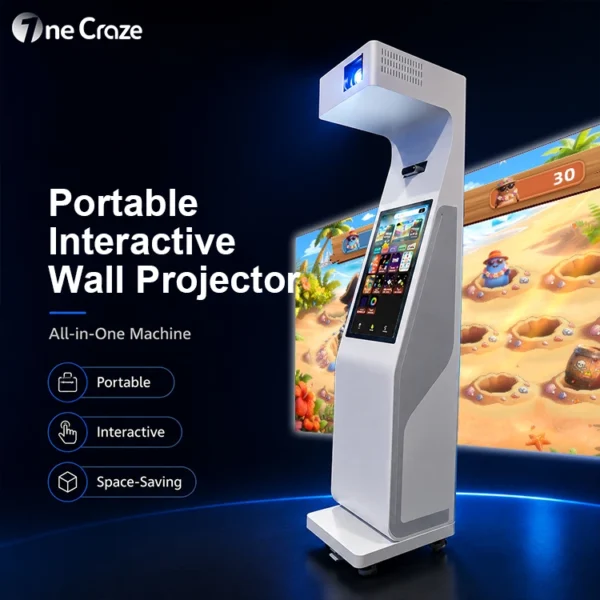
The final cost depends on the system format, court size, tracking hardware, projection or display equipment, software package, installation work and customization needs. A compact screen-based game has a different budget from a full projection-mapped trampoline zone with custom content and complex site integration.
| Cost factor | What changes the budget | Operator advice |
|---|---|---|
| Game format | Screen-based, projection-based or hybrid setup | Choose the format that fits your court and business model |
| Tracking method | Camera, motion sensor, pressure detection or combined tracking | Prioritize accuracy and response time over the cheapest option |
| Visual output | Projector brightness, screen size or display quality | Match visuals to lighting and viewing distance |
| Software package | Number of games, modes and updates | Select content that supports parties, repeat play and different ages |
| Installation | Mounting, wiring, calibration and site preparation | Plan early if the park is still under construction |
| Custom content | Branded games, local themes or sponsor campaigns | Use customization when it can support premium pricing or marketing |
| Support plan | Training, updates, troubleshooting and spare parts | Commercial attractions need reliable after-sales support |
They can be safe when the venue uses proper trampoline equipment, clear player limits, safe mounting, staff monitoring and suitable game rules. Operators should always follow local regulations, trampoline manufacturer guidance and their own safety procedures.
Not always. Some systems use projection, while others use display screens, sensors and digital feedback. The right choice depends on the court layout, lighting, game style and budget.
Yes, many parks can retrofit an interactive game zone. However, the supplier should review the court dimensions, ceiling height, lighting, mounting options, power access and safety layout before recommending a system.