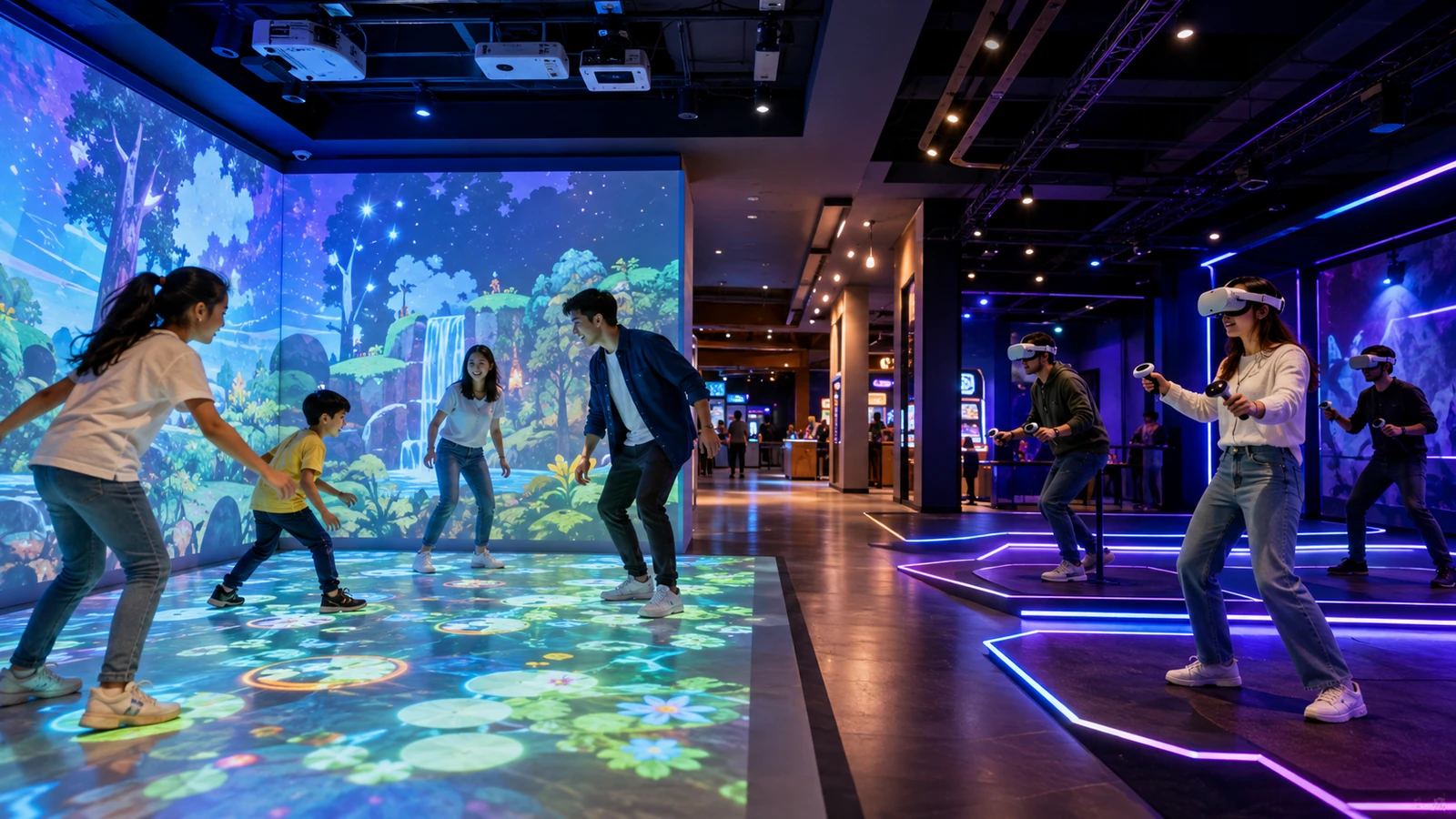
What Is the Difference Between an Immersive Game Room and VR?
Compare how players enter and interact with each experience
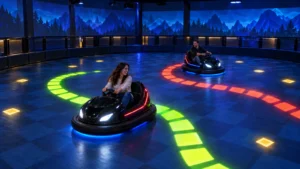
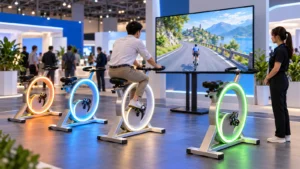
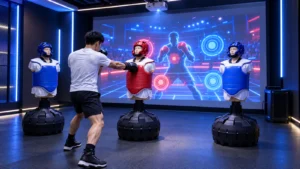
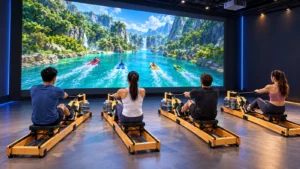
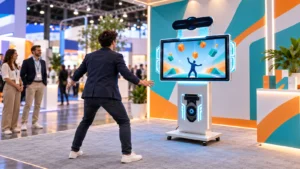
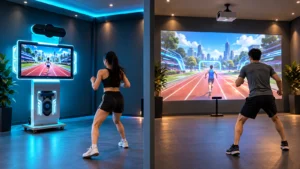
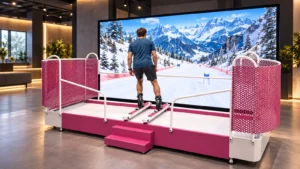
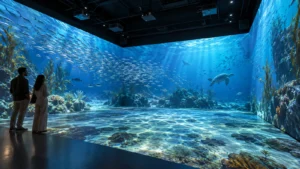
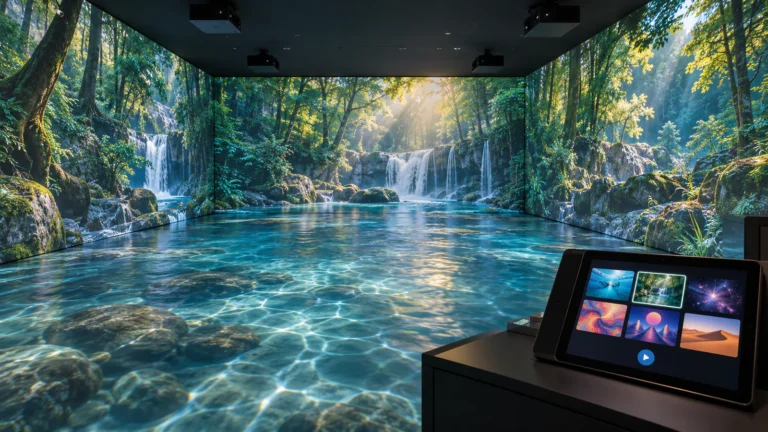
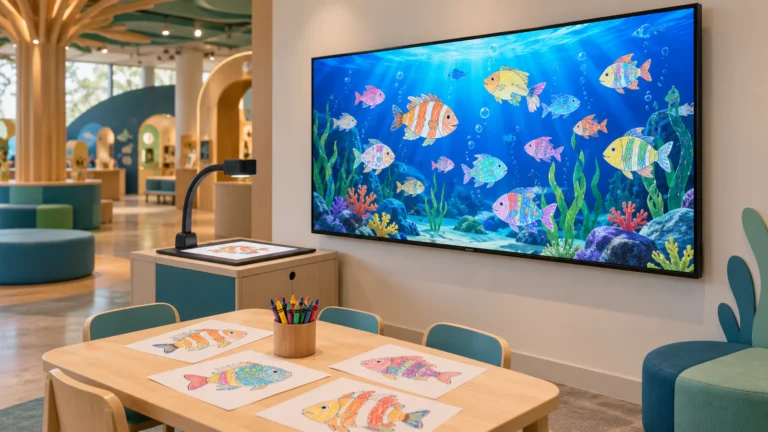
A headset-free immersive room uses projectors, LED displays, motion sensors, cameras, and interactive software to transform a physical space into a playable environment. Players move freely and interact with walls, floors, or projected objects.
For example, an interactive wall projection system can turn a wall into a multiplayer sports or challenge game. Likewise, a commercial Floor Is Lava game encourages players to jump, run, and react together.
Location-based VR, meanwhile, requires players to wear headsets and often use controllers. It can deliver detailed virtual worlds, but operators must manage wearable equipment, cleaning, fitting, and player instruction.
Which Option Creates a Better Guest Experience?
Balance immersion, comfort, and accessibility
VR can create a highly personal and visually detailed experience. Therefore, it works well for story-driven adventures, simulations, and competitive gaming.
However, headset-free rooms make participation easier. Guests can enter the room, understand the activity quickly, and start playing without adjusting a headset. In addition, spectators can watch the action, which helps create energy around the attraction.
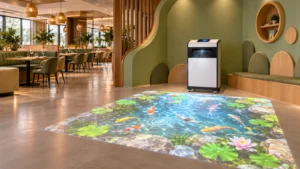
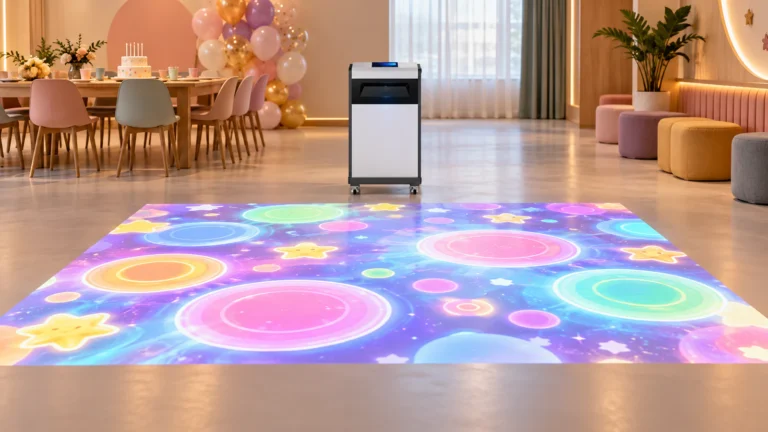
A mobile interactive floor projector can also help operators test interactive games in different areas before building a permanent room.
Headset-free play may suit families, children, parties, and mixed-age groups particularly well. VR may appeal more strongly to gamers and guests who want individual immersion.

How Do Capacity and Daily Operations Compare?
Review throughput, staffing, hygiene, and maintenance
Capacity can directly affect an FEC’s revenue. Headset-free rooms often allow several guests to play together without requiring one complete equipment set for every player. As a result, operators can potentially move groups through the attraction more efficiently.
VR usually requires a headset, controller set, and tracking position for each participant. Staff may also need to:
- Fit and adjust headsets
- Explain controls
- Clean equipment after each session
- Monitor cables, batteries, and tracking
- Help players who experience discomfort
By contrast, many active game room solutions support group play with limited wearable equipment. Still, operators must regularly inspect projectors, sensors, computers, flooring, and safety zones
What Equipment and Space Does Each Format Need?
Plan the room around technology and player movement
A headset-free room may include projectors, sensors, cameras, speakers, a control computer, interactive software, wall surfaces, and protective structures.
Projector quantity depends on the room dimensions, coverage area, brightness, and desired level of immersion. This immersive room projector guide explains the main planning factors.
VR requires headsets, gaming computers or standalone processors, charging equipment, tracking systems, controllers, and clear movement zones. Free-roam VR may also need a larger unobstructed space and more detailed player supervision.
Before making a decision, operators should review the available interactive entertainment products and choose equipment that matches the venue’s actual size, audience, and operating capacity.
Which Solution Should Your FEC Choose?
Match the attraction to your customers and business model
Choose a headset-free immersive game room when your venue prioritizes:
- Family and group participation
- Simple onboarding
- High visual impact
- Active physical movement
- Reduced dependence on wearable equipment
- Easy spectator engagement
Choose location-based VR when your venue prioritizes:
- Individual immersion
- Detailed virtual environments
- Simulation-style experiences
- Premium gaming sessions
- A technology-focused audience
Some venues can combine both formats. For instance, an operator could use VR as a premium attraction while installing an interactive LED floor and wall game room for group challenges.
Ultimately, the best solution depends on your target guests, available space, staffing level, session price, and desired throughput. If you need a customized room configuration, you can contact OneCraze to discuss equipment and layout options.
Not always. The final cost depends on room size, projector quantity, sensors, software, construction, and content. However, headset-free rooms may require fewer individual devices when several people play together.
Capacity depends on the room dimensions, game design, and safety clearance. A properly planned multiplayer room can accommodate families, parties, or team-building groups without giving every player a headset.
Yes. Combining both can help an FEC serve different audiences. Headset-free rooms can support social group play, while VR can provide premium individual or small-team experiences.