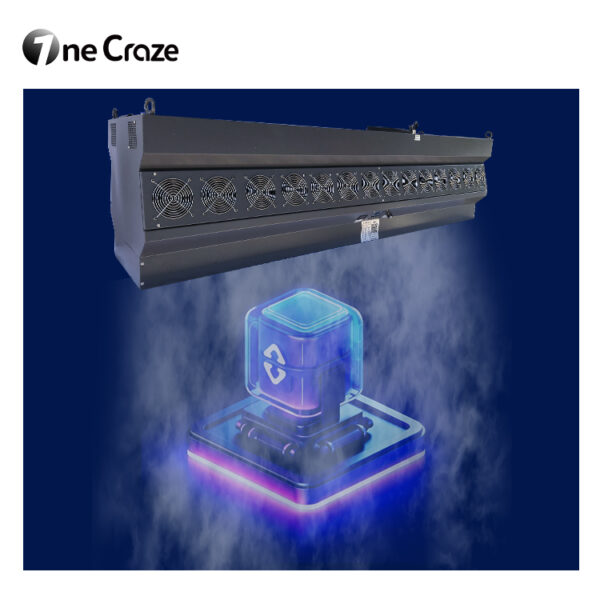
OneCraze’s fog screen display machine provides a starting point for discussing event applications. This guide addresses companies purchasing equipment for their rental inventory—not clients seeking a one-day rental service. Confirm model-specific specifications and included services before ordering.
Define the Events You Want to Serve
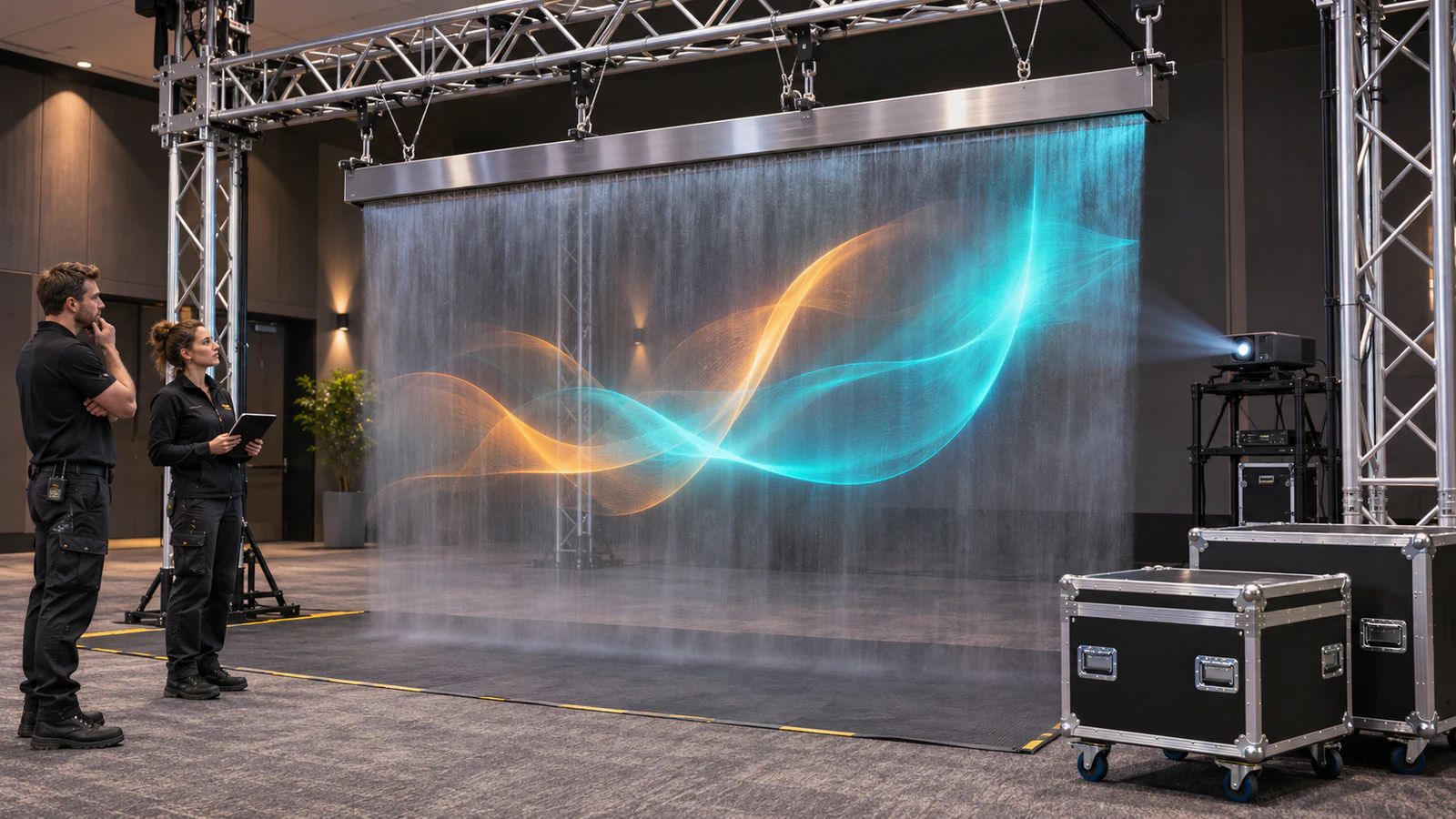
A fog projection screen uses a curtain of fine water droplets as the projection surface. It can create a semi-transparent image, but it is not a true volumetric hologram. It also differs from a theatrical smoke machine or an outdoor fountain-style water screen.
Start with the intended booking: a product reveal, exhibition feature, stage backdrop or visitor entrance. Each requires different viewing arrangements and operating procedures. A screen used as a visual backdrop does not automatically qualify for walk-through operation.
Before selecting equipment, identify:
- Typical indoor venue conditions and available installation space.
- Desired visible image dimensions and audience position.
- Whether visitors will approach or pass through the image.
- Expected operating periods and venue access windows.
Do not choose a model based only on its largest advertised curtain width. Ask whether its usable image and deployment requirements match your common bookings. Where mist is unsuitable, the fog screen, projection scrim and transparent LED comparison can help you discuss an alternative display approach with the client.

Request a Complete Event Deployment Quotation
When comparing a fog projection screen for sale, separate the generator price from the equipment required to deliver a working event. A low starting price may leave your team sourcing several essential items independently.
Use one deployment checklist for every supplier:
| Quotation item | Information to request | Why rental buyers need it |
|---|---|---|
| Mist generator | Exact model, dimensions, operating weight and service access | Determines handling, installation and maintenance planning |
| Water arrangement | Required water quality, filling method, drainage and optional tank | Determines what each venue must provide |
| Projector and lens | Named models, intended image size and projection layout | Establishes whether existing rental stock is suitable |
| Playback and controls | Included player, content formats and verified control functions | Defines how technicians operate the experience |
| Support and mounting | Approved arrangement, load information and installation documentation | Allows qualified personnel to assess the proposed venue |
| Transport and support package | Packed dimensions, cases, spares, training and warranty terms | Helps calculate recurring deployment effort |
These are quotation requirements, not confirmation that every item is included. The fog curtain specification guide provides further questions for your equipment schedule.
If you already own projectors, request a compatibility review rather than assuming they will work. Share the lens, intended projection distance and sample content. The projector selection guide explains relevant buying factors, but a fog-screen demonstration should determine the final choice.
Check Transport and Setup Before Calling It Portable
For rental operations, “portable” should describe a verified handling process—not simply equipment that can be moved. Ask for packed and operating dimensions separately, including any cases, water accessories and supporting structures.
Compare those measurements with your vehicle, venue loading route, lifts and storage access. Then clarify which components travel assembled, which require on-site connections and what handling equipment the manufacturer specifies. Do not infer a crew size from a promotional photograph.
Measure the Complete Setup Window
Ask the supplier to demonstrate the sequence from unpacking to an approved image. Include positioning, assembly, filling, checks and projection adjustment. Record the conditions of that demonstration before using its duration in your event schedules.
Furthermore, a temporary installation still needs an approved support arrangement. Qualified venue and installation personnel should review loads, mounting, electrical provision and access. Do not improvise suspension or assume one venue’s approval transfers to the next.
Keep a deployment record for each booking, including equipment configuration, room photographs and changes made during setup. This gives the next technician a useful starting point without replacing a fresh site assessment.
Assess Every Venue and Plan the Return to Storage
Reusing the same equipment does not produce identical conditions at every event. Doors, ventilation, room lighting and audience movement can change the result. Therefore, send clients a site-information form before confirming the proposed display arrangement.
Request photographs, an installation plan, lighting conditions, water and drainage access, and the permitted operating schedule. Coordinate any aerosol-related restrictions and alarm-system considerations with venue management; never disable protective systems to accommodate the effect.
Afterward, plan how the unit returns to storage. Ask the manufacturer for model-specific instructions covering:
- Shutdown, draining, cleaning and drying.
- Water-system inspection and permitted cleaning products.
- Packing orientation and storage conditions.
- Service intervals, replacement parts and fault reporting.
Avoid inventing a universal cleaning routine or transporting a filled unit unless the manufacturer expressly permits it. Also confirm whether rental use and repeated transport affect warranty conditions.
Commercially, include preparation, freight, installation labor, consumables, maintenance and support in your internal job costing. A generator purchase price alone cannot establish a rental margin. The quotation comparison guide helps distinguish equipment, delivery and commissioning responsibilities.
Test the Operating Cycle, Not Only the Visual Effect
Before purchase, agree on a demonstration plan using the proposed configuration. Show representative branded content, view it from the intended audience position and record the room conditions. A close-up video of bright animation is not enough to evaluate an event installation.
Request a continuous run that reflects the intended operating period. Check curtain stability, start and stop behavior, operator adjustments, noise and water consumption. Inspect the floor and surrounding area during the run rather than only immediately after startup.
If walk-through use is proposed, require a separately assessed demonstration of that use. Treat “dry fog” and “low wetting” as claims requiring evidence under stated conditions, not guarantees that clothing or floors will remain dry everywhere.
Finally, observe shutdown and preparation for transport. Agree on acceptance criteria and documentation before shipment, using the factory acceptance test checklist as a planning framework. Repeat relevant checks after delivery and at each installation.
Only if the quotation lists it. Confirm the generator, projector, lens, playback equipment, water accessories and installation services individually.
Do not assume so. Request model-specific environmental limits and a site assessment. An indoor mist curtain and an outdoor water-screen installation are different proposals.
Ask about accepted media formats, content preparation and any software permissions or fees. Confirm who supplies and approves each client’s artwork before the event.