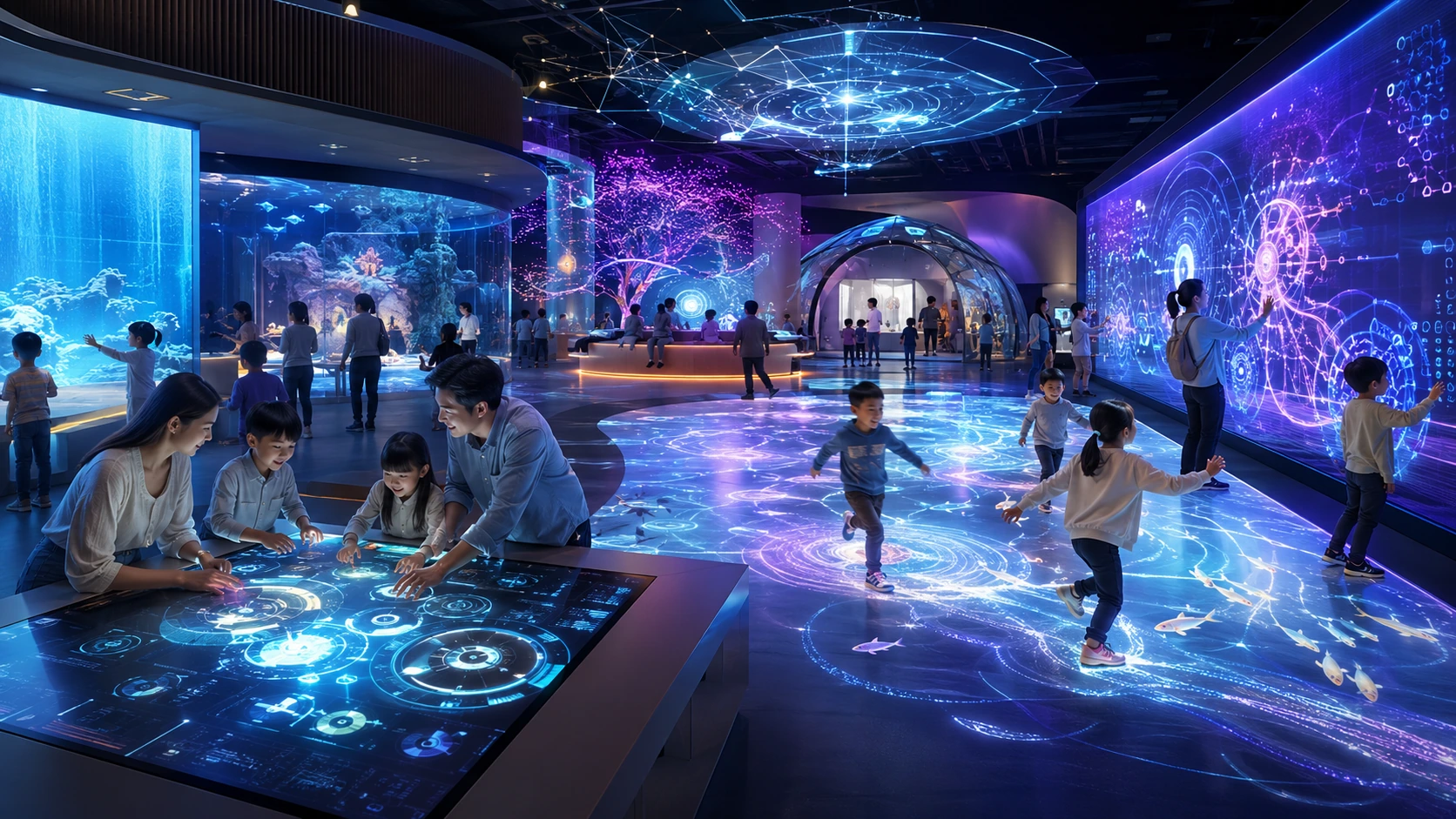
What Should Be Included in a Complete AI Interactive Experiences Park System?
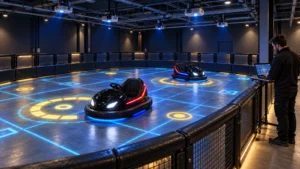
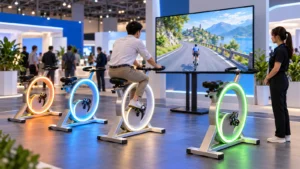
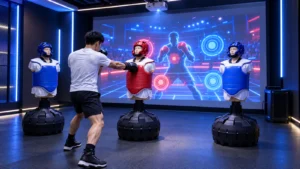
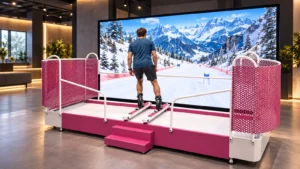
At the hardware level, a professional implementation may include projection systems, motion sensors, cameras, control servers, LED display structures, audio systems, touchscreens, and custom-triggered interfaces. In many cases, Video touch walls, interactive floors, touch tables, interactive surfaces form the core of the interactive area because they encourage active participation and multi-user engagement.
At the content level, the venue needs dynamic scenes, themed visual assets, interaction logic, game rules, environmental storytelling, and responsive media layers. AI can improve this framework by enabling adaptive content delivery, behavior recognition, and smart scene transitions. For example, a children’s exploration zone may automatically switch themes based on visitor age groups, while a branded exhibition may change messaging depending on user interaction depth.
the control level, the venue needs reliable software. This includes content management, remote diagnostics, performance monitoring, data reporting, and future update support. Without solid software integration, even visually impressive installations may become difficult to operate. Therefore, the best manufacturer or supplier is not simply the one that sells hardware, but the one that provides a stable operational system.
How Do Installers of Interactive Attractions Influence Project Success?
Many buyers focus heavily on hardware specifications and overlook installation expertise. However, poor implementation can reduce the value of even the most advanced equipment. Therefore, selecting skilled Installers of interactive attractions is one of the most important decisions in the entire project.
Professional installers do much more than place screens or connect cables. They study the space, map traffic flow, evaluate lighting conditions, check structural constraints, and coordinate electrical and network planning. In immersive venues, precision matters. A projector that is slightly misaligned or a sensor that is poorly calibrated can weaken the user experience and create maintenance problems later.
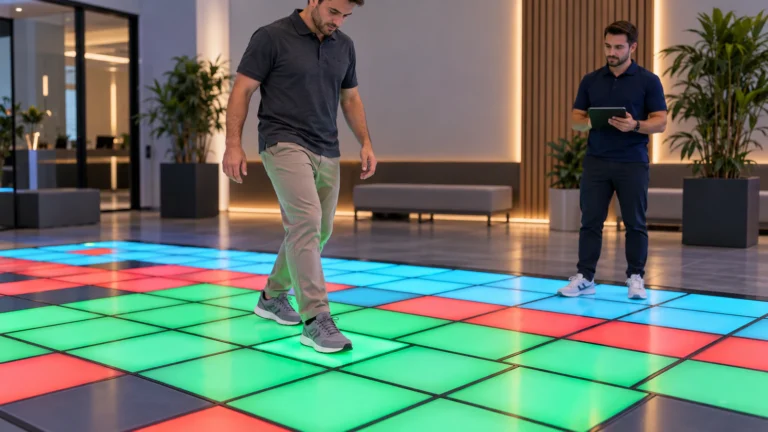
In addition, experienced installers understand how to synchronize interactive hardware with content logic. For example, an interactive floor must respond instantly and accurately to footsteps, while a video touch wall must balance touch sensitivity, visual brightness, and multi-user response. When these elements are configured by specialists, the attraction feels smooth and premium. When they are not, the result feels inconsistent.
Why Are Immersive Exhibits and Environments So Effective in Experience Parks?
Modern visitors are drawn to environments that stimulate multiple senses at once. They do not simply want to look at a display. Instead, they want to step inside a story, influence outcomes, and become part of the scene. This is why Immersive exhibits and environments have become central to new-generation park design.
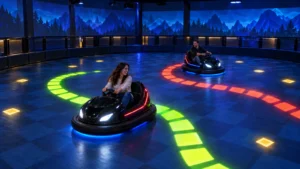
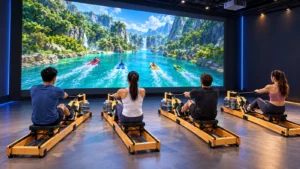
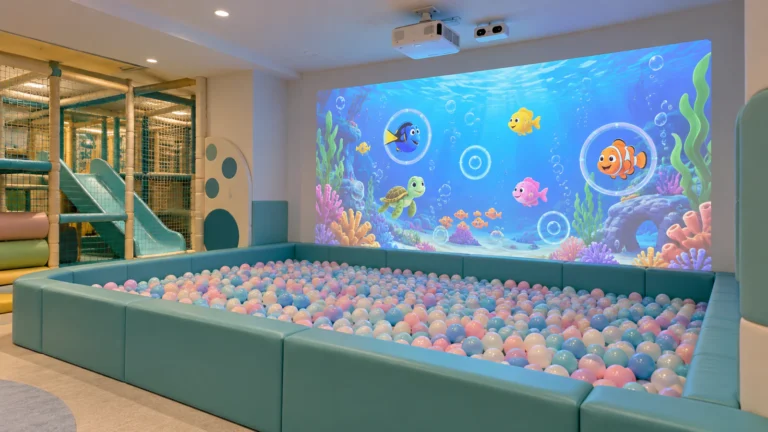
An immersive environment combines visuals, sound, interaction, theme design, and responsive content to create a strong emotional connection. For example, a jungle-themed interactive zone may use projection mapping, ambient sound, motion-triggered animal reactions, and interactive challenge game mechanics. Because the guest is surrounded by sensory input, the experience becomes more memorable.
These environments also support flexible business models. A venue can use one immersive space for family play during the day, school programs in the afternoon, and private events in the evening. With AI-assisted content switching, the same system can serve multiple target groups efficiently. Therefore, the investment becomes more versatile.
From a branding perspective, immersive exhibits increase perceived value. A strong environment can help justify a higher ticket price, improve customer satisfaction, and increase return visits. It also creates content that visitors naturally want to photograph and share. For operators searching for the best company to help them buy or order an immersive solution, this combination of function and visual impact is a major advantage.
How Can Video Touch Walls, Interactive Floors, Touch Tables, and Interactive Surfaces Be Used Strategically?
These technologies are not just flashy add-ons. When used strategically, they become the foundation of a highly engaging and commercially effective attraction layout. In fact, Video touch walls, interactive floors, touch tables, interactive surfaces can be combined to create layered visitor journeys across different age groups and play styles.
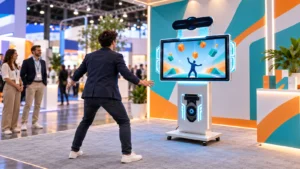
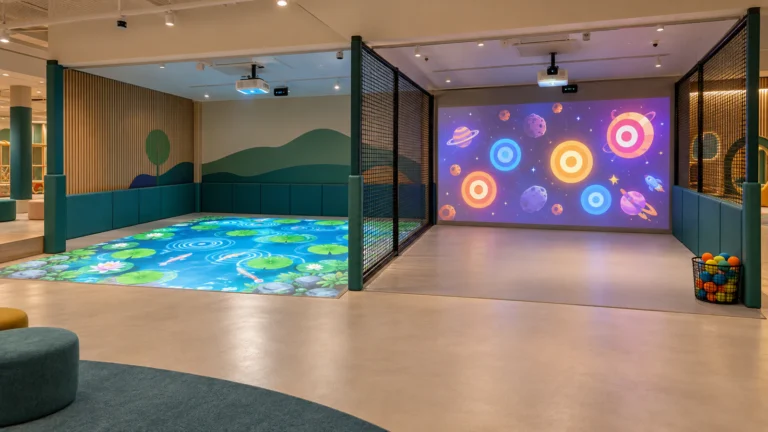
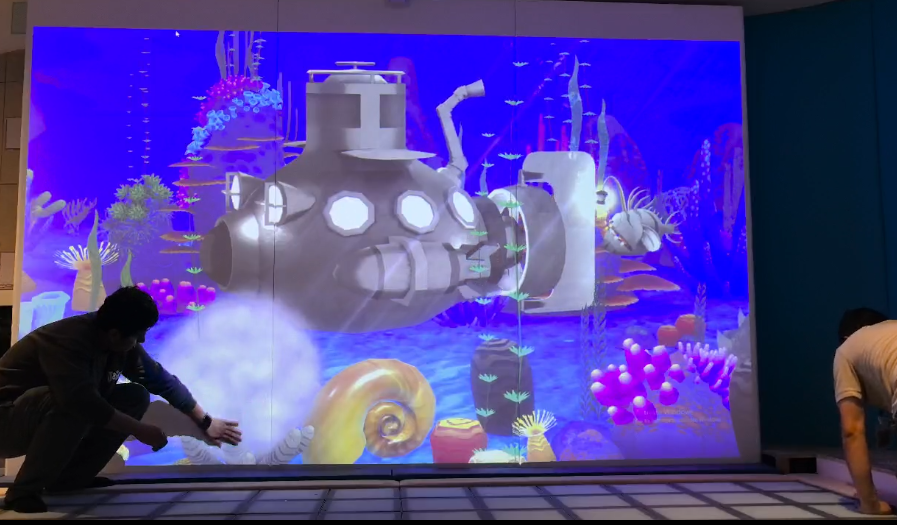
A video touch wall works well for competitive games, educational interaction, collaborative storytelling, and brand campaigns. It allows users to tap, hit, drag, or trigger effects directly on a large digital canvas. This makes it ideal for team challenges, reflex training, and interactive information displays.
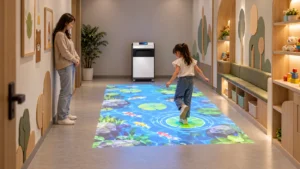
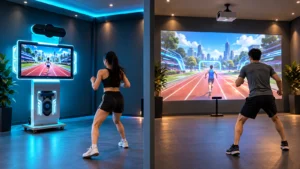
An interactive floor is powerful because it transforms movement into content. Visitors can run, jump, chase, stomp, or follow projected cues. This makes it highly suitable for children’s zones, sports-style games, themed entrances, and motion-based attraction areas. Because the floor feels physically active, it often increases dwell time and excitement.
A touch table supports detailed exploration. It is useful for museums, retail brand experiences, smart planning interfaces, and educational environments. Visitors can browse content, solve puzzles, or interact with 3D objects in a controlled and social format. This makes it especially valuable for slower-paced immersive storytelling.
Other interactive surfaces can include projection tables, smart counters, responsive walls, or custom scenic interfaces embedded into the architecture. When integrated into one park-wide system, these elements support a seamless visitor experience. Furthermore, AI can help personalize content, collect interaction insights, and improve the relevance of each zone.
What Are the Main Advantages and Challenges of Implementing an AI Interactive Park Solution?
Before making an investment decision, operators should compare the strengths and limitations of this type of project clearly. The table below provides a practical overview.
| Aspect | Advantages | Challenges |
|---|---|---|
| Visitor Engagement | Increases participation, excitement, and repeat visits | Requires strong content design to avoid repetition |
| Brand Appeal | Creates visually impressive and shareable environments | Poor execution can reduce perceived quality |
| Operational Efficiency | Centralized software and AI improve management | Staff training is needed for best performance |
| Content Flexibility | Easy to update themes, campaigns, and game modes | Ongoing content refresh may involve extra cost |
| Revenue Potential | Supports tickets, events, sponsorships, and group bookings | Initial price may be higher than static attractions |
| Space Utilization | One space can serve different audiences and functions | Layout planning must be precise |
| Data & Insights | AI helps track behavior and optimize attraction usage | Data setup must be planned responsibly |
| Competitive Positioning | Helps venues stand out with the latest and hottest concepts | Market expectations rise quickly, so upgrades matter |
How Can Onecraze Help You Launch Your Interactive Experience?
Taking the leap into digital entertainment architecture requires a partner who understands both the creative vision and the technical execution. How do you begin this journey? You start by consulting with the experts at onecraze. We manage the entire lifecycle of your AI interactive experiences park implementation solution, from initial blueprints to final launch. Our team actively collaborates with your stakeholders to ensure the final product reflects your unique brand identity.
We source the most reliable hardware, develop custom AI algorithms, and oversee the physical deployment. By choosing onecraze, you guarantee that your venue will feature the most innovative, stable, and engaging attractions on the market. Do not let your entertainment venue fall behind the curve. Visit onecrazemedia.com today, reach out to our design consultants, and discover how we can transform your space into a profitable, unforgettable digital destination.

Compared to traditional mechanical rides, digital interactive surfaces require far less physical maintenance. Primarily, you need to keep the projection surfaces and touch glass clean using approved, non-abrasive solutions. Additionally, you must schedule routine software updates and periodically calibrate the depth sensors and infrared cameras to ensure tracking remains accurate. A professional company will usually offer a service level agreement (SLA) to handle remote diagnostics and technical support.
Yes, one of the greatest advantages of an AI interactive park is its adaptability. Because the experiences are software-driven, you can buy and download the latest content, seasonal themes, or entirely new games without changing the physical hardware structure. This allows you to keep the attraction fresh and encourages guests to return frequently to experience your newest offerings.
It is a complete solution that combines hardware, software, interactive content, and installation services to build smart, immersive attraction environments. It often includes video walls, interactive floors, touch tables, sensors, and AI-based content control.