AR Sandbox Interactive Projection System Manufacturer for Educational Play Spaces
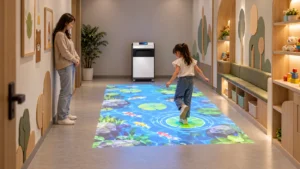
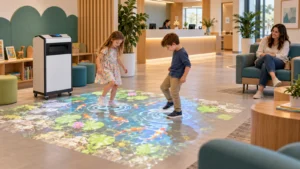
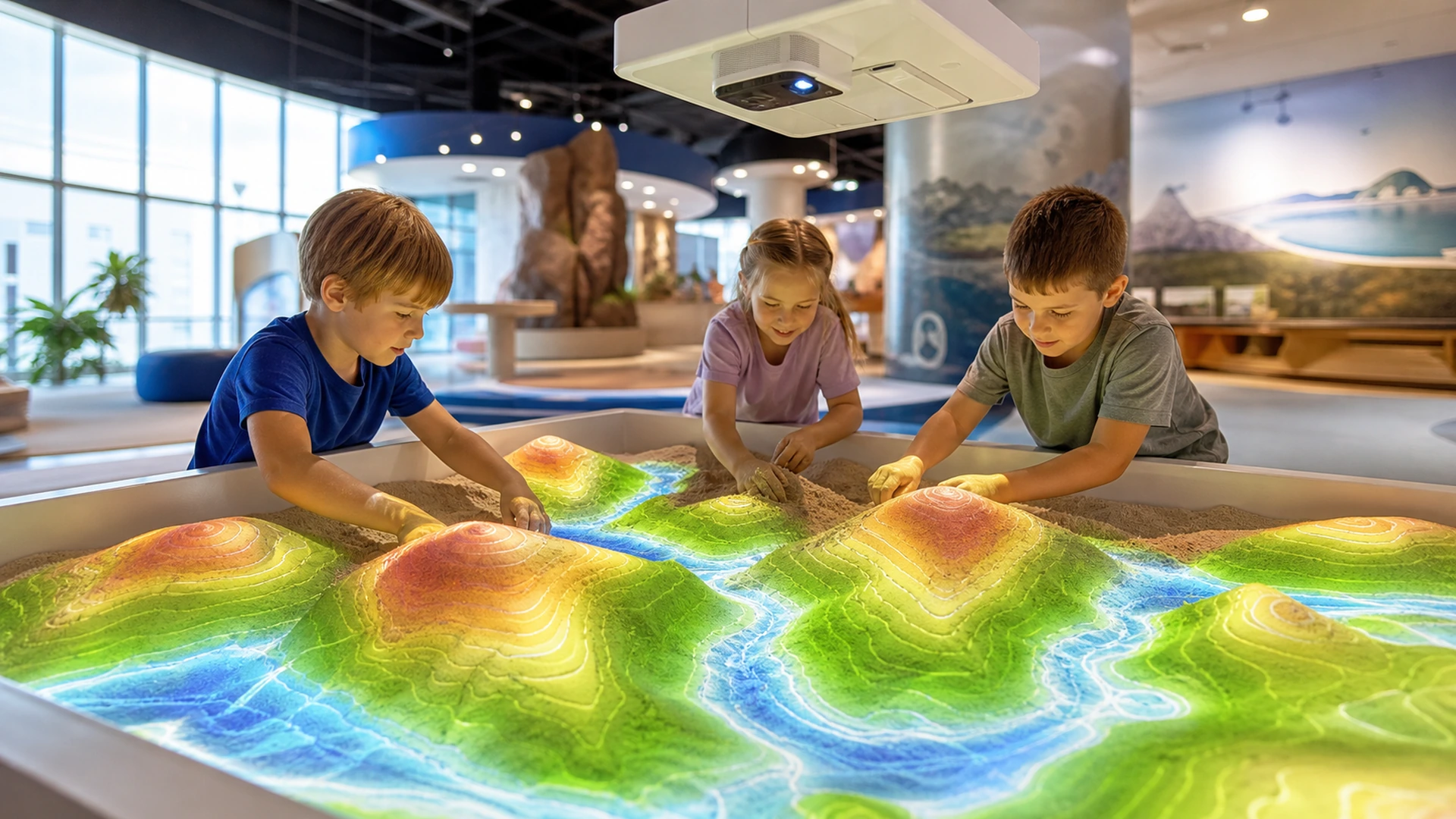
AR sandbox systems are popular because they connect physical play with digital feedback. Children can move sand with their hands, then immediately see projected changes on the same surface. This type of tangible interaction works well for geography, water flow, ocean themes, construction play, gardening games, sensory exploration and STEM education.
The educational value of AR sandbox technology is also recognized beyond the entertainment industry. The U.S. Geological Survey describes AR sandbox as an interactive educational tool for understanding mapping, topography, watersheds and natural hazards. UC Davis also documented its Augmented Reality Sandbox project, which helped make this concept widely known in museums and classrooms.
For commercial buyers, however, a DIY research-style setup is not always enough. Kids museums, schools and indoor playgrounds usually need a packaged solution that is easier to install, operate, clean and maintain. This is where a supplier like OneCraze can help convert the idea into a practical attraction.
What OneCraze Provides as an Interactive Sandbox Supplier
OneCraze can provide AR sandbox and interactive sandbox projection solutions for different venue types. Depending on the project, the solution may include the sandbox body, projector, sensing hardware, control computer, interactive software, themed game content and project support. OneCraze product options include the Best AR Sandbox Game for Kids and the AR Gardening Beach Interactive Projection Game.
| Solution module | What OneCraze provides | Why it matters for venues |
|---|---|---|
| Sandbox structure | Commercial sand table or project-specific sandbox design | Creates a stable physical base for children’s interaction |
| Projection hardware | Projector configuration and projection planning | Keeps visuals clear on the sand surface |
| Depth sensing | Sensor setup for reading sand height or interaction changes | Allows real-time response when children move the sand |
| Software system | Interactive scenes, effects and control logic | Turns the sandbox into an attraction, not only a display |
| Themed content | Ocean, terrain, gardening, volcano, water or custom themes | Matches the venue concept and target age group |
| Installation support | Layout advice, calibration guidance and operation training | Helps staff launch and maintain the system more confidently |
| After-sales service | Troubleshooting, content advice and support communication | Supports long-term commercial use |
This full-system approach is important because an AR sandbox depends on alignment. The sensor, projector and software must match the sandbox size and position. If one part is poorly configured, the interaction can feel inaccurate or unstable.
Custom AR Sandbox Solutions for Different Venues
Different venues need different sandbox experiences. A science center may want topographic colors, rain simulation and watershed education. A children’s museum may prefer ocean creatures, volcanoes or construction themes. An indoor playground may need brighter visuals, simple rules and durable operation. A mall activity zone may prefer a compact attraction that attracts families quickly.
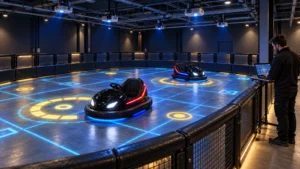
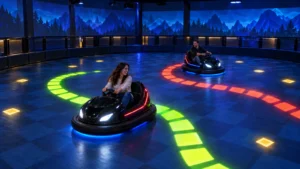
OneCraze can help adapt the system direction based on venue type, target age group and project goal. For example, a school STEM room may use the sandbox for hands-on geography and earth science learning. A family entertainment center may use it as a calm interactive zone beside more active attractions such as interactive slide projection or interactive climbing wall games. A museum may combine it with broader interactive projection for exhibitions.
How an AR Sandbox Projection System Works
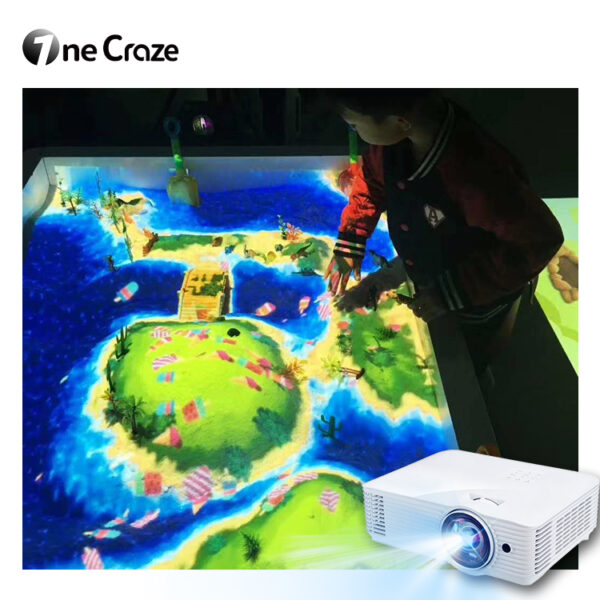
An AR sandbox projection system usually works through four layers. First, children shape the real sand by hand. Second, a depth sensor reads the height and surface changes. Third, the software converts the sensor data into visual logic. Finally, the projector overlays the updated visuals back onto the sand.
This loop creates a simple but powerful experience: touch the sand, change the digital world. Depending on the software content, the system can show terrain colors, water flow, islands, beaches, gardens, animals, volcano effects or creative game scenes. The key is real-time response. If the visual feedback is fast and clear, children understand the connection between their hands and the projected world.
Why Choose a Manufacturer Instead of a DIY AR Sandbox?
A manufacturer or solution provider can help with hardware selection, sandbox structure, projection brightness, sensor placement, cable management, calibration, software content and long-term service. This reduces the pressure on the buyer to integrate everything alone.
| DIY AR sandbox approach | OneCraze commercial solution approach |
|---|---|
| Buyer sources and integrates hardware alone | OneCraze provides a project-ready hardware and software direction |
| Setup may require technical experimentation | Installation and calibration guidance can reduce trial-and-error |
| Content may be limited to basic terrain visualization | Commercial themes can include education, ocean, gardening or custom scenes |
| Maintenance depends on the buyer’s technical skill | Supplier support helps with operation and troubleshooting |
| Better for labs or hobby projects | Better for museums, schools, indoor playgrounds and FECs |
Educational and Commercial Value of AR Sandbox Attractions
AR sandbox attractions work because they combine touch, movement, visual feedback and discovery. Children are not only watching a screen. They are shaping the environment and seeing the result immediately. That makes the attraction suitable for both learning and entertainment.
For educational venues, the sandbox can support geography, water systems, landforms, environmental science and creative exploration. commercial play venues, it can provide a quieter but highly visual activity zone that balances more active attractions. For malls and events, it can create a family-friendly installation with strong visual appeal and short learning time.
Operators can evaluate value through dwell time, repeat interaction, group participation, parent feedback, class usage, event traffic and content refresh opportunities. If the system is positioned well, it can become both an attraction and an educational storytelling tool.
Build a Custom AR Sandbox Projection Attraction
If you are planning an AR sandbox interactive projection system for a kids museum, science center, school, indoor playground, FEC or mall activity zone, OneCraze can help you design a custom sandbox projection solution with suitable hardware, software, content and project support.
Start here: view the OneCraze AR Sandbox Game for Kids or contact OneCraze for a custom AR sandbox recommendation.
It is a system that uses real sand, a depth sensor, software and a projector to create interactive visuals on the sand surface. When users move the sand, the projected scene changes in real time.
Yes. AR sandbox systems are well suited for hands-on learning, earth science, water flow, terrain, ocean themes and creative play. They work especially well when children can explore freely with simple guidance.
Send your venue type, available space, ceiling height, lighting conditions, target age group, preferred sandbox size, expected daily usage and any theme requirements. Photos and drawings are very helpful.