What Interactive Floor Projector Did We Test?
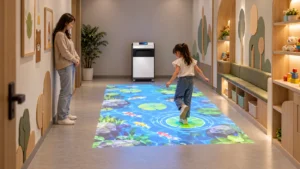
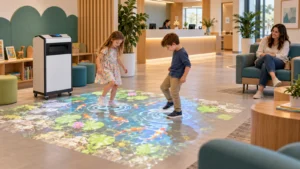
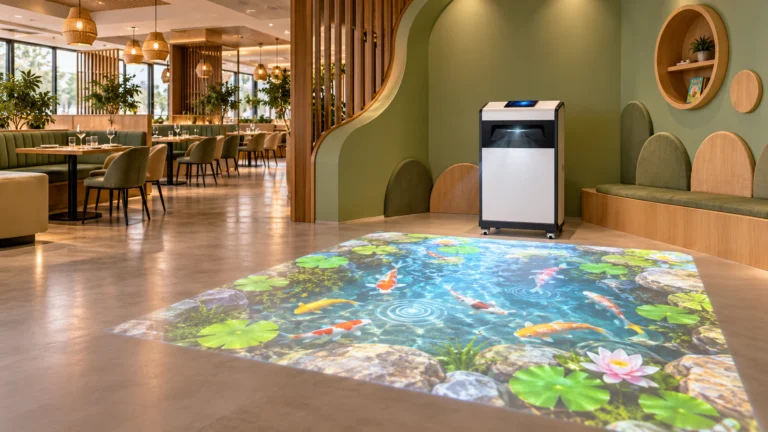
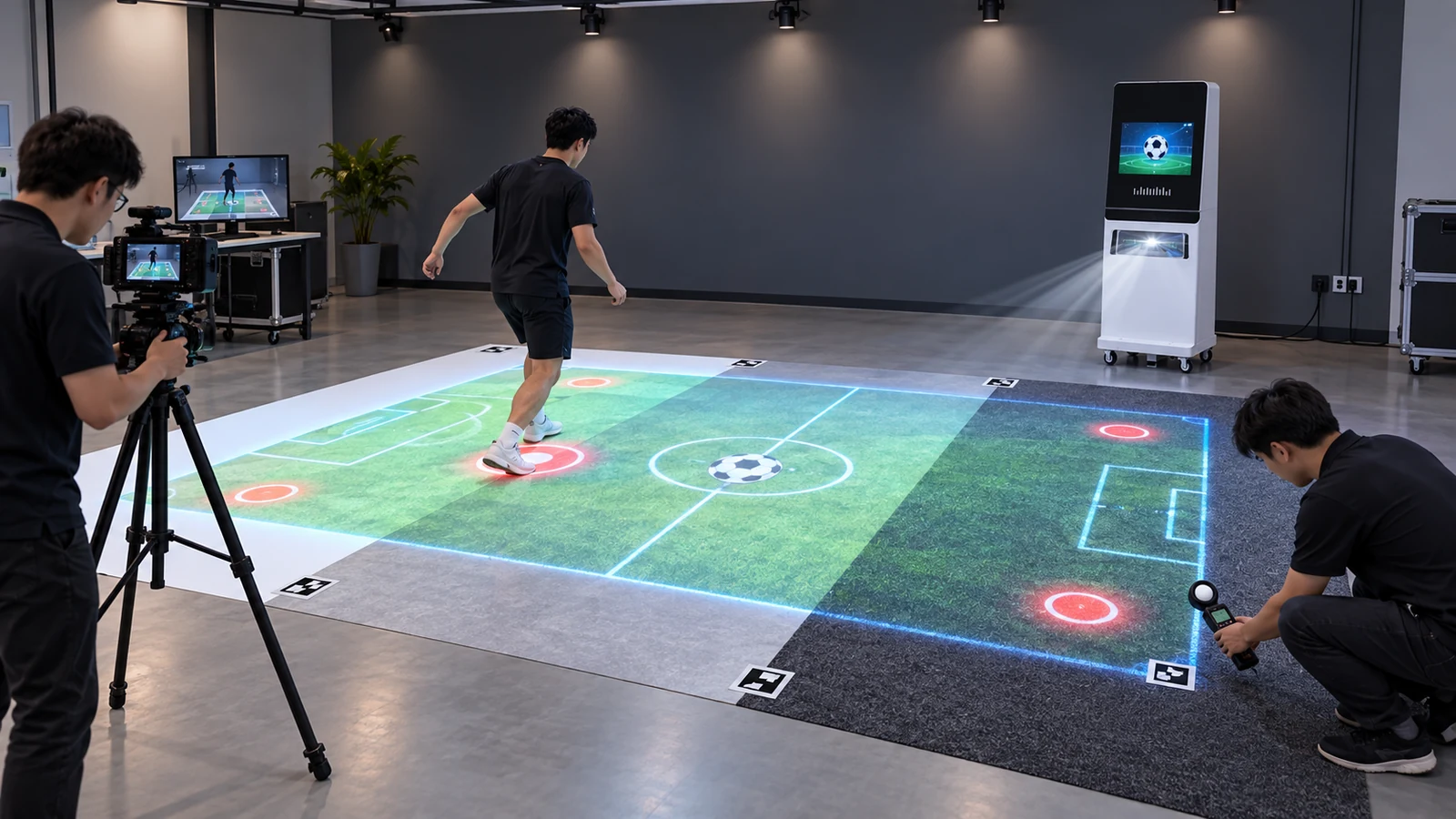
We used a production [[MODEL NAME AND VERSION]] rather than a specially prepared demonstration unit. The current OneCraze SAIO Interactive Floor Mapping All-in-One combines a projector, 3D laser radar, computer, audio and control display in one cabinet. Its public page lists a 1.9 × 3.5 m floor image, a 0.235:1 throw ratio, 50+ games and support for one to six players.
| Test item | Recorded configuration |
|---|---|
| Test date and location | [[DATE]], [[FACTORY OR TEST-ROOM LOCATION]] |
| Test engineer | [[FULL NAME, JOB TITLE AND EXPERIENCE]] |
| Technical reviewer | [[FULL NAME AND JOB TITLE]] |
| OneCraze system model and serial number | [[MODEL]], [[SERIAL NUMBER]] |
| Projector manufacturer and model | [[PROJECTOR BRAND AND MODEL]] |
| Rated brightness and measurement standard | [[VALUE AND STANDARD, FOR EXAMPLE ISO/IEC 21118]] |
| Native resolution and throw ratio | [[RESOLUTION]], [[THROW RATIO]] |
| Sensor model and firmware | [[SENSOR]], [[FIRMWARE VERSION]] |
| Game software and build | [[GAME NAME]], [[SOFTWARE VERSION]] |
| Projected image size | [[WIDTH × DEPTH]] m |
| Machine position and installation height | [[DISTANCE/HEIGHT AND DIAGRAM LINK]] |
| Test surfaces | Matte white vinyl; light-gray [[LVT/RUBBER]]; dark short-pile carpet |
| Ambient-light meter | [[MANUFACTURER, MODEL, CALIBRATION DATE]] |
| Power meter | [[MANUFACTURER AND MODEL]] |
| Latency recording equipment | [[CAMERA MODEL AND FRAME RATE OR OTHER METHOD]] |
| Test video and raw data | [[FULL VIDEO URL]]; [[CSV DOWNLOAD URL]] |
The projector brightness reference should use the rating published for the exact model. ISO/IEC 21118:2020 defines projector information and measurement requirements. The test team can also use the AVIXA Image System Contrast Ratio standard as a technical reference when defining visible image performance. However, this OneCraze venue test is not a certification under either standard unless a qualified party completes the required procedure and documentation.
What Were the Results on White Vinyl, Gray Flooring and Dark Carpet?
The table below must report every tested condition, including those that failed the acceptance limits. Do not replace measured values with “good,” “excellent” or other unsupported marketing language.
| Surface and ambient light | Actual average lux | Target recognition | Tracking success | False triggers | Median / P95 response | Commercially usable? |
|---|---|---|---|---|---|---|
| Matte white vinyl — 50 lux | [[ ]] | [[ ]]% | [[ ]]% | [[ ]] | [[ ]]/[[ ]] ms | [[PASS/FAIL]] |
| Matte white vinyl — 100 lux | [[ ]] | [[ ]]% | [[ ]]% | [[ ]] | [[ ]]/[[ ]] ms | [[PASS/FAIL]] |
| Matte white vinyl — 200 lux | [[ ]] | [[ ]]% | [[ ]]% | [[ ]] | [[ ]]/[[ ]] ms | [[PASS/FAIL]] |
| Matte white vinyl — 300 lux | [[ ]] | [[ ]]% | [[ ]]% | [[ ]] | [[ ]]/[[ ]] ms | [[PASS/FAIL]] |
| Matte white vinyl — 500 lux | [[ ]] | [[ ]]% | [[ ]]% | [[ ]] | [[ ]]/[[ ]] ms | [[PASS/FAIL]] |
| Light-gray flooring — 50 lux | [[ ]] | [[ ]]% | [[ ]]% | [[ ]] | [[ ]]/[[ ]] ms | [[PASS/FAIL]] |
| Light-gray flooring — 100 lux | [[ ]] | [[ ]]% | [[ ]]% | [[ ]] | [[ ]]/[[ ]] ms | [[PASS/FAIL]] |
| Light-gray flooring — 200 lux | [[ ]] | [[ ]]% | [[ ]]% | [[ ]] | [[ ]]/[[ ]] ms | [[PASS/FAIL]] |
| Light-gray flooring — 300 lux | [[ ]] | [[ ]]% | [[ ]]% | [[ ]] | [[ ]]/[[ ]] ms | [[PASS/FAIL]] |
| Light-gray flooring — 500 lux | [[ ]] | [[ ]]% | [[ ]]% | [[ ]] | [[ ]]/[[ ]] ms | [[PASS/FAIL]] |
| Dark short-pile carpet — 50 lux | [[ ]] | [[ ]]% | [[ ]]% | [[ ]] | [[ ]]/[[ ]] ms | [[PASS/FAIL]] |
| Dark short-pile carpet — 100 lux | [[ ]] | [[ ]]% | [[ ]]% | [[ ]] | [[ ]]/[[ ]] ms | [[PASS/FAIL]] |
| Dark short-pile carpet — 200 lux | [[ ]] | [[ ]]% | [[ ]]% | [[ ]] | [[ ]]/[[ ]] ms | [[PASS/FAIL]] |
| Dark short-pile carpet — 300 lux | [[ ]] | [[ ]]% | [[ ]]% | [[ ]] | [[ ]]/[[ ]] ms | [[PASS/FAIL]] |
| Dark short-pile carpet — 500 lux | [[ ]] | [[ ]]% | [[ ]]% | [[ ]] | [[ ]]/[[ ]] ms | [[PASS/FAIL]] |
Result interpretation
[[WRITE 150–250 WORDS AFTER THE TEST. IDENTIFY THE HIGHEST PASSING LUX LEVEL FOR EACH SURFACE, THE FIRST FAILURE MODE, AND WHETHER TRACKING OR VISIBILITY CAUSED THE FAILURE. INCLUDE NUMBERS AND LINK EACH CLAIM TO THE RAW ROW OR VIDEO TIMESTAMP.]]
The earlier OneCraze guide to interactive projection on carpet, tile and dark floors explains why a light matte surface usually preserves more contrast. This report must replace that general expectation with measured limits for the tested system.

Did Ambient Light Affect Tracking and Response Time?
Projection visibility and motion tracking are different parts of the system. A laser radar may continue detecting movement when ambient light makes the game image difficult to read. Conversely, a visually clear image does not prove that the sensor covers every corner accurately.
The OneCraze comparison of LiDAR, infrared cameras and depth sensors explains the main sensing principles. This report should add measured results for the exact sensor installed in the tested machine.
The test should therefore report tracking by location, not only as one overall percentage. Publish the center, four edge and four corner results in the downloadable raw dataset. Identify any systematic weak zone and show the sensor position on a dimensioned diagram.
What Did the Continuous-Operation Test Show?
After completing the surface matrix, run the system continuously for [[2/4/8]] hours using an automated game loop and scheduled participant sessions. Record power draw at startup, idle and active play. Measure projector exhaust temperature, cabinet temperature and room temperature at fixed intervals.
The report should disclose:
- Startup-to-ready time: [[TIME]]
- Calibration time from a known machine position: [[TIME]]
- Idle power: [[WATTS]]
- Average active power: [[WATTS]]
- Recorded peak power: [[WATTS]]
- Test duration: [[HOURS]]
- Sessions or automated cycles completed: [[NUMBER]]
- Software crashes: [[NUMBER]]
- Tracking or projector interruptions: [[NUMBER]]
- Maximum measured cabinet and exhaust temperatures: [[VALUES AND LOCATIONS]]
- Recovery time after a controlled restart: [[TIME]]
Include every interruption in the timeline. If the system completes the test without a failure, state the tested duration rather than claiming unlimited continuous operation. Buyers who need a broader pre-shipment procedure can use the OneCraze interactive projection factory acceptance test.
What Do the Results Mean for Commercial Buyers?
The final recommendation should identify suitable and unsuitable conditions without turning one test into a universal rule. It should answer:
- Which tested surface delivered the highest usable ambient-light limit?
- At what lux level did target recognition fall below the acceptance threshold?
- Did dark carpet require a smaller image, lower light or a projection mat?
- Did tracking performance change, or did only visual performance change?
- Which room photos and measurements should a buyer send before quotation?
- When should OneCraze recommend a brighter projector instead of the tested configuration?
For a shopping-mall project, compare the measured limits with the venue’s normal lighting rather than testing after stores close. The OneCraze guide to a 4,000-lumen interactive floor projector for shopping malls should link to this report and replace general brightness recommendations with the verified findings.
Similarly, image size changes brightness on the floor. A 4,000-lumen unit used for a compact image cannot automatically support a much larger attraction under the same light. Buyers planning a larger system should review the interactive floor projection guide for FECs and request a full-size test with the ordered projector and surface.
When comparing alternative projector models, buyers can also use the OneCraze projection-mapping projector buying guide and the quotation comparison checklist to keep brightness, lens, image size, warranty and installation scope aligned.
Under the tested conditions, [[INSERT DIRECT ANSWER WITH SURFACE, IMAGE SIZE AND MAXIMUM PASSING LUX]]. A lumen figure alone is not enough because image size, ambient light, floor color and game graphics change the visible result.