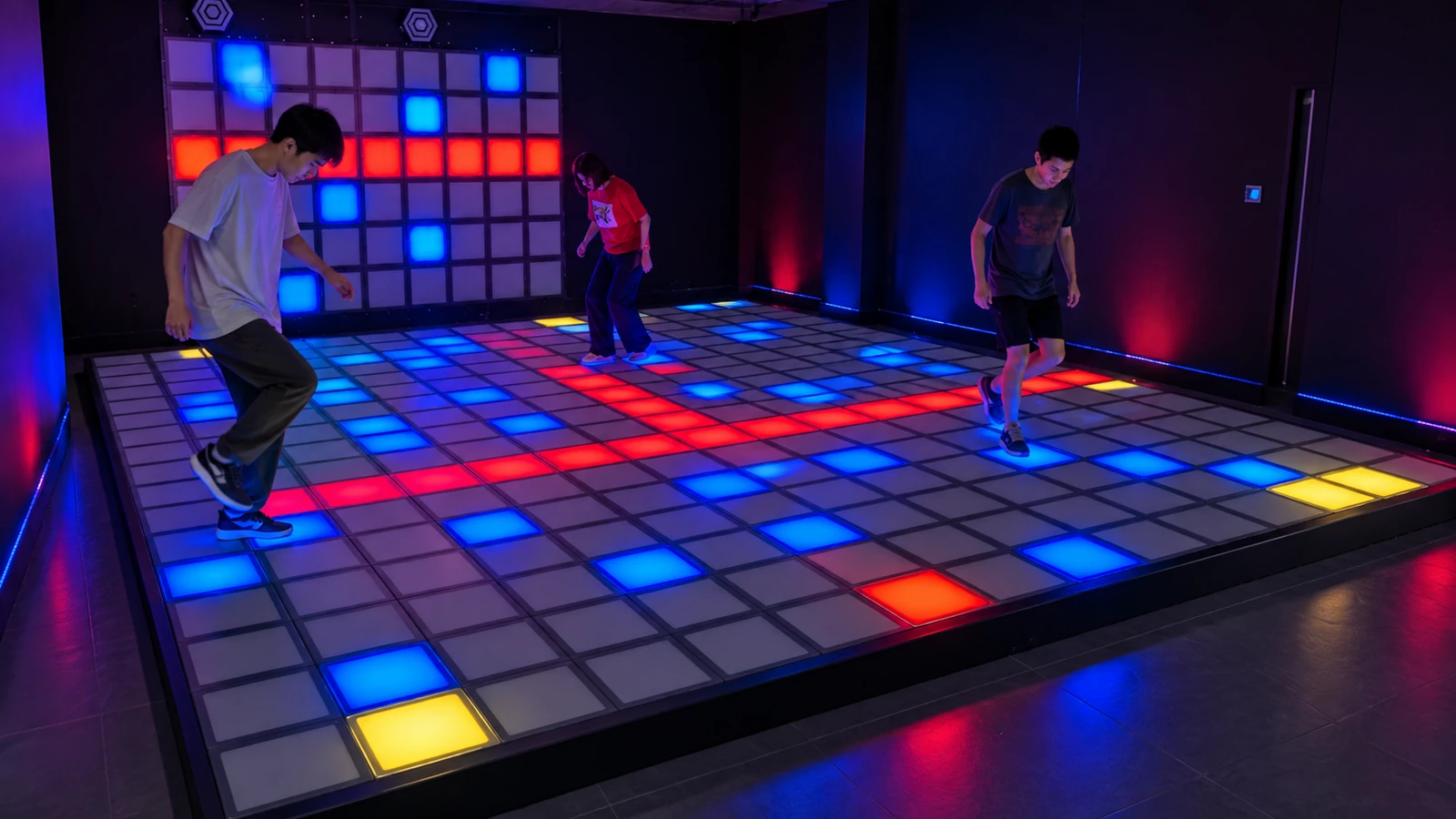
What Is an Interactive Hopscotch LED Floor Game?
Turn a familiar jumping activity into a programmable challenge
In a traditional hopscotch game, players follow a fixed sequence painted on the floor. In contrast, an interactive LED system changes the route while the player moves.
First, the software lights the starting tile. Next, it creates a sequence of safe squares, numbered positions, colors, or symbols. The player must then jump onto the correct tiles while avoiding incorrect or dangerous zones.
The system detects every step and updates the game immediately. As a result, it can record time, accuracy, mistakes, levels, and final scores.
OneCraze’s Activate Game Interactive LED Jumping Grid provides a commercial example of this format for malls, entertainment centers, exhibitions, and activity venues.
What Equipment Does the System Need?
Connect the LED floor, software, controls, and scoring
A commercial interactive hopscotch system normally requires:
- Pressure-sensitive RGB LED floor tiles
- Tile control and communication modules
- Game computer
- Interactive game software
- Touchscreen or operator interface
- Speakers and sound effects
- Score and timer display
- Power and network equipment
- Floor frame and edge protection
- Optional access control or leaderboard
The OneCraze jumping-grid product uses modular 30 × 30 cm induction floor tiles. However, buyers should confirm the final tile dimensions, quantity, materials, controller, software, and warranty in the quotation.
Operators who want several attractions can also review the complete OneCraze Activate LED game solutions and combine the jumping floor with reaction walls or other active challenges.
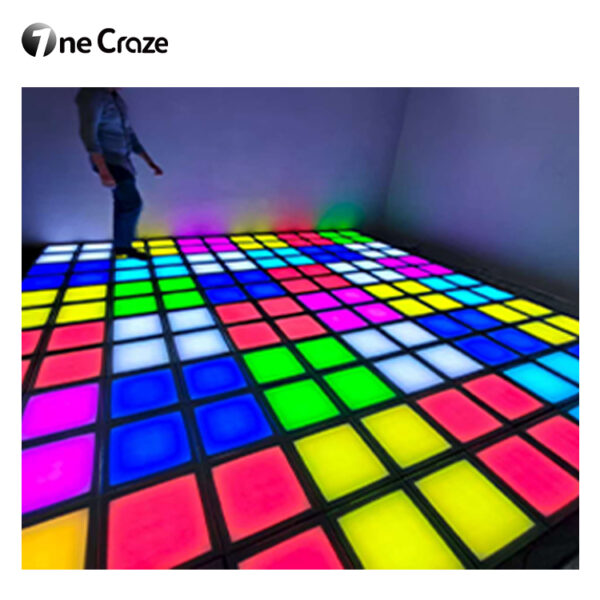
Which Game Modes Can an Interactive Hopscotch Floor Offer?
Use one floor for jumping, memory, speed, and teamwork
The software determines whether the installation feels like a simple children’s activity or a replayable commercial attraction.
Popular game directions include:
- Classic sequence: Jump through numbered or illuminated tiles in the correct order.
- Color path: Follow one assigned color while other tiles change.
- Memory grid: Study a short pattern and repeat it from memory.
- Timed challenge: Complete the route before the countdown ends.
- Avoid the danger tile: Move across safe squares without touching red or forbidden zones.
- Team relay: Players complete sections of the route and combine their results.
- Reaction mode: Jump quickly when random tiles illuminate.
- Progressive difficulty: Increase speed, route length, or pattern complexity after each level.
Is an LED Hopscotch Floor Better Than Floor Projection?
Choose the interaction technology that fits the venue
Both systems can create digital hopscotch games, but they use different display and detection methods.
| Feature | Interactive LED floor | Floor projection system |
|---|---|---|
| Display | Light inside physical tiles | Projected image on a floor surface |
| Detection | Tile pressure or touch sensing | Camera, radar, LiDAR, or motion sensor |
| Image style | Bright grid colors and symbols | Detailed animation and themed graphics |
| Installation | Modular floor structure | Ceiling-mounted or mobile projector |
| Best use | Fast jumping and reaction games | Animated educational or story-based games |
| Main planning issue | Floor level and tile access | Lighting, shadows, and mounting distance |
An LED grid often suits fast, step-based competition because each physical tile acts as both the display and the controller. Meanwhile, projection can provide more detailed images and animated scenes.
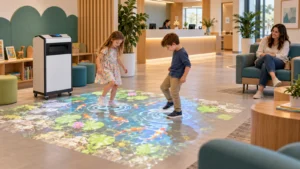
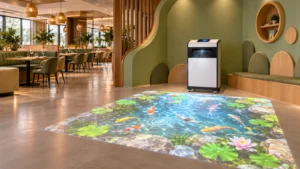
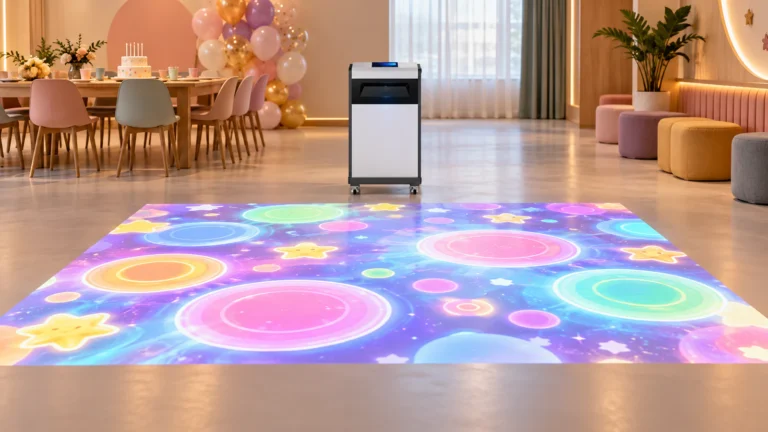
OneCraze also supplies an interactive hopscotch floor projection game for schools, malls, daycare centers, and indoor play venues. Therefore, buyers can choose LED tiles or projection according to the desired experience.
How Should You Plan the Room?
Protect player movement, visibility, and maintenance access
Start with the clear playable floor area. Then, add space for entry, exit, waiting players, spectators, the control screen, staff, and equipment access.
The plan should confirm:
- Room length and width
- Floor level and structural condition
- Tile layout and border treatment
- Player age and expected group size
- Entrance and exit positions
- Queue and spectator areas
- Power and network routes
- Lighting and sound control
- Emergency circulation
- Maintenance access beneath or around the tiles
What Should a Manufacturer and Solution Provider Supply?
Purchase a complete working attraction instead of isolated tiles
A professional interactive LED floor manufacturer should provide more than tile modules. The complete scope should connect hardware, control systems, software, game content, installation, testing, and support.
OneCraze is an interactive LED floor game manufacturer and active game room solution provider. Depending on the project, its scope can include:
- LED floor equipment
- Control computer and touchscreen
- Game software and scoring
- Customized game modes
- Room layout suggestions
- OEM and ODM branding
- Installation guidance
- System testing
- Software support
- Spare-parts recommendations
Buyers can also review OneCraze’s interactive LED floor and wall manufacturer guide before comparing complete proposals.
Finally, send the manufacturer the room dimensions, site photos, target players, required game modes, preferred capacity, installation country, and planned opening date. This information helps the solution provider prepare a more accurate layout and equipment proposal.
To request a customized jumping-grid configuration, contact OneCraze with your project details.
Yes. The manufacturer can configure individual challenges, team relays, cooperative paths, timed competitions, and other multiplayer modes. Capacity depends on the floor size, game rules, and required player separation.
Yes. Depending on the software package, buyers may customize colors, symbols, difficulty, language, scoring, sound, branding, and game rules. The quotation should clearly identify which changes are included.