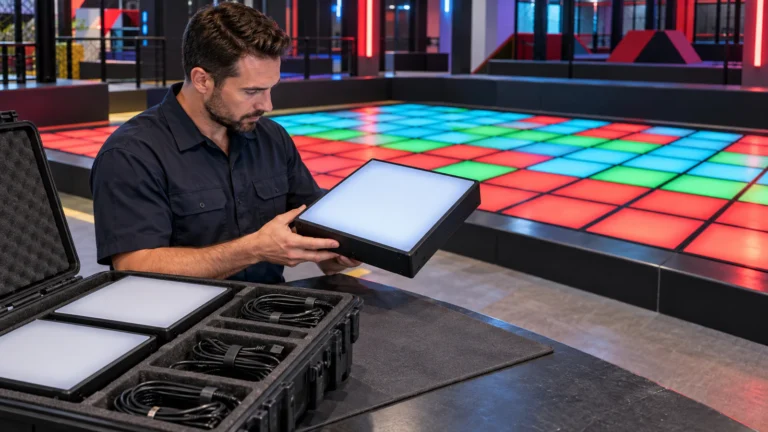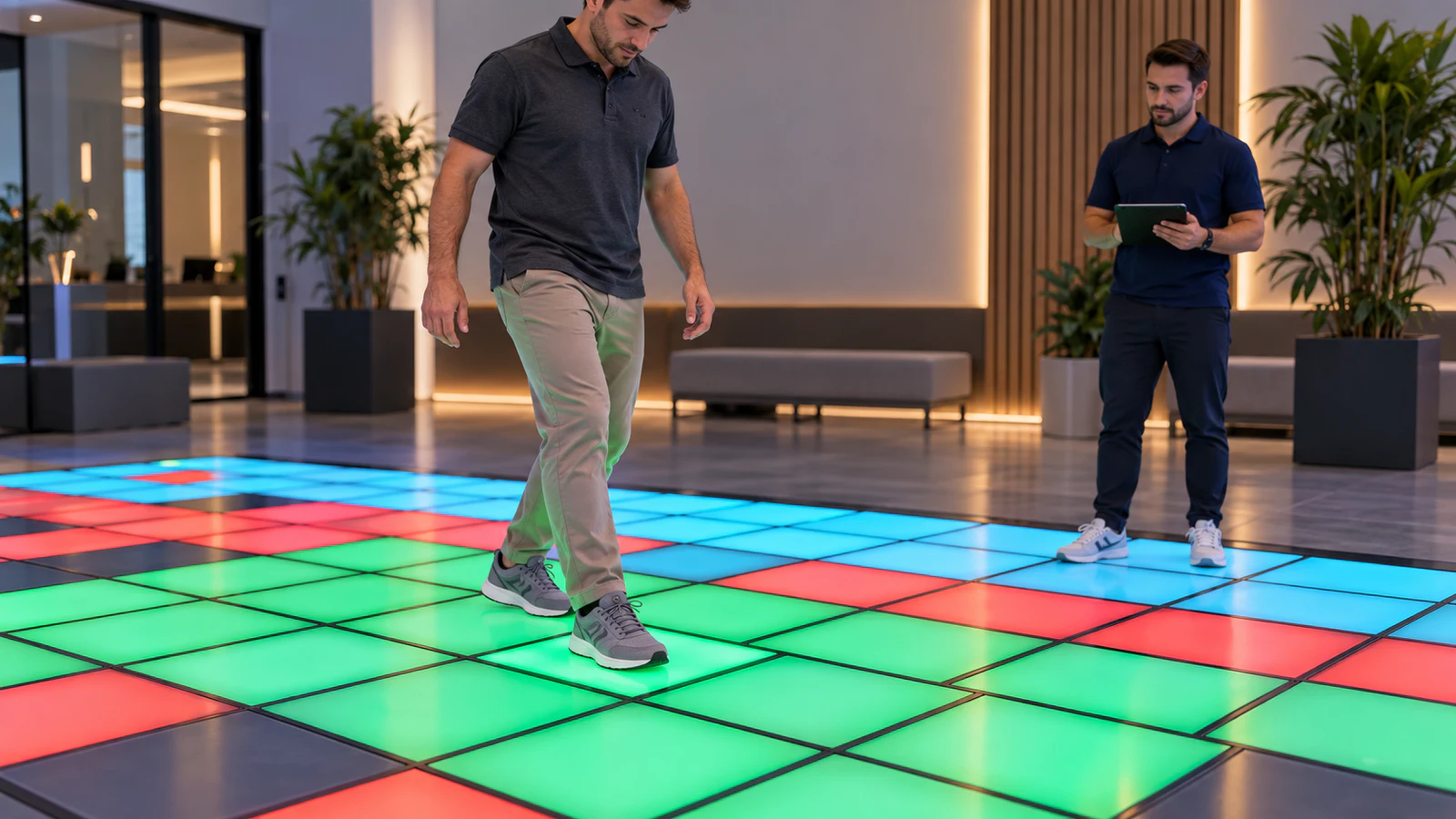
The OneCraze Lava LED Floor Game currently lists 300 × 300 × 75 mm tiles and one-to-six-player operation. Those specifications help define the product, but they do not establish a minimum detectable player weight or a measured response time. Request configuration-specific evidence before setting your purchasing criteria.
Does a Tile Lighting Up Mean the Step Was Scored Correctly?
Not necessarily. A tile may illuminate because the game has assigned it a color, because a sensor detected contact or because the software accepted a scoring action. These are different events.
First, ask the supplier to explain the selected game’s rules. Identify which action should score, which should trigger a penalty and which should produce no change. Then compare the player’s action with the system’s response.
Where available, request a diagnostic view showing the detected tile separately from the score display. Otherwise, ask for another documented method of verifying input. A continuous video showing the foot, tile and game response is more useful than isolated close-ups.
Also confirm the actual sensing method in writing. Labels such as “touch,” “pressure” or “capacitive” are not interchangeable, and a control-screen specification does not identify the floor sensor. Evaluate the complete system rather than assuming one technology guarantees better gameplay.
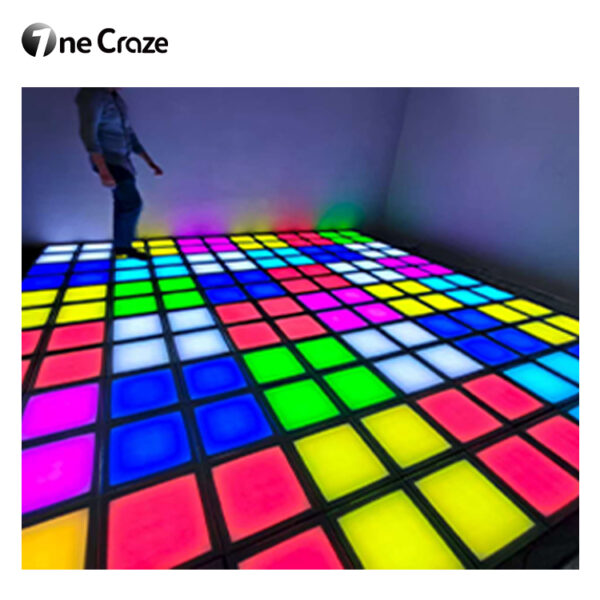
How Should Buyers Test Light Steps, Footwear and Tile Edges?
Use ordinary actions allowed by the manufacturer. Do not ask participants to stomp harder to conceal missed detection or perform extreme movements to challenge the hardware.
Include checks at:
- The center of a tile during a normal step.
- Positions near its edges and corners.
- Adjacent tiles when a foot naturally overlaps the boundary.
- Representative locations across the assembled grid.
Record the footwear and test positions so the comparison remains meaningful. If socks or particular shoes are not approved, do not present them as required operating conditions.
Installation matters too. Use the proposed supporting structure and finished surface, not only a loose demonstration tile. The raised-floor and edge-ramp guide explains the installation details buyers should coordinate before commissioning.
Can the System Distinguish Standing Still From Repeated Steps?
A game that rewards occupying a safe tile needs different behavior from one that counts repeated visits. Consequently, the demonstration should show what happens when a player steps on, stays in place, steps off and returns.
Ask whether the system reports initial contact, continued occupancy and release, or another defined input pattern. Then confirm how the game uses those signals. A sensor may detect an action while the software intentionally ignores it during a cooldown or animation.
Repeat the sequence at an agreed pace within normal gameplay. Look for missed releases, duplicate points or responses that remain active after the player leaves. Request an explanation before classifying an unexpected result as a hardware fault.
If sensitivity is adjustable, record the setting used. Ask who can change it, how the approved configuration is restored and whether increasing sensitivity creates unintended triggers elsewhere. Avoid accepting a demonstration that depends on undocumented adjustments between attempts.
What Does Multiplayer Detection Actually Prove?
Detecting several occupied tiles does not automatically identify individual players. Team scoring may work without personal tracking, while individual scoring may require assigned zones, turns or another identification method.
Request the precise rules for your intended mode. Then demonstrate simultaneous actions in separate parts of the grid and ordinary movement across neighboring tiles. Check whether points and penalties follow those rules consistently.
Do not exceed the approved player count to test the system. The usable room also needs circulation, supervision and suitable movement space; the active game center layout guide helps buyers plan beyond the illuminated grid.
For a self-service LED floor game system, also confirm how staff respond to a reported scoring problem. Automatic session start does not remove the need for fault reporting, operator intervention and a recovery procedure.
What Should a Pre-Purchase Step Detection Test Record?
Agree on the game version, settings, participants, footwear, repetitions and acceptance criteria before testing. There is no universal pass rate or latency limit that this guide can assign to every product.
Use the following checklist to request comparable evidence from suppliers:
| Test | What to observe | What to record |
|---|---|---|
| Normal center step | Expected input and game response | Attempts, accepted actions and missed inputs |
| Edge and corner contact | Behavior near tile boundaries | Position tested and tiles reported |
| Sustained contact | Occupancy behavior under the selected rule | Hold duration and expected versus actual result |
| Step off and return | Release and repeat-trigger behavior | Sequence, pace and duplicate or missing responses |
| Simultaneous players | Correct handling of concurrent actions | Participant count, positions and scoring rule |
| Empty-grid observation | Unintended activity without players | Observation period and unexplained triggers |
Include this evidence in the factory acceptance test plan and repeat relevant checks after installation. Where a specific tile needs service, follow the model’s approved procedure; the tile replacement and spare-parts guide covers the purchasing questions behind that process.
Finally, attach the agreed test criteria to the order. Use the same scope-first approach described in the equipment quotation comparison guide, so demonstrations and delivered equipment refer to the same configuration.
No single value applies to all designs. Ask for the exact model’s operating limits and evidence relevant to your intended users. Maximum structural load is not a minimum detection threshold.
Not necessarily. Evaluate successful detection and unintended triggers together. Use manufacturer-approved settings and preserve a record of the accepted configuration.
Not from tile activation alone. Confirm whether the game uses team areas, turns, additional tracking or another method before promising individual scoring.