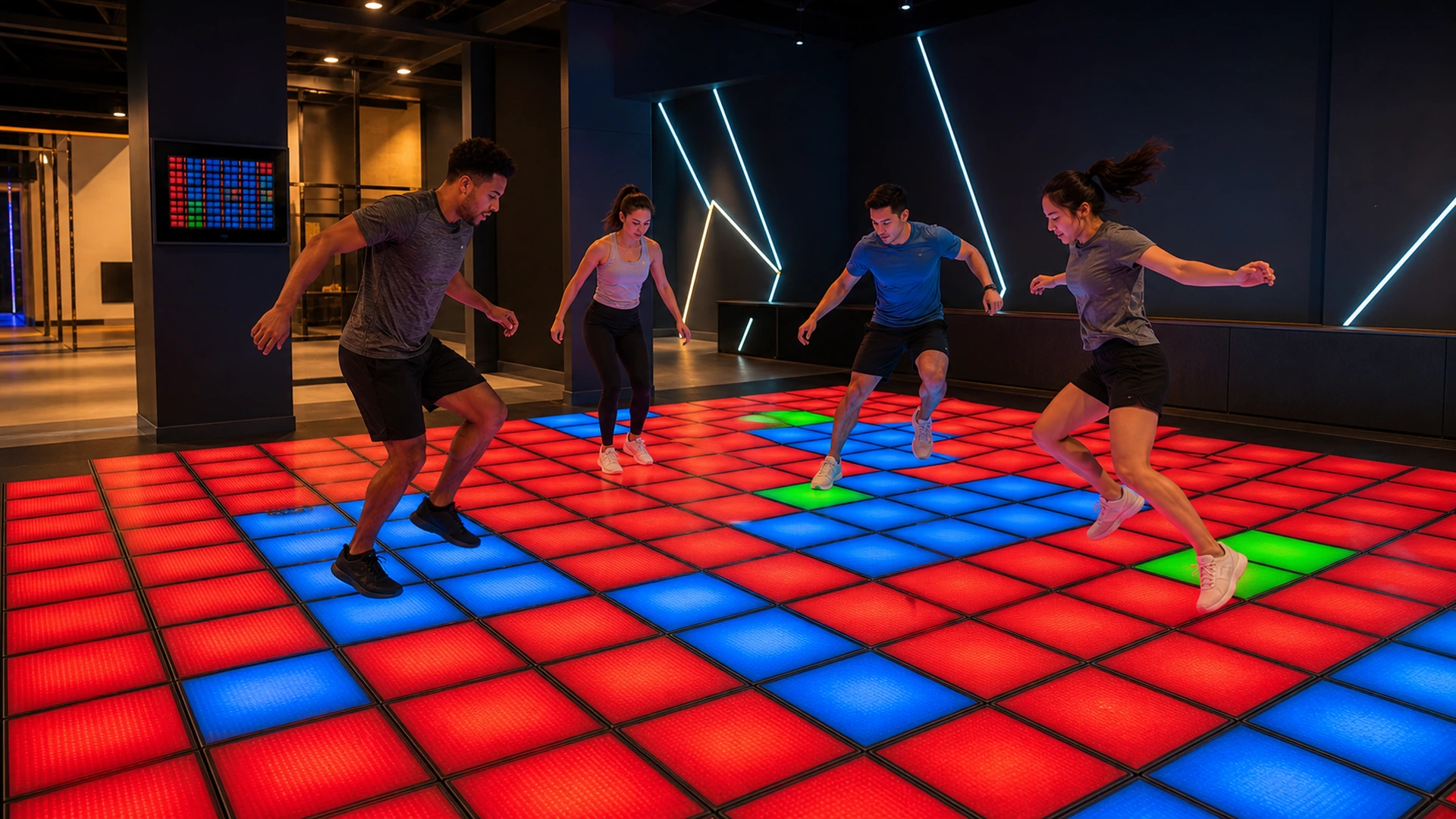
What Is an Interactive Floor Is Lava Game, and How Does It Work?
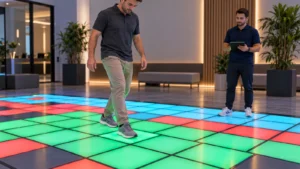
The LED grid acts as both the screen and the controller. Each floor tile changes color and detects when a player steps on it. The control system compares that input with the current game rules, then updates the score, sound and next tile pattern in real time.
A typical lava challenge uses three easy-to-understand color roles:
- Red tiles represent lava or another danger zone that players must avoid.
- Blue, white or another target color marks tiles that players must step on to score.
- Green tiles form temporary safe zones, starting positions or checkpoints.
The software can change these roles between games. For example, a memory mode may briefly show a safe route and then ask players to repeat it. A reaction game can light targets in rapid sequence, while a team mode can divide the grid into cooperative objectives. Therefore, the same room can serve young families during the day, birthday groups on weekends and adults during team-building sessions.
The OneCraze Activate Lava LED Floor Game currently uses 300 × 300 × 75 mm capacitive tiles and lists support for one to six players. The product page also lists four game modes, up to 24 levels, continuing software updates, a three-year warranty and lifetime software support. The final order should still confirm the exact bill of materials, software version and project-specific warranty terms.
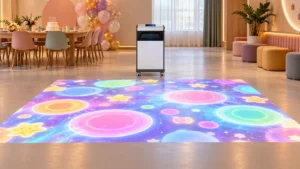
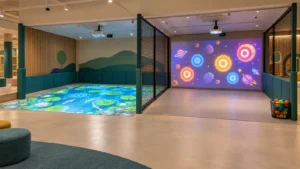
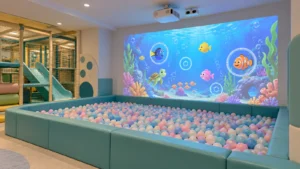
Unlike an interactive projection floor, this product creates the image directly inside the physical tiles. As a result, players do not cast projector shadows, and the grid remains visually strong under more ambient light. Projection remains useful when a venue needs detailed themed graphics or a larger scenic surface; operators can compare the two approaches in the OneCraze guide to interactive floor projection for FECs.
How Much Space and How Many LED Tiles Does a Game Room Need?
Start with the playable grid, then add circulation around it. A supplier should not fill every available centimeter with tiles because players need a controlled entrance, a clear exit and enough room to slow down after a round. Staff also need access to the control screen and emergency stop, while waiting guests need a separate queue or viewing position.
Because each OneCraze tile measures 300 mm square, the grid can grow in 0.3-meter increments. The following configurations show how a buyer can begin planning. They are examples rather than fixed capacity ratings; game rules, age group, local occupancy limits and the final risk assessment may require a different layout.
| Example playable grid | Tile arrangement | Approximate tile quantity | Suggested starting use | Planning note |
|---|---|---|---|---|
| 3.6 × 3.6 m | 12 × 12 | 144 | Compact one-to-three-player room | Prioritize short rounds and controlled movement |
| 4.8 × 4.8 m | 16 × 16 | 256 | Standard two-to-four-player challenge | Supports more routes and team patterns |
| 6.0 × 6.0 m | 20 × 20 | 400 | Larger three-to-six-player attraction | Requires stronger crowd control and wider circulation |
Which LED Tile Specifications Matter for Commercial Operation?
A commercial floor must handle repeated foot impact, rapid direction changes and long operating hours. Therefore, buyers should look beyond LED brightness and ask how the complete tile assembly manages load, grip, sensing, heat and service.
| System area | What the supplier should confirm | Why it matters |
|---|---|---|
| Tile construction | Top material, frame, dimensions and unit weight | Determines durability, installation height and floor loading |
| Rated load | Static and dynamic load test method | Players jump, turn and land with more force than normal walking |
| Surface grip | Slip-resistance test and cleaning method | Dust, shoe material and cleaning products can change traction |
| Step detection | Capacitive, pressure or other sensing method | Affects response, calibration and detection through different footwear |
| LED and diffuser | Brightness, color consistency and replaceable parts | Supports clear game cues and efficient repairs |
| Module service | Front or rear access and single-tile replacement | Reduces downtime when one tile or sensor fails |
| Electrical design | Voltage, power per tile, distribution and protection | Supports safe circuit planning and stable full-grid operation |
| Control and safety | Start, pause, emergency stop and fault reporting | Gives staff control when a guest falls or equipment behaves abnormally |
| Spare parts | Tiles, sensors, cables, power supplies and controllers | Helps the venue recover without waiting for a full shipment |
| Software support | Updates, backups, remote diagnosis and language options | Protects replay value and simplifies troubleshooting |
The attraction room should keep edges, transitions and cables outside the player path. The surrounding route must also meet the venue’s applicable accessibility requirements. For example, the U.S. Access Board’s ADA guidance states that covered floor and ground surfaces must be stable, firm and slip resistant. Local laws differ, and areas of sport activity may receive specific treatment, so the project team should confirm which rules apply to the game zone, entrance, exit and spectator area.
Which Game Modes Create Better Replay Value?
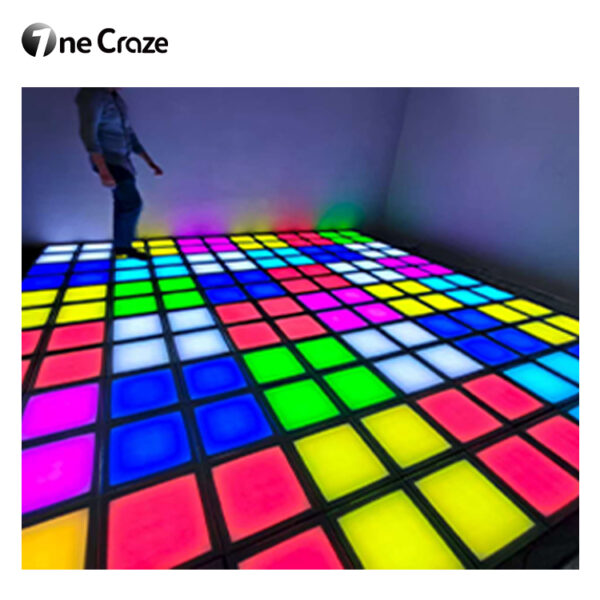
OneCraze can organize the game library around several commercial formats:
- Lava escape: reach or hold safe tiles while danger zones expand.
- Target chase: clear illuminated scoring tiles before the timer expires.
- Memory path: study a sequence and reproduce it after the guide disappears.
- Reaction race: compete for randomly appearing targets.
- Team cooperation: divide tasks or require simultaneous activation.
- Territory battle: capture more grid cells than the opposing team.
- Time attack: complete a fixed mission as quickly as possible.
- Elimination challenge: remove mistakes or players between rounds.
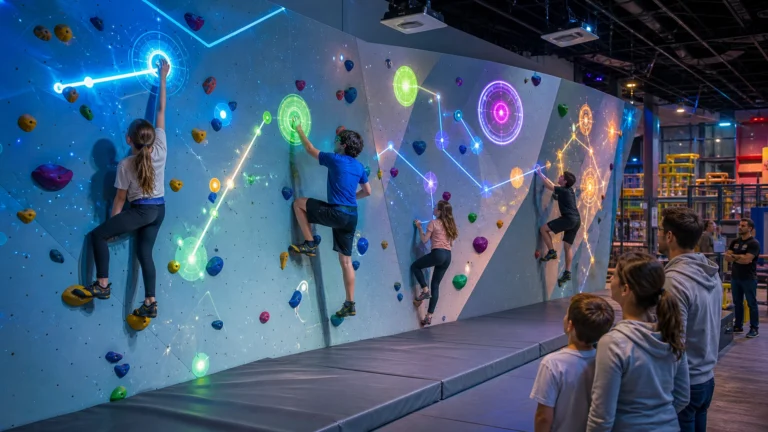
Content updates matter because physical tiles may remain in service for years. New seasonal colors, branded missions, local-language instructions and tournament formats can refresh the attraction without rebuilding the room. For a broader active-entertainment mix, operators can pair the LED grid with interactive gym wall games or interactive trampoline games.
Where Does a Commercial LED Grid Game Fit Best?
The Floor Is Lava concept works best where guests expect movement, competition and short repeatable challenges. In a family entertainment center, it can operate as a ticketed standalone room or join a multi-attraction package. In an active game center, it can become one mission among laser, wall-button, sports and reaction rooms.
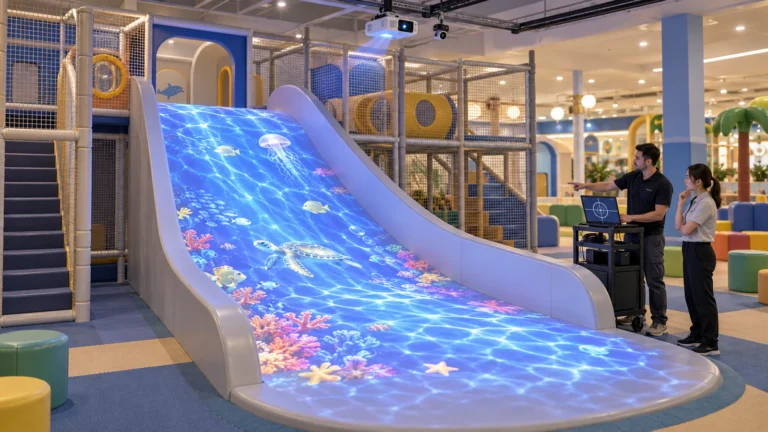
Trampoline parks and indoor playgrounds can use the grid to diversify their attraction mix. The LED room does not duplicate trampoline movement, so it offers a useful alternative for groups that want speed and strategy. Shopping malls can use a compact version as a visually bright attraction, while resorts and hotels can include it in a supervised recreation area.
Corporate team-building centers can emphasize communication instead of individual scores. Schools and youth camps may also use reaction, memory and coordination modes, provided the venue selects suitable difficulty, supervision and session rules.
Daily operation still determines whether the product performs well commercially. Staff should explain the color rules, check footwear, control the number of players and restart the room quickly between sessions. The booking system should define session length and group capacity clearly. In addition, the operator should record tile faults, software errors and guest incidents instead of relying on informal verbal reports.
Owners should determine which local amusement, electrical, fire, accessibility and building requirements apply before opening. The ASTM F3559 lifecycle guide explains that owners, operators, designers, manufacturers, vendors and suppliers may all have responsibilities across the life of an amusement ride or device. It does not automatically classify every LED game floor, so the buyer and local authority must determine the standards and inspections applicable to the specific installation.
What Should a Turnkey Floor Is Lava Game Supplier Provide?
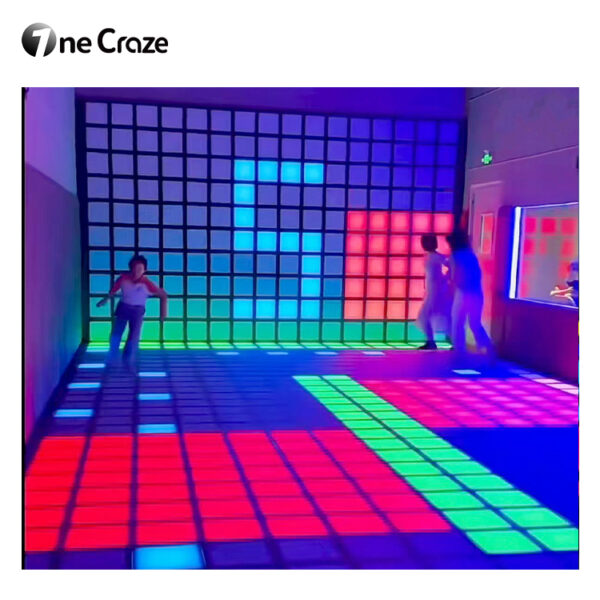
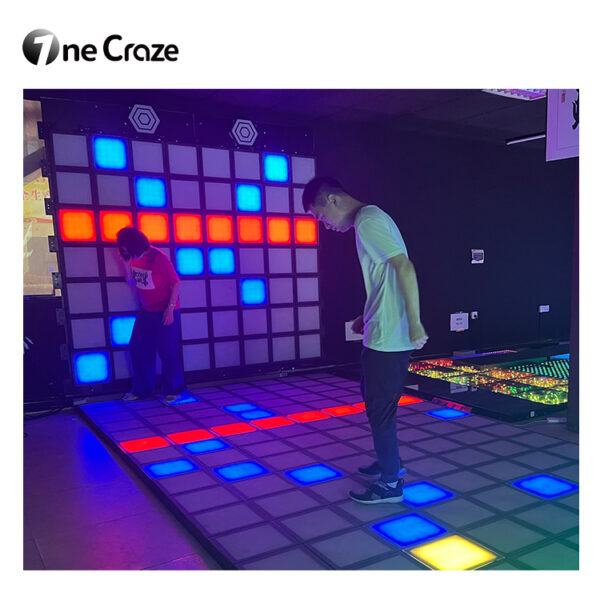
A hardware quotation may include only the LED tiles, controller and basic software. A complete commercial room usually requires more: the tile grid, support base, edge treatment, power distribution, control computer, operator screen, audio, room lighting, game software, installation documents, spare parts and training.
Before comparing prices, ask each supplier to mark every included and excluded item. The proposal should state tile quantity, playable dimensions, player capacity, game modes, language, power requirements, packed volume, installation method, lead time, warranty, update policy and remote-support process. Buyers should also request original videos showing full rounds with several players instead of edited close-ups of the floor.
For factory acceptance testing, OneCraze can demonstrate full-grid sensing, color consistency, multi-player response, scoring, emergency stopping, restart behavior and continuous operation. The buyer can select random tiles for step testing and confirm that a single failed module can be located and replaced. A spare-parts package should match the project size and shipping distance.
As a manufacturer and solution provider, OneCraze can discuss:
- Hardware-only LED grid systems for experienced local integrators.
- Complete game packages with tiles, control system, software and audio.
- Turnkey room solutions with layout design, lighting, wall treatment, installation guidance and training.
- OEM or ODM options for game rules, language, branding and room size.
- Multi-room active entertainment projects that combine floor, wall and team challenges.
These names often describe the same general product category: an interactive floor built from illuminated sensor tiles. “Floor Is Lava” usually refers to a game mode in which players avoid danger colors, while pixel floor and mega grid describe the hardware or room format.
The current OneCraze product page lists support for one to six players. The recommended number for each project depends on the playable grid, game mode, player age and safe movement space.
Yes. The modular 300 mm tile format allows the grid to use different row and column counts. However, the supplier must leave enough space for entrances, exits, staff access and safe player movement.