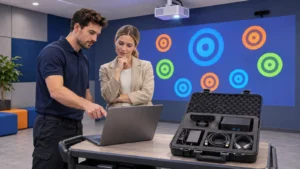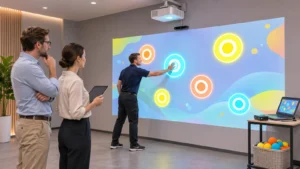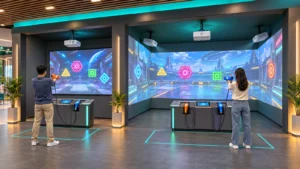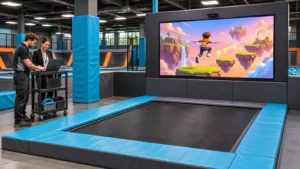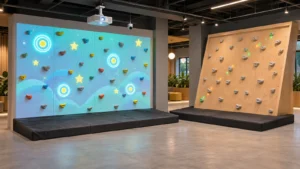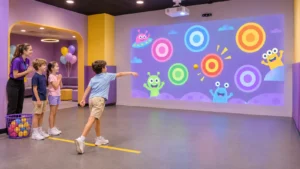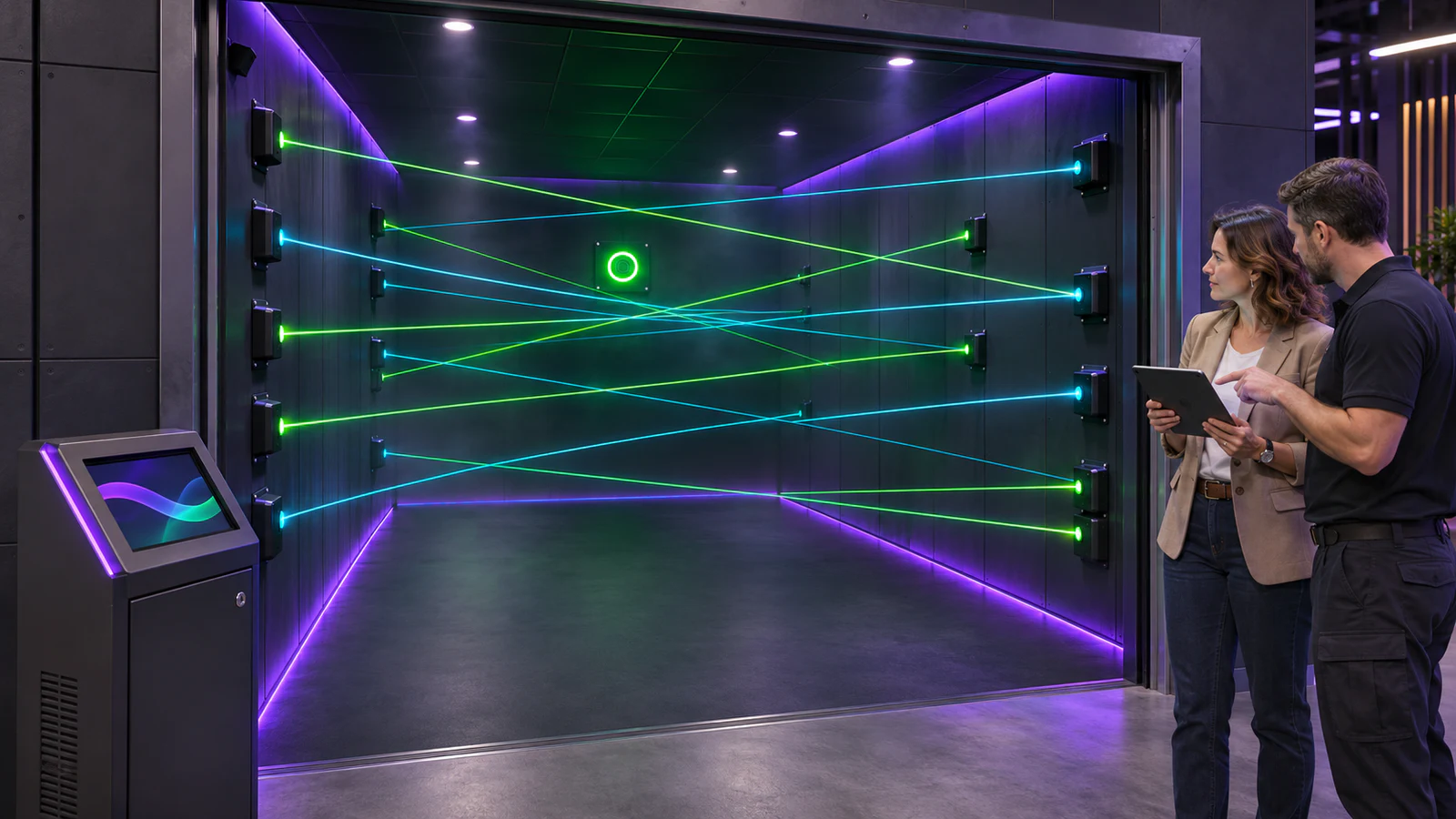
OneCraze’s laser maze and target blaster room solution provides a starting point for that discussion. Its product page describes beam-avoidance and target-shooting activities; confirm which modes and components your proposed package includes rather than assuming every demonstration represents the same installation.
Are You Buying a Laser Maze or a Laser Tag System?
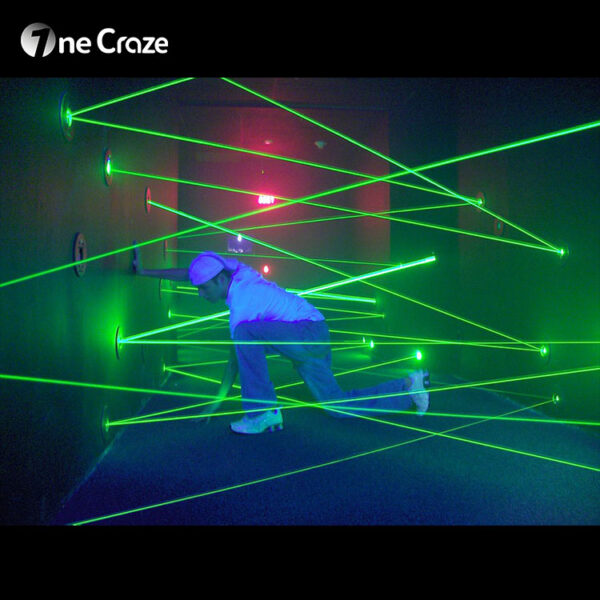
In a beam-avoidance laser maze, players move through a room while trying not to interrupt designated beams. Depending on the game, they may also reach targets, follow a sequence or complete a timed route.
By contrast, a commercial laser tag equipment package centers on tagging opponents or targets using handheld devices and sensing equipment. A combined challenge room can add target shooting, but that does not make every laser maze a player-versus-player laser tag arena.
First, state the required interaction in your inquiry:
- Avoid beams while moving toward a finish point.
- Reach or activate targets in a defined sequence.
- Play cooperatively or compare individual results.
- Add a separate target-shooting mode, if required.
Then ask the supplier to demonstrate those exact actions. This prevents a quote for a simpler beam maze from being compared with a package that includes additional targets, blasters and control functions.
What Does a Laser Maze Manufacturer Need to Know About Your Room?
Send a dimensioned floor plan before requesting a final layout. Include the clear internal dimensions, ceiling height, columns, doors, existing finishes and areas available for mounting equipment.
Also identify the entrance, exit, operator position and space for briefing or waiting. Equipment footprint is not the same as total attraction footprint. A room that accommodates the hardware may still leave insufficient space for access, supervision or group changeover.
Ask the manufacturer to explain:
- How the proposed route suits the intended players and group size.
- Where equipment mounts and how technicians reach it.
- Which room surfaces and lighting conditions the design requires.
- Where power, control equipment and protected cable routes belong.
Finally, place the attraction within your wider active game room plan. Nearby queues should not obstruct its doorway, and staff should be able to manage entry without interrupting another attraction.
What Should a Complete Laser Maze Equipment Quote Include?
A laser maze game equipment package should identify the components required for the agreed modes, together with the work needed to make them operational. Request model names, quantities, software scope and installation exclusions in the same proposal.
Use this responsibility table when comparing suppliers. It is a purchasing checklist, not a statement that every item comes standard.
| Delivery area | Ask the supplier to specify | Confirm who completes the work |
|---|---|---|
| Beam detection | Emitters, receivers, mounts, controllers and connection requirements | Equipment supply, positioning and alignment |
| Game interaction | Start controls, targets and any optional shooting devices | Installation and testing for each purchased mode |
| Game software | Included modes, difficulty settings, scoring and operator controls | Configuration, licensing and operator training |
| Results and effects | Display, audio, lighting and any proposed atmospheric effects | Supply, local installation and site suitability review |
| Room preparation | Finishes, mounting structure, electrical work and cable routes | Supplier, local contractor or venue team |
| Acceptance and support | Test procedure, documentation, spares and service terms | Factory checks, site commissioning and fault handling |
The scope-comparison approach in our equipment quotation checklist can help separate equipment-only supply from installed delivery. That resource covers projection projects, so use its commercial questions rather than copying its hardware specifications.
Where Does Custom Manufacturing Add Value?
Custom manufacturing is useful when it solves a specific room or operating problem. More beams, brighter effects or additional modes do not automatically create a better attraction.
Match the layout to the experience
Ask how the proposed mounting arrangement supports the intended route and difficulty progression. Confirm which changes staff can make through software and which require physical adjustment by a technician. Do not assume software can compensate for an unsuitable room layout.
Plan for maintenance and repeat installations
Request accessible connection points, a component inventory and a documented configuration. For additional venues, require approval before component substitutions so the installation team knows what has changed.
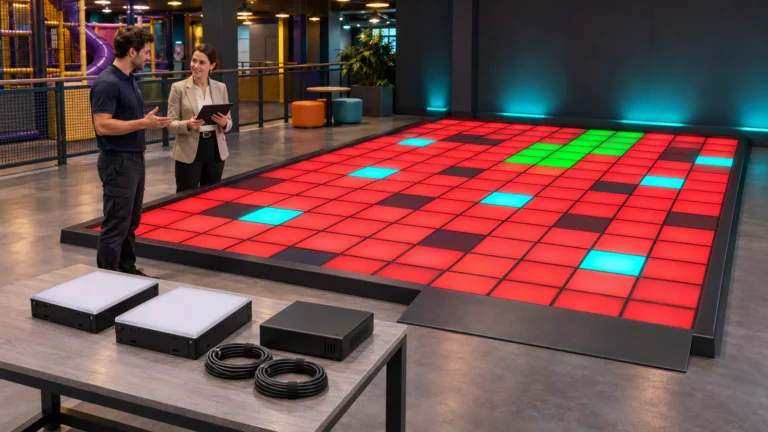
If the maze sits alongside a Push button-wall challenge or a Floor Is Lava LED room, discuss shared player flow and operator tasks. However, treat common scoring, accounts or access control as separate integration requirements, not automatic features of buying from one supplier.
How Should You Evaluate the Supplier Before Ordering?
Request a live demonstration showing a complete operating cycle: selecting a mode, starting a session, registering an interruption or target action, displaying the result and preparing for the next group.
Next, ask the supplier to show the agreed difficulty settings, repeated resets and the response to an unavailable detection channel. Record the demonstrated hardware and software version, along with any differences from the proposed order. Agree on testing duration and acceptance criteria before shipment, then repeat relevant checks after installation.
Review safety evidence separately from gameplay
Request laser classification documentation and applicable test reports for the proposed configuration, plus installation and operating instructions. A promotional video or the classification of one component does not establish the safety of the installed attraction. Have a qualified reviewer assess the system and site requirements before public operation.
Ask how staff stop the attraction, maintain supervision and preserve unobstructed exit routes. If atmospheric effects are proposed, have the venue team review ventilation and fire-detection compatibility. Do not choose higher optical output simply to make beams more visible.
Finally, confirm who performs installation, provides training and supports alignment or component replacement. Factory access is valuable only when the supplier can turn that knowledge into usable documentation and service.
Not necessarily. An equipment quote may exclude wall finishes, electrical preparation, mounting structures, local labor and commissioning. Ask for an itemized supply scope and a responsibility schedule before comparing prices.
There is no single room size that fits every layout. The required space depends on the selected modes, mounting arrangement, player movement and access needs. Submit a floor plan and request a project-specific layout, including waiting and operator areas.
Some combined solutions describe both activities. Confirm the included devices, supported software modes and changeover process through a demonstration. Do not assume the two activities can run simultaneously.