What Is an Interactive Space?
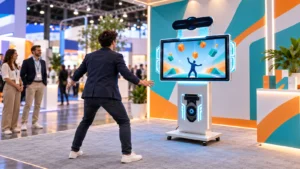
An interactive space is a designed environment where users actively influence what happens around them. In other words, the system responds to movement, touch, gestures, pressure, voice, or other inputs. The visitor does not only watch the space; instead, the visitor changes the outcome.
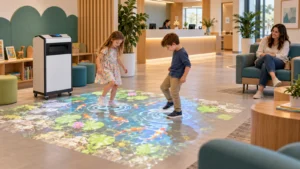
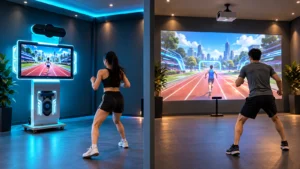
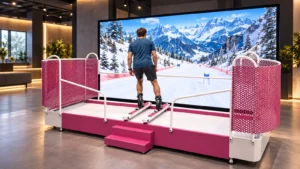
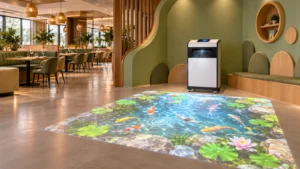
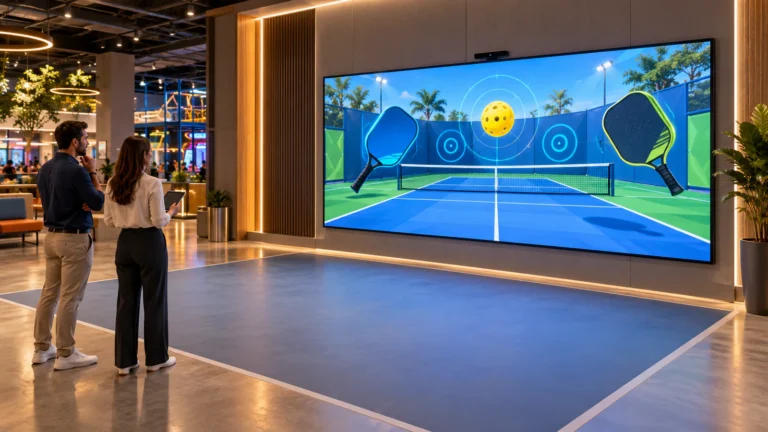
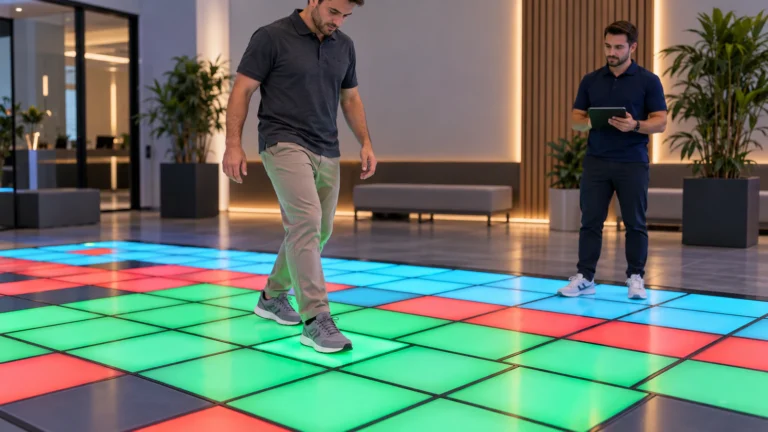
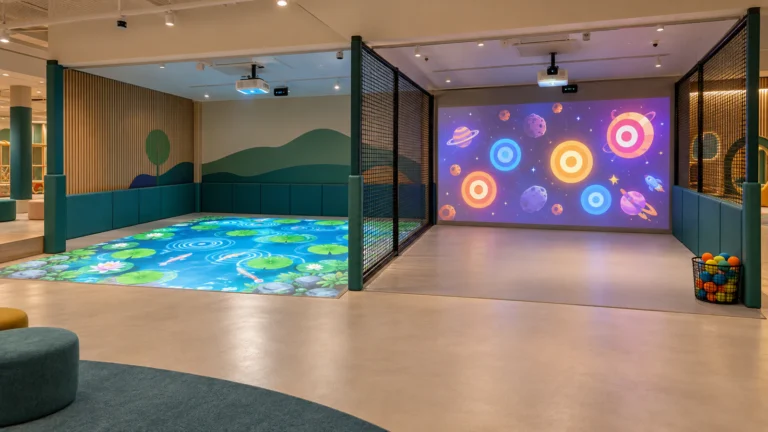
For instance, an interactive floor game in a children’s center reacts when kids step on projected objects. Similarly, an interactive wall in a sports venue may track thrown balls, hand movements, or body motion. In these cases, the system creates a feedback loop. The person acts first, and then the digital environment responds. As a result, interactivity depends heavily on participation.
Common features of an interactive space:
- Motion sensing or gesture recognition
- Touch-based or pressure-based response
- Game-like system logic
- User-triggered visual or audio changes
- Real-time feedback
- Activity-driven software content
Because of these features, interactive spaces work especially well in:
- Family entertainment centers
- Schools and training zones
- Museums with participatory exhibits
- Retail activation areas
- Interactive sports rooms
- Sensory learning spaces
What Is an Immersive Space?
By contrast, an immersive space focuses on surrounding the visitor with a complete environment. Here, the goal is not always to make the user control the content. Instead, the goal is to make the user feel fully inside the experience. The space may use light, visuals, sound, projection, LED surfaces, themed architecture, and environmental design to create that effect.
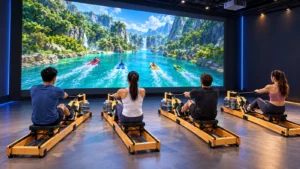
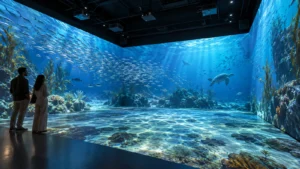
For example, an immersive art room may cover walls and floors with moving digital visuals while synchronized sound fills the room. Visitors may walk through the environment and emotionally absorb the scene, yet they may not directly control what appears. In this sense, immersion emphasizes presence, atmosphere, and storytelling more than user-triggered response.
Common features of an immersive space:
- 360-degree or multi-surface visual design
- Environmental storytelling
- Coordinated sound and lighting
- Strong emotional or sensory impact
- Large-scale themed content
- Seamless space transformation
Therefore, immersive spaces are highly effective in:
- Immersive museums
- Brand experience centers
- Exhibition halls
- Themed entertainment venues
- Experience restaurants
- Digital art installations
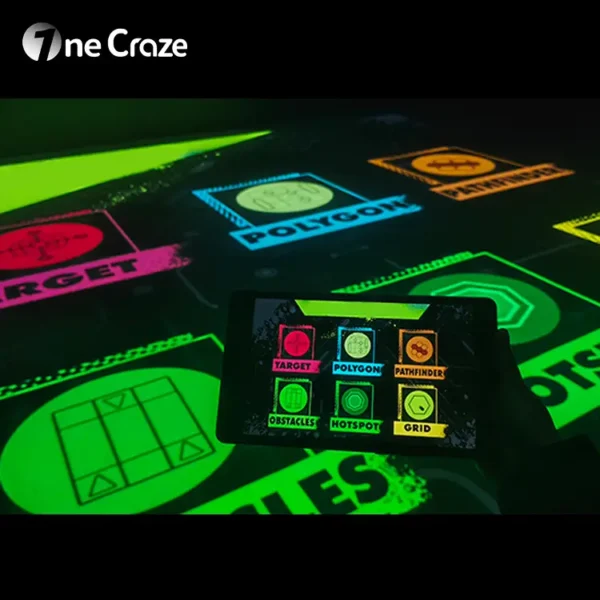
The Core Difference: Participation vs Presence
In an interactive environment, designers prioritize response. They build the system so that users can trigger actions, solve challenges, complete tasks, or manipulate digital content. In an immersive environment, designers prioritize atmosphere. They build the room so that users feel surrounded by a different world, even if they never press, touch, or trigger anything.
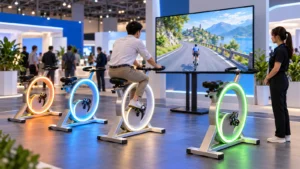
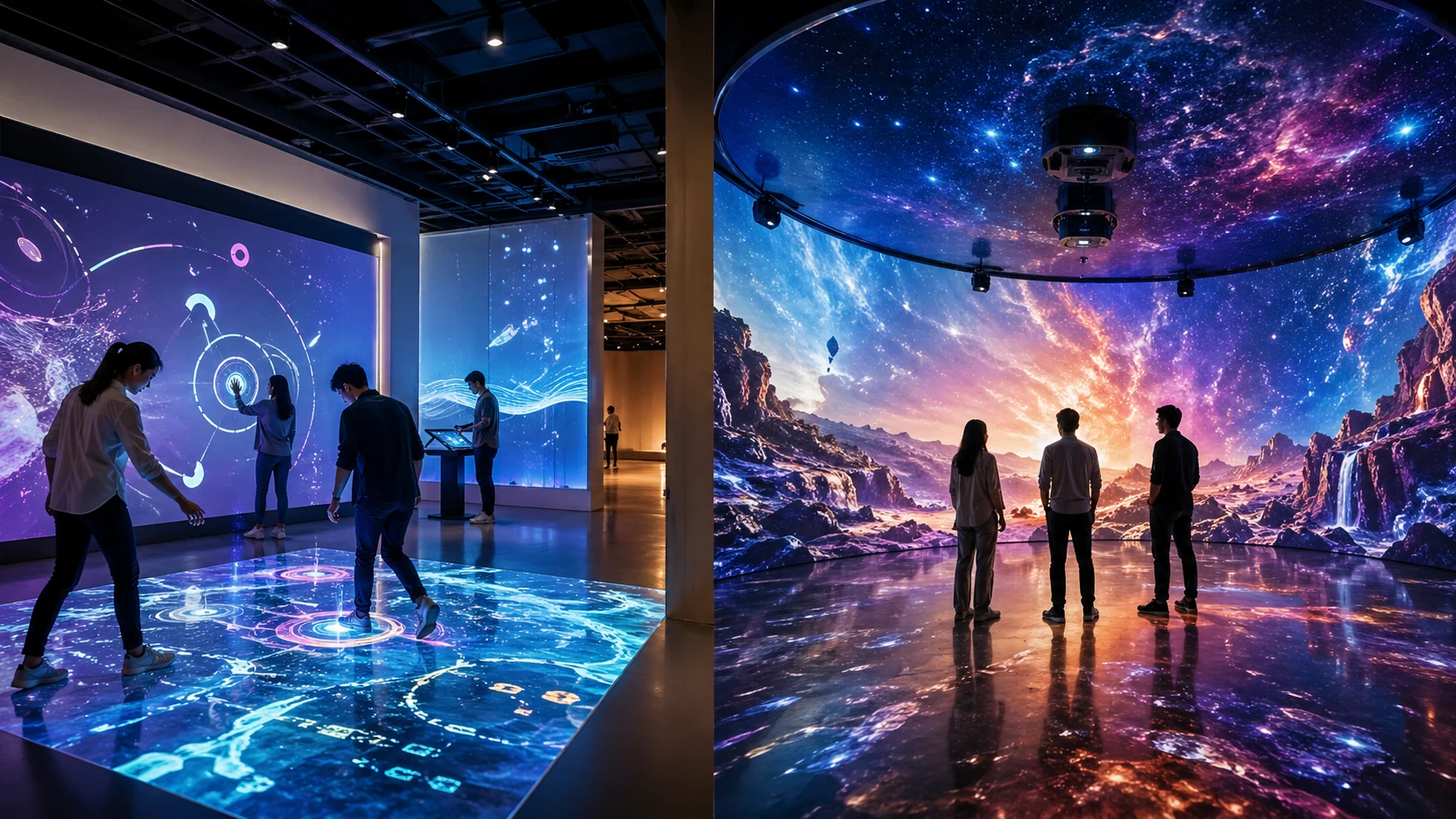
That said, the two concepts can absolutely overlap. In fact, the most advanced venues often combine both. A room can be immersive because it surrounds the visitor with media, and interactive because it reacts to the visitor’s movements. Nevertheless, from a planning perspective, the lead objective still matters.
A simple way to remember it:
- Interactive = the space responds to the user
- Immersive = the space surrounds the user
- Interactive + Immersive = the space both surrounds and responds
Technology Comparison Between Interactive and Immersive Spaces
Although both spaces may use advanced technology, they usually apply it differently. Interactive spaces require systems that detect user input. Therefore, hardware such as IR sensors, cameras, radar sensors, touch frames, or pressure systems becomes essential. Without responsive technology, the space cannot truly be interactive.
On the other hand, immersive spaces focus more on visual continuity and environmental control. Therefore, they often rely on high-lumen projectors, large LED displays, surround audio, content synchronization systems, and architectural lighting control. These tools help designers create a unified sensory world rather than a response-based activity.
Interactive Spaces vs Immersive Spaces
| Element | Interactive Spaces | Immersive Spaces |
|---|---|---|
| Primary goal | User participation | User presence and emotional engagement |
| User role | Active controller | Experiential observer or participant |
| Core function | System responds to actions | Environment surrounds the senses |
| Main technologies | Sensors, tracking, touch, software logic | Projection mapping, LED walls, sound, lighting |
| Content type | Games, reactive effects, training tasks | Story-driven visuals, themed environments, ambient scenes |
| Best use cases | Education, sports, gaming, retail interaction | Museums, exhibitions, restaurants, art experiences |
| Success metric | Engagement and activity completion | Emotional impact and dwell time |
| Design priority | Feedback and response | Atmosphere and continuity |
Which Space Type Is Better for Commercial Projects?
By comparison, if a venue wants to create emotional impact, social sharing, premium visual appeal, or strong thematic storytelling, then an immersive space may be the better option. For instance, an immersive exhibition room or projection dining experience can create stronger visual memory and higher photo-sharing potential.
Choose an interactive space if you want to:
- Increase participation
- Support education or training
- Create game-based experiences
- Encourage physical movement
- Improve repeat play value
Choose an immersive space if you want to:
- Build atmosphere
- Strengthen storytelling
- Create a premium visual experience
- Increase social media sharing
- Transform an ordinary room into a destination
The main difference is that interactive spaces respond to user actions, while immersive spaces surround users with a fully designed sensory environment. Interactive spaces focus on participation, whereas immersive spaces focus more on presence, atmosphere, and emotional impact.
Yes, a space can absolutely be both interactive and immersive. In fact, many modern digital experience rooms combine responsive technology with large-scale visual and audio design. This approach creates deeper engagement and a more memorable visitor experience.
It depends on the business goal. Interactive spaces work well for gaming, education, sports, and active engagement. Immersive spaces work better for exhibitions, storytelling, premium visual experiences, and branded environments. Many venues achieve the best results by combining both concepts