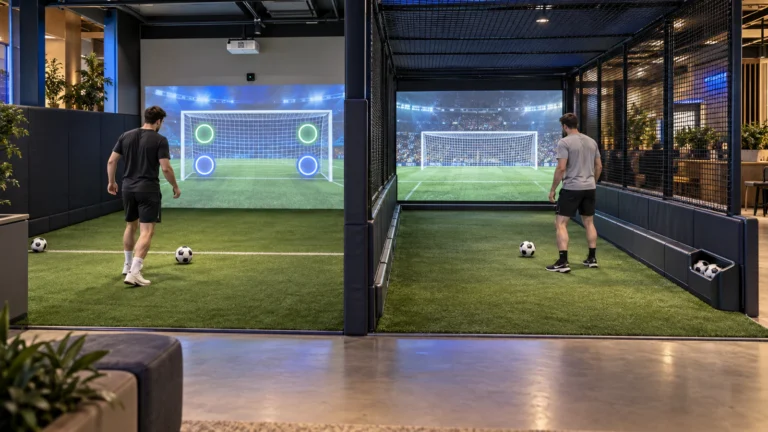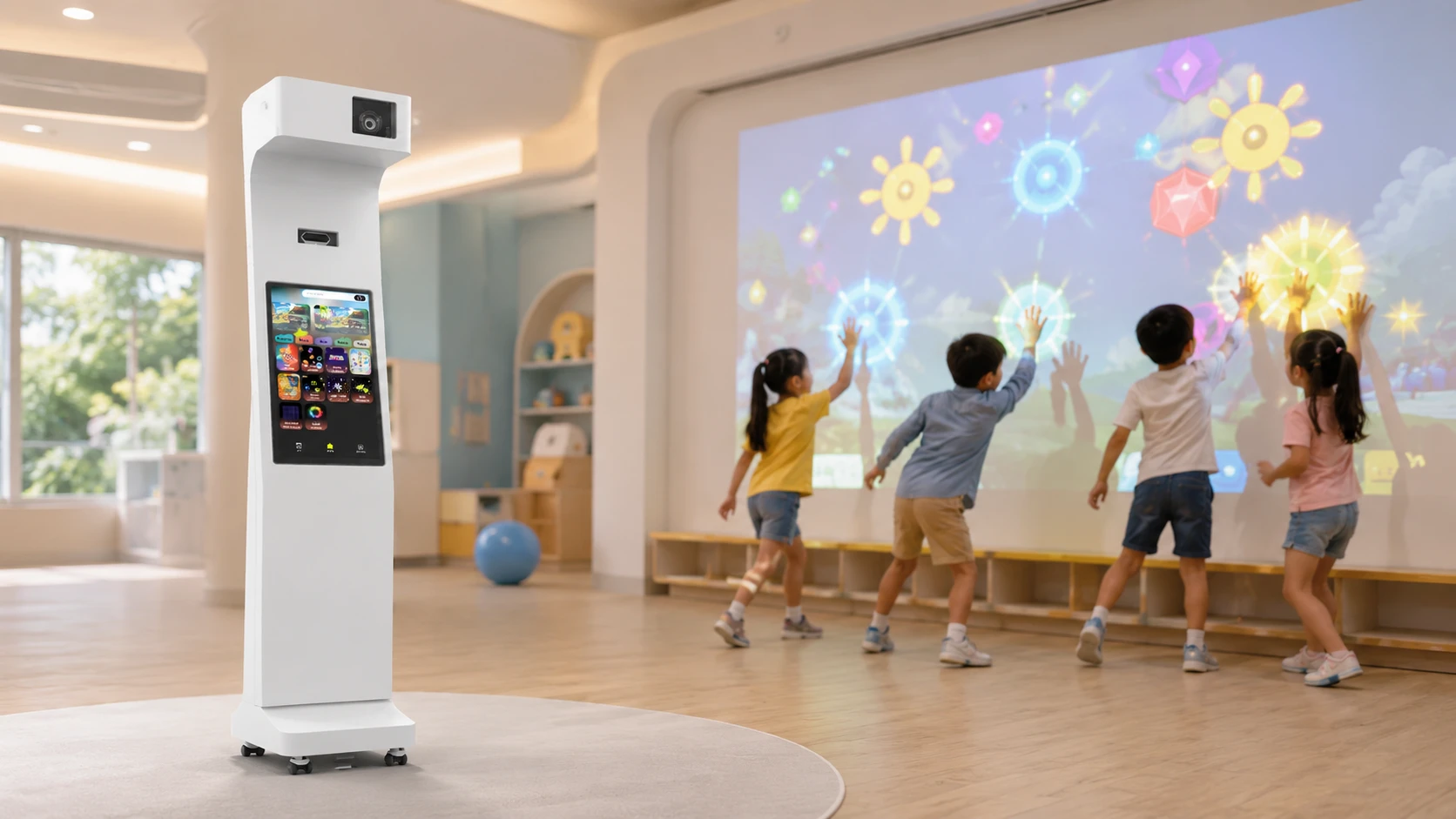
What Is the Typical Price Range for an Interactive Wall Projector Game System Cost?
The cost depends on the system configuration, game content, hardware quality, and installation method. However, buyers can usually think about three general levels.
| System Type | Typical Use | Price Level | Suitable Venues |
|---|---|---|---|
| Basic wall projection game setup | Small demo or simple children’s game area | Entry-level | Small rooms, temporary demos, light-use spaces |
| Portable interactive wall projector all-in-one system | Plug-and-play wall games with multiple game choices | Mid-range | Schools, gyms, FECs, activity rooms, malls |
| Customized multi-game interactive wall solution | Larger projection area, customized games, advanced tracking | Higher level | Museums, sports centers, large FECs, branded venues |
For most schools, gyms, and family entertainment centers, a portable interactive wall projector all-in-one system is often the most practical choice. It does not require complex construction, and staff can operate it more easily.
What Factors Affect the Cost of an Interactive Wall Projector Game System?
Several key factors influence the final price.
1. Projector Brightness and Image Quality
A brighter projector usually costs more. If your venue has strong lighting, large windows, or a bright activity room, you may need higher brightness to keep the game visuals clear.
For darker rooms or controlled indoor spaces, a standard brightness configuration may be enough. For schools, gyms, malls, and FECs, brightness should match the real environment, not just the product specification.
2. Motion Sensing and Detection Accuracy
Interactive wall games depend on accurate detection. If the system cannot detect throwing, touching, hitting, or movement correctly, the game experience becomes frustrating.
Better sensors, cameras, and tracking technology may increase the cost, but they also improve game performance. This is especially important for multiplayer games and sports training applications.
3. Game Software and Content Package
Some systems include only a few basic games. Others include multiple games for children, sports training, reaction challenges, throwing games, team competitions, and customized themes.
A stronger software package usually increases value because the venue can use the system for more activities.
Common game types include:
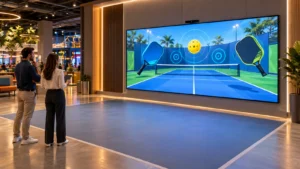
- Ball throwing wall games
- Food Cutting Knife Throwing Game
- Monster hit games
- Reaction training games
- Sports target games
- Fitness wall games
- Children’s interactive wall games
- Team competition games
- Museum interaction games
- Custom branded games
More games usually mean better long-term use, especially for FECs and school activity centers.
4. Portable or Fixed Installation
A fixed interactive wall system may require mounting, wiring, sensor positioning, and professional installation. This can be suitable for permanent venues.
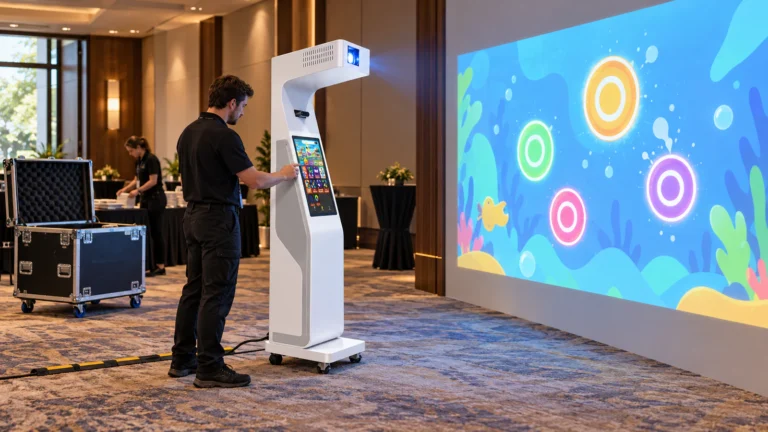
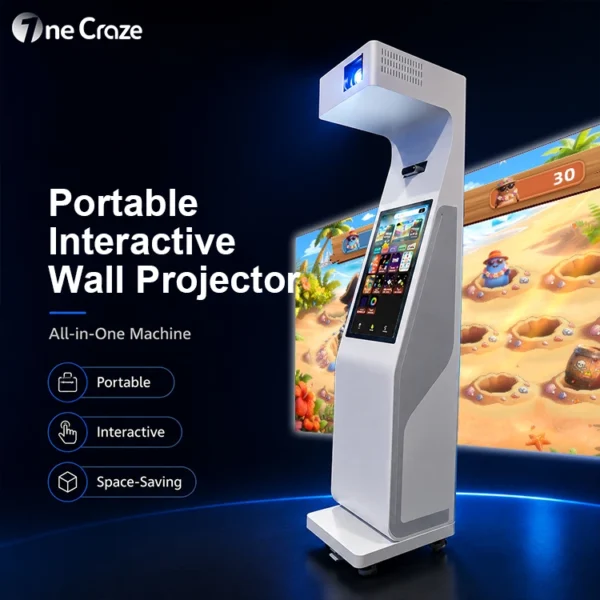
A portable interactive wall projector all-in-one system is different. It integrates projector, sensor, touchscreen, software, and control hardware into one mobile unit. It is designed for easier operation and flexible use.
Portable systems may have a higher equipment cost than a basic projector setup, but they can reduce installation difficulty and save time.
5. Touchscreen Control and Built-in Host
A system with a built-in touchscreen is easier for staff to operate. They can select games, switch modes, and manage the system without using a separate computer.
This feature matters for schools, gyms, malls, and FECs because daily operators may not be technical staff.
6. Multiplayer Support
If the system supports multiplayer games, team scoring, group challenges, and real-time competition, it may require better software and detection performance.
For commercial venues, multiplayer support is valuable because it increases participation. When one person plays, others watch. When scores appear, more people join.
7. Customization Requirements
If you need custom game visuals, language, branding, scoring rules, or special theme content, the price may increase.
Customization is common for:
- Museums
- Brand events
- Themed FECs
- School programs
- Sports training centers
- Shopping mall campaigns
8. Shipping, Voltage, and After-Sales Support
For global buyers, shipping cost, packaging, voltage requirements, spare parts, and remote support also affect the final quotation.
Is a Portable Interactive Wall Projector More Cost-Effective Than a Fixed Wall System?
A portable interactive wall projector all-in-one system is more flexible. It can be moved between rooms, used for temporary events, or shared by multiple departments.
| Option | Advantages | Possible Limitations |
|---|---|---|
| Fixed wall projector game system | Stable position, good for permanent venues | Requires installation planning and setup |
| Portable interactive wall projector all-in-one system | Easy to move, plug-and-play, no complex installation | Projection area depends on wall and room condition |
| Custom large wall game solution | Strong visual impact, suitable for flagship venues | Higher budget and longer project cycle |
How Much Should Schools Budget for an Interactive Wall Projector Game System?
Schools usually need a system that is safe, easy to operate, and suitable for group activities. The goal is not only entertainment. The system should support PE classes, movement games, coordination training, and student engagement.
For schools, cost depends on:
- Room size
- Wall size
- Number of students using the system
- Game content for different age groups
- Whether the system needs to be portable
- Staff operation requirements
- After-sales support needs
A school should avoid buying only the cheapest projector. The better choice is a complete system with easy operation and stable game software.
How Much Should FECs and Indoor Play Centers Budget?
Family entertainment centers need systems that can attract repeat play. A wall projector game system in an FEC should be visually exciting, durable, easy for staff to operate, and suitable for multiple players.
FEC buyers should pay attention to:
- Game quantity
- Game replay value
- Multiplayer scoring
- System durability
- Daily operation simplicity
- Visual effects
- Maintenance support
- Upgrade options
For an FEC, a cheaper system with only a few games may lose attraction quickly. A system with multiple games and different modes can create better long-term value.
What Information Should You Send to Get an Accurate Price?
Before requesting a quotation from OneCraze, prepare these details:
| Information | Example |
|---|---|
| Venue type | School, gym, FEC, museum, mall, sports room |
| Wall size | Width and height of available wall |
| Room size | Length, width, and usable activity area |
| Lighting condition | Bright, normal, or dark indoor space |
| Target users | Children, students, athletes, families, visitors |
| Game purpose | Entertainment, PE class, sports training, museum interaction |
| Portable or fixed use | Need mobile machine or fixed installation |
| Multiplayer requirement | Single player, two players, team mode |
| Preferred games | Throwing games, reaction games, sports games, children’s games |
| Budget range | Helps recommend suitable configuration |
| Delivery country | Needed for shipping and voltage confirmation |
Not always. A portable all-in-one system may cost more than a basic projector, but it can reduce installation difficulty and support flexible use in schools, gyms, FECs, and event spaces.
A complete system may include a projector, motion sensor or camera, built-in computer, touchscreen control, game software, calibration tools, accessories, and technical support.
Yes. The system can support reaction training, throwing accuracy, hand-eye coordination, timing practice, and team competition.