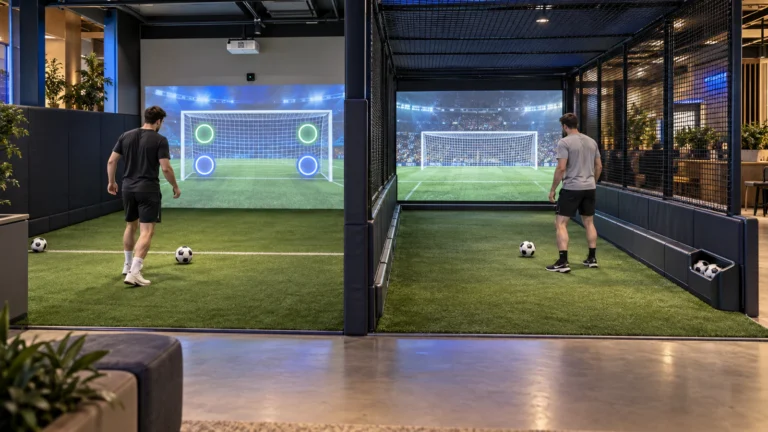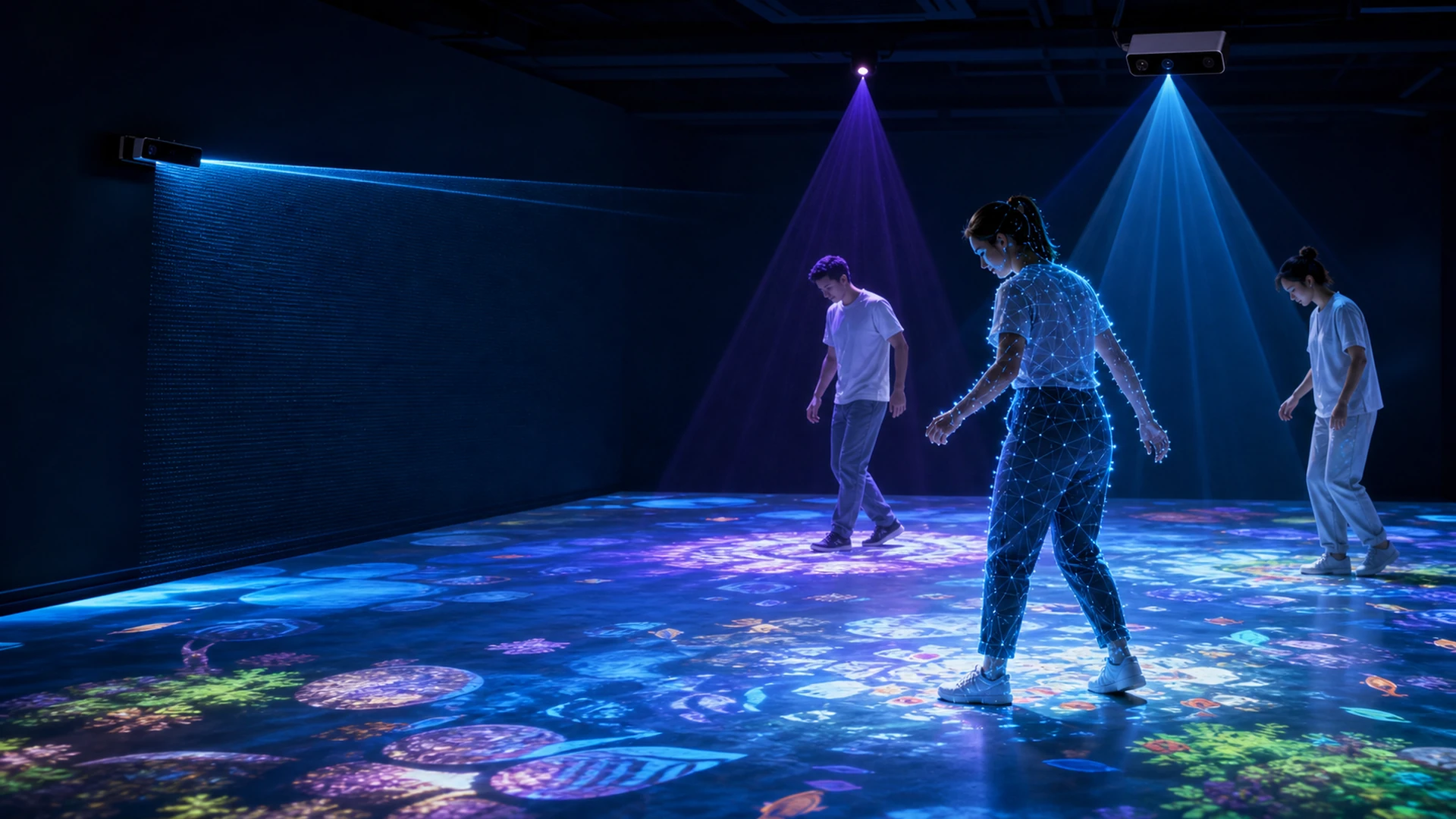
Choosing between LiDAR, an IR camera and a depth sensor can directly affect the responsiveness, accuracy and installation cost of an interactive projection system. These technologies may all use infrared light, but they do not produce the same data. A standard IR camera captures a two-dimensional infrared image, a depth sensor creates distance information for many pixels, and LiDAR measures distances along one or more scanning planes. Therefore, the right choice depends on the venue, interaction style and tracking area—not simply on which sensor sounds more advanced.
What Is the Difference Between LiDAR, an IR Camera and a Depth Sensor?
The table below provides a practical comparison for interactive floors, walls and immersive entertainment spaces.
| Sensor type | Main output | Key advantage | Main limitation | Best suited to |
|---|---|---|---|---|
| 2D LiDAR | Distance points on a scanning plane | Stable detection across a defined area | Limited body and gesture detail | Large floors, boundary detection and simple triggers |
| IR camera | Two-dimensional near-infrared image | Cost-effective visual tracking | Does not directly measure distance | Controlled indoor floor or wall interaction |
| Depth sensor | Per-pixel distance or 3D depth map | Detects body volume, position and gestures | Shorter working range and greater processing needs | Multi-user interaction and gesture-controlled content |
How Does LiDAR Work in an Interactive Floor System?
LiDAR sends out light pulses and calculates distance from the time required for the reflected signal to return. A 2D unit usually scans a horizontal plane and returns a series of distance points. Interactive software then converts those points into positions, zones or collision events.
When Should You Use LiDAR Tracking?
LiDAR works well when a system needs reliable position detection over a clearly defined floor area. Installers can mount it around the perimeter or above the tracking plane, making it useful for large interactive floors, attraction entrances and moving-object detection. It can also support vehicle-based attractions when the experience needs position triggers instead of detailed body gestures.
However, one scanning plane cannot describe the full shape of a person. Furniture, railings and other players may also create blind zones. As a result, installers often use several units or combine LiDAR with another tracking technology in complex venues.
How Does an IR Camera Track Interactive Projection?
A near-infrared camera records reflected infrared light that the human eye cannot see. With a suitable illuminator and image-processing software, the system can identify bright points, silhouettes or movement and translate them into two-dimensional coordinates.
IR cameras are often a practical choice for compact installations because they are flexible and comparatively affordable. Nevertheless, ambient sunlight, reflective surfaces, shadows and overlapping users can reduce consistency. Careful camera placement, controlled lighting and calibration therefore matter. Because a basic IR camera does not directly provide distance, it may struggle when the application needs to distinguish people at different depths.
What Does a Depth Sensor Add to Interactive Projection?
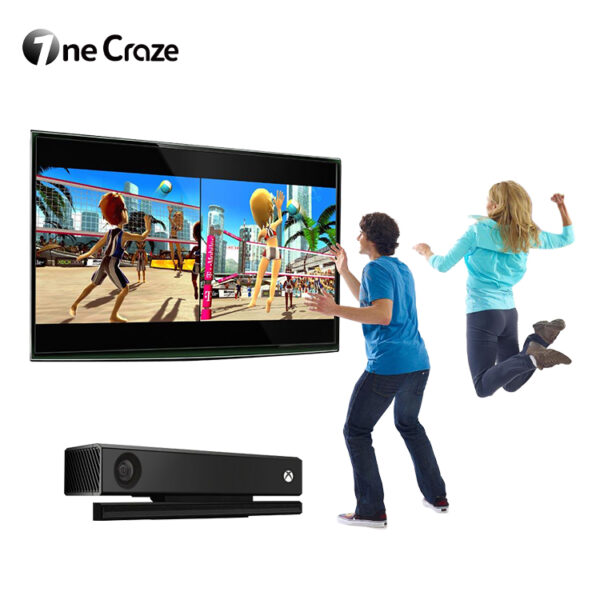
A depth sensor assigns a distance value to many image pixels. Depending on the model, it may calculate depth through stereo vision, structured infrared light or time-of-flight measurement. This added dimension helps software separate users from the background, recognize body volume and respond to hand, arm or full-body gestures.
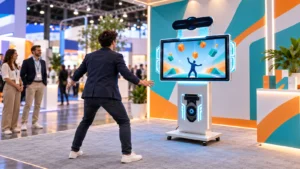
Depth sensing is especially useful for interactive walls, multi-player games and immersive rooms. For example, the system can react differently when a visitor reaches toward a wall, jumps or moves closer to an image. Still, depth cameras have defined working ranges. Occlusion, low-texture surfaces, competing infrared patterns, exposure conditions and processing load can all affect the final result.
Which Sensor Is Best for Your Interactive Projection Project?
There is no universal winner. Match the sensor to the experience visitors will actually use.
| Application | Recommended starting point | Why |
|---|---|---|
| Large floor with simple position triggers | 2D LiDAR | Covers defined zones with stable distance detection |
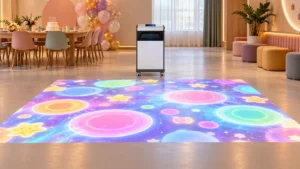
| Compact indoor interactive floor | IR camera | Offers economical movement tracking in controlled lighting |
| Gesture-controlled interactive wall | Depth sensor | Captures distance and body movement |
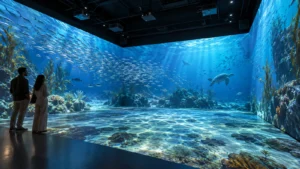
| Immersive multi-player room | Multiple depth sensors or hybrid tracking | Reduces blind spots and supports richer interaction |
| Vehicle or object position tracking | LiDAR or dedicated positioning system | Prioritizes reliable location data over gesture detail |
| Temporary event installation | IR camera or portable depth sensor | Faster deployment and easier relocation |
| High-traffic permanent attraction | Industrial depth, LiDAR or a hybrid system | Supports stronger reliability and maintainability |
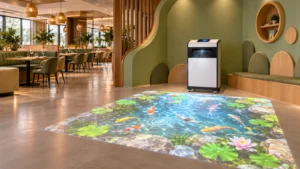
For an experience centred on projected floor content, review our immersive floor projection mapping solution before selecting the tracking hardware.
How Should You Choose an Interactive Projection Sensor?
First, define the interaction: footstep effects, zone triggers, object tracking or detailed gestures. Next, record the tracking dimensions, ceiling height, expected player count, ambient light, surface reflectivity and possible obstacles. You should also consider latency, calibration time, maintenance access and the software integration method.
Most importantly, test the sensor in conditions that resemble the final venue. A specification sheet cannot fully predict occlusion, infrared interference or visitor behaviour. If you need a compact system with integrated projection and tracking, explore the interactive projection all-in-one system.
No. LiDAR measures distance with laser light, but a typical 2D LiDAR returns points along a scanning plane. A depth camera normally creates a dense depth map that represents distance across an image. Some 3D LiDAR systems produce richer point clouds, so the exact distinction depends on the model.
No. A near-infrared camera detects reflected infrared illumination, while a thermal camera detects emitted heat radiation. Interactive projection systems commonly use near-infrared cameras rather than thermal imaging.
A depth sensor is usually the strongest starting point because it provides distance information as well as image position. The final accuracy also depends on the tracking software, mounting angle, range and lighting conditions.
Sometimes, but coverage alone is not enough. Users and objects can block the sensor’s view. Large or crowded areas may require multiple sensors, overhead mounting or a hybrid design to reduce blind spots.
Technical References
- SICK: Time-of-flight measurement
- RealSense: Stereo depth camera technology
- RealSense: Depth-camera projectors
- RealSense: Depth post-processing
- Basler: Near-infrared cameras
Build the Right Tracking System for Your Venue
The best sensor is the one that produces stable, useful tracking data in your real installation environment. Share your floor plan, interaction concept and expected visitor capacity with OneCraze. We can help you compare tracking options and design a practical system for your venue.