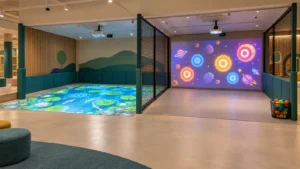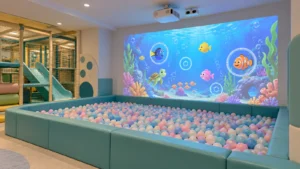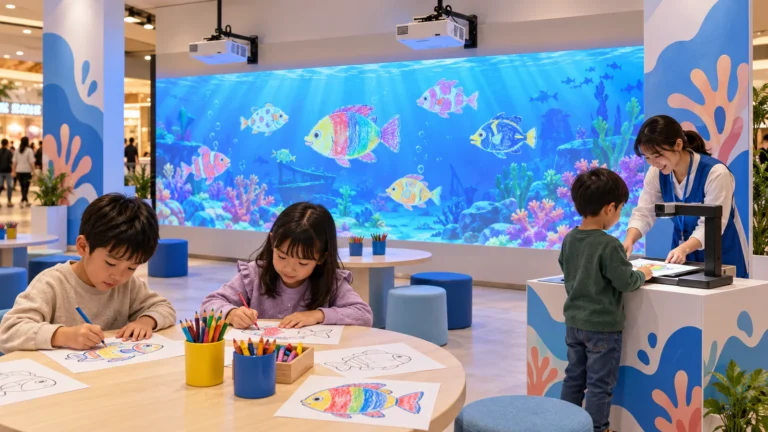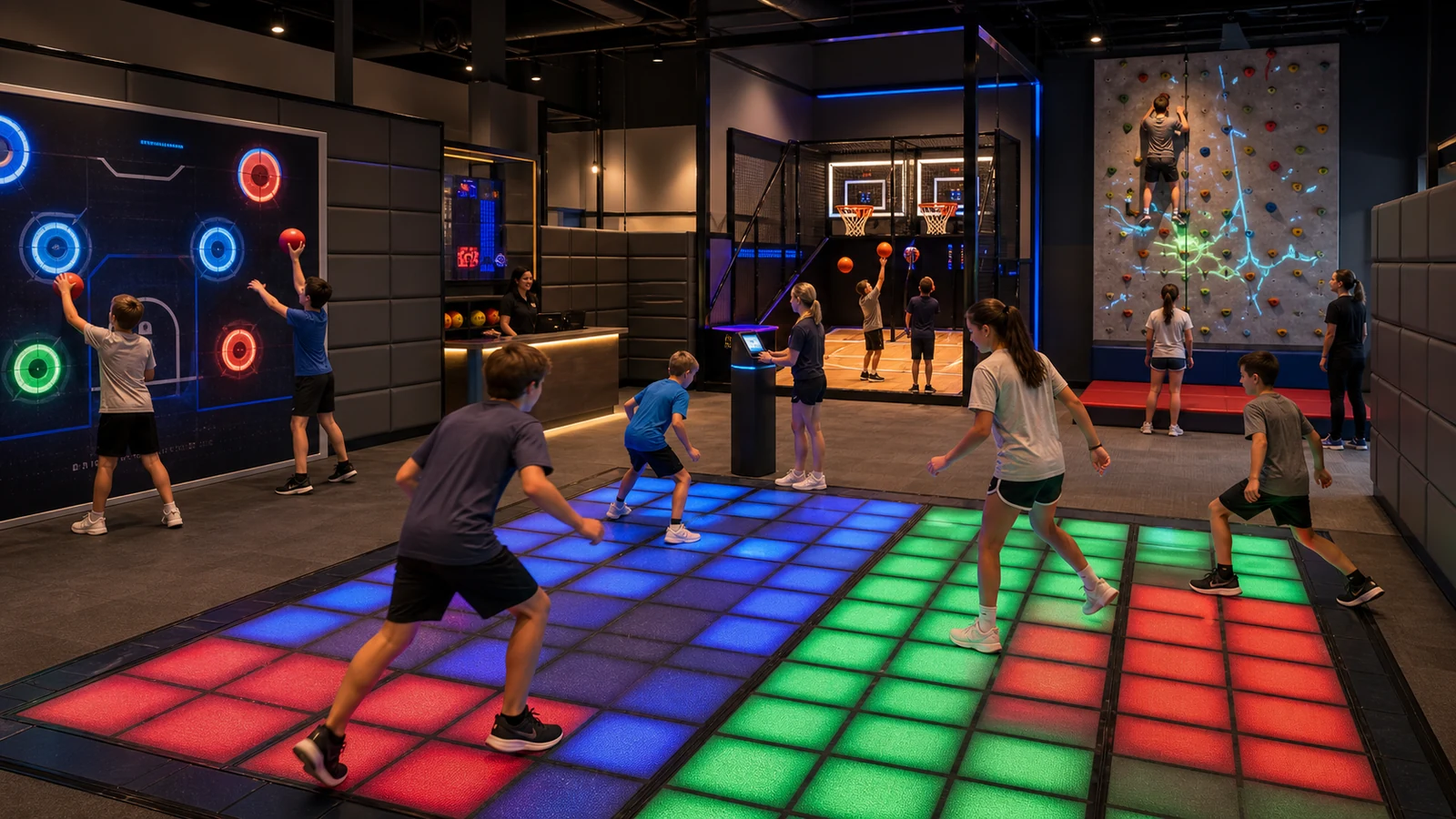
Buyers can also explore the full OneCraze interactive sports product range before preparing a room plan.
What Equipment Does a Sport-Themed Entertainment Center Need?
The following eight systems can form a practical starting mix:
| Equipment direction | Main player action | Published OneCraze starting format | Strong venue role |
|---|---|---|---|
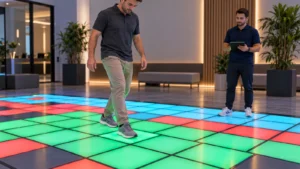
| Interactive LED floor grid | Run, jump, avoid colors and clear targets | 300 × 300 × 75 mm capacitive tiles; 1–6 players | Fast reaction room and team mission |
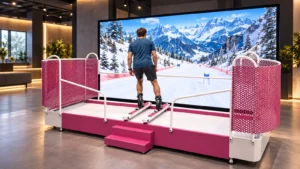
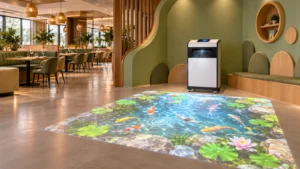
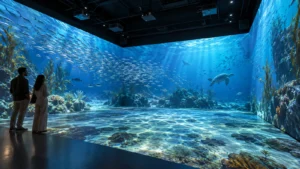
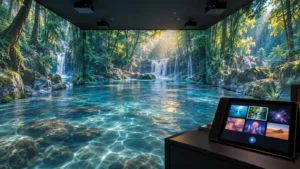
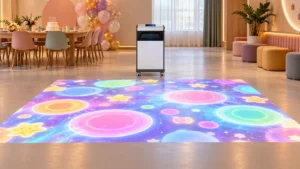
| Immersive sports projection | Move, touch and complete projected exercises | Approximately 4 × 2.5 m; 1–6 players | Flexible multi-sport room |
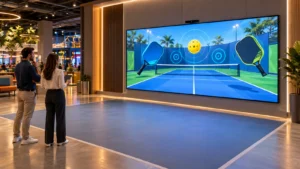
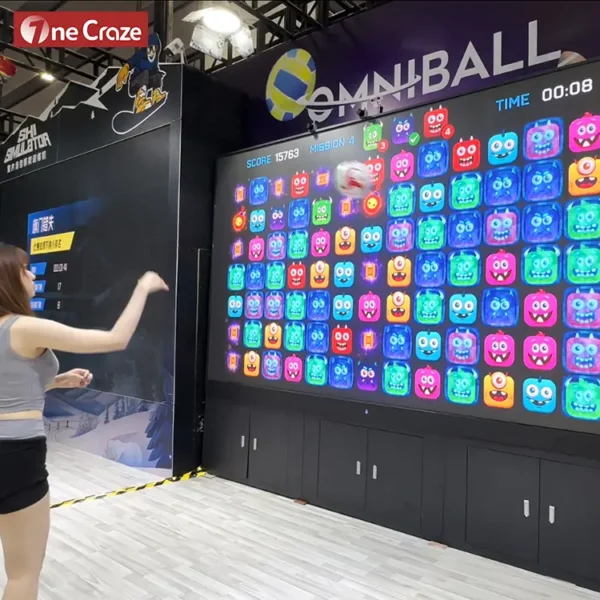
| Multi-sport ball wall | Throw or kick real balls at digital targets | Eight listed game types; multiplayer entry | High-energy group competition |
| Interactive basketball room | Shoot, dribble and complete timed drills | Approximately 6 × 2.5 m; 1–2 players | Recognizable skill-and-score attraction |
| AR boxing simulator | Strike physical targets and trigger feedback | Approximately 4 × 2.5 m; 1–3 players | Short reaction and fitness challenge |
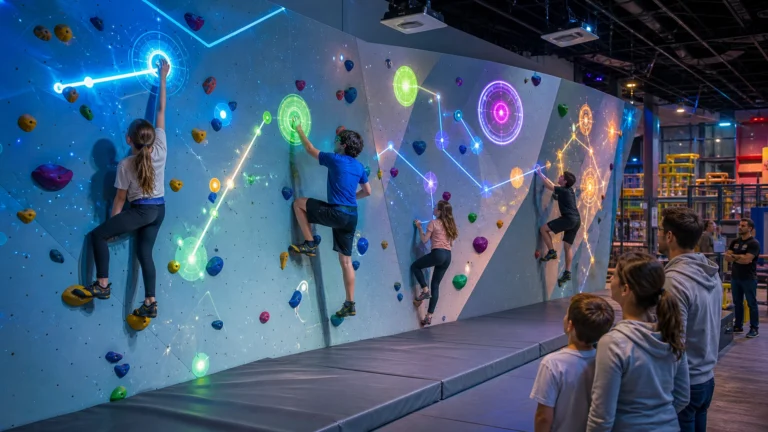
| Interactive climbing wall | Climb, reach and touch projected targets | Approximately 4 × 2.5 m; 1–2 players | Vertical challenge with strong visibility |
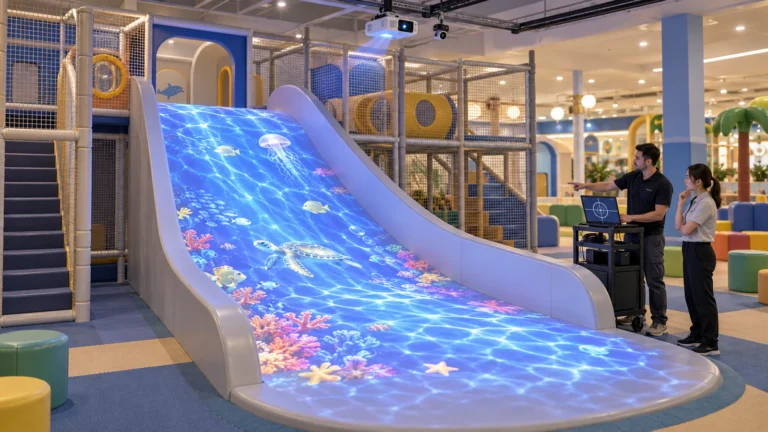
| Interactive trampoline game | Jump and control on-screen movement | Approximately 2 × 3 m; 1–2 players | Digital upgrade for an existing trampoline zone |
| Indoor golf simulator | Swing, practice and play virtual courses | Approximately 5.5 × 4 × 3 m; 1–2 players | Longer session for teens, adults and events |
Buyers who are evaluating individual zones can review the detailed guides to a commercial multi-sport ball simulator, interactive climbing wall games and interactive trampoline equipment. Those pages cover the product-specific questions; this article focuses on how the attractions work together.
More equipment does not automatically create a stronger venue. In many projects, four well-connected attractions produce a clearer experience than eight isolated rooms. OneCraze can help buyers compare individual equipment through the interactive projector and entertainment equipment catalog and then build a project-specific combination.
How Can RFID, Self-Service Access and Scoring Connect Multiple Rooms?
However, “RFID compatible” does not prove that two systems exchange the information a venue needs. The buyer should define specific commands and events, including:
- Validate player, team, credit and booked time
- Confirm that a room is available and ready
- Start, pause, stop and reset a session
- Return score, completion status and fault messages
- Prevent duplicate scans or entry after a session starts
- Continue safely when the venue network is unavailable
- Allow staff to override access and correct a failed session
- Export operating logs without exposing unnecessary personal data
The self-service layer may use a kiosk at each room or one reception point for the full venue. Smaller projects can begin with staff-issued access and automatic room starts. Larger multi-room centers may need central booking, wristbands, player profiles, digital waivers, leaderboards and remote monitoring.
Before requesting integration, use the OneCraze guide to a self-service interactive LED floor game system to map the complete guest flow. Projects that need custom commands, branding or venue-platform connections should also define the requirements described in OEM interactive game software and API integration.
In addition, international venues should treat localization as more than translated game names. The operator interface, safety prompts, countdowns, score screens and help messages all need the selected language. Arabic projects should confirm fonts, right-to-left layout and mixed number behavior through a defined multilingual interactive software specification.
When Do You Need a Manufacturer Versus a Turnkey Solution Provider?
A supplier proposal should assign responsibility for:
- Room dimensions, structural fixing and floor transitions
- Projector, LED, sensor, computer and control specifications
- Power distribution, network points, ventilation and cable routes
- Game software, licenses, updates and backup restoration
- Access, membership, booking, POS and leaderboard integration
- Branding, language localization and custom content approval
- Installation, acceptance testing and final commissioning
- Staff training, preventive maintenance and fault escalation
- Warranty exclusions, remote support and on-site service
- Spare parts, software version control and future expansion
For example, a ball wall supplier may deliver accurate sensing and games but exclude the impact wall, balls and room finish. A climbing solution may require the local climbing-wall contractor to approve holds, structure and fall protection. Similarly, an LED floor price may exclude its support base, edge ramps, electrical distribution or access terminal.
Therefore, ask each bidder to mark every included and excluded item. Buyers can use the OneCraze quotation comparison guide to place hardware-only and turnkey proposals into the same scope.
What Customization Creates a Branded Active Game Center?
Branding should connect the venue without making every room visually identical. A common player profile, color system, sound language, score format and mission structure can establish continuity. Each attraction can then keep its own sports theme and movement style.
Useful customization may include:
- Branded attract screens, launchers and scoreboards
- Team names, avatars, colors and venue-wide leaderboards
- Local-language player and operator instructions
- Difficulty profiles for children, families and adult groups
- Tournament, party and corporate-event modes
- Venue-specific missions that connect several rooms
- Sponsor or seasonal assets with scheduled start and end dates
- White-label administrator tools for distributors or venue chains
Buyers should distinguish a visual reskin from new game development. Replacing a logo, background and color palette requires less work than changing scoring, adding a new sensor or building a cross-room tournament. The quotation should list each deliverable, revision round, source-asset requirement and acceptance case.
If the venue will open several locations, define a standard room kit and a controlled customization layer. This approach simplifies training and spare parts while allowing each site to use local language or selected themes. OneCraze’s interactive sports wall manufacturer guide gives buyers additional questions for OEM content, distributor support and multi-location projects.
What Should Be Tested Before a Turnkey Venue Opens?
Testing should begin at the factory and continue after installation. A short demonstration video may confirm the visual concept, but it does not prove continuous operation, edge sensing, multiplayer capacity, access integration or recovery after a fault.
The factory acceptance test should cover every ordered attraction, software license and control function. Ask the supplier to demonstrate normal sessions as well as failed scans, lost network, power restart, sensor faults and emergency stopping. Record the hardware model, software version and configuration so the delivered package matches the tested package.
After installation, run a complete guest journey with real groups. Measure briefing time, play time, room reset, queue formation and staff intervention. Then check whether results reach the correct player account and whether one unavailable room disrupts the whole circuit.
Owners must also determine which local amusement, electrical, fire, structural and accessibility requirements apply to each attraction. The IAAPA resources for family entertainment centers highlight layout, queue management, staffing, training, maintenance and emergency preparedness, while ASTM International’s F24 committee develops standards for amusement rides and devices. Neither link replaces local review; equipment classification and applicable requirements depend on the project and jurisdiction.
Finally, prepare an opening and maintenance routine:
- Inspect player surfaces, balls, holds, tiles and visible cables.
- Test sensors, scoring, sound, start controls and emergency stops.
- Confirm that access, session credits and leaderboards synchronize correctly.
- Run a sample game at each attraction before guests enter.
- Record faults and repairs by room, component and software version.
- Keep essential spares and a documented manual-start procedure available.
The OneCraze factory acceptance test guide can help procurement teams convert the supplier demonstration into measurable pass/fail checks.
It includes commercial attractions that combine sports movements with digital feedback, such as interactive LED floors, ball walls, basketball rooms, boxing targets, climbing walls, trampolines, golf simulators and projection-based multi-sport games. A complete venue may also include RFID access, scoring, booking and operator software.