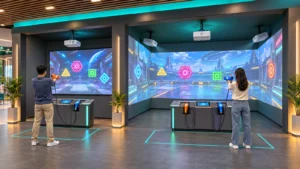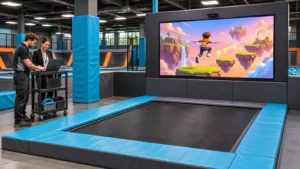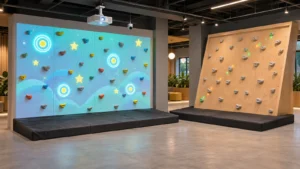
Start with the type of interactive wall projection you want to operate. Then decide which partner can supply, install and maintain that experience within your budget and opening schedule.
What Makes an Interactive Wall Supplier the Best Fit?
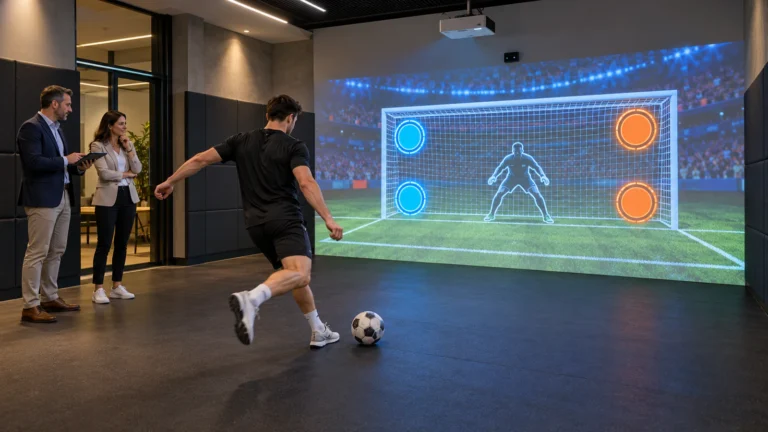
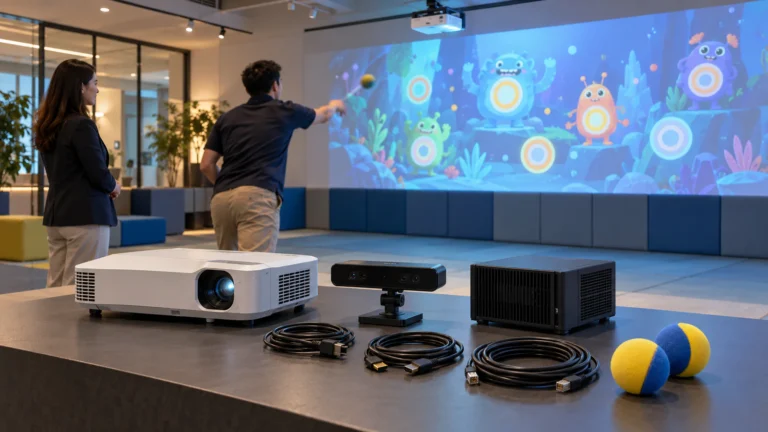
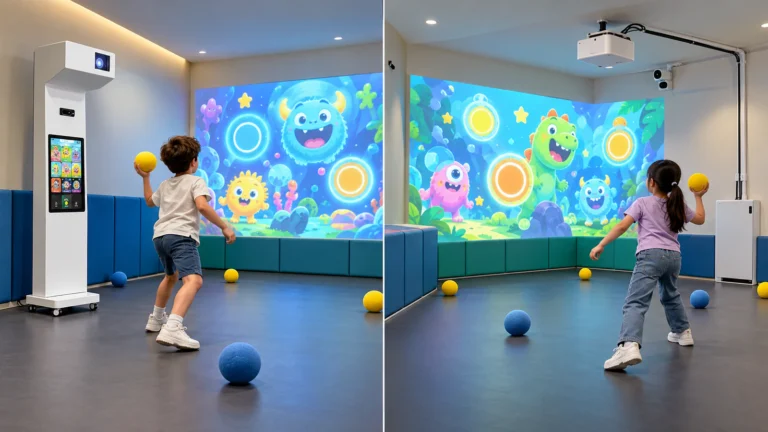
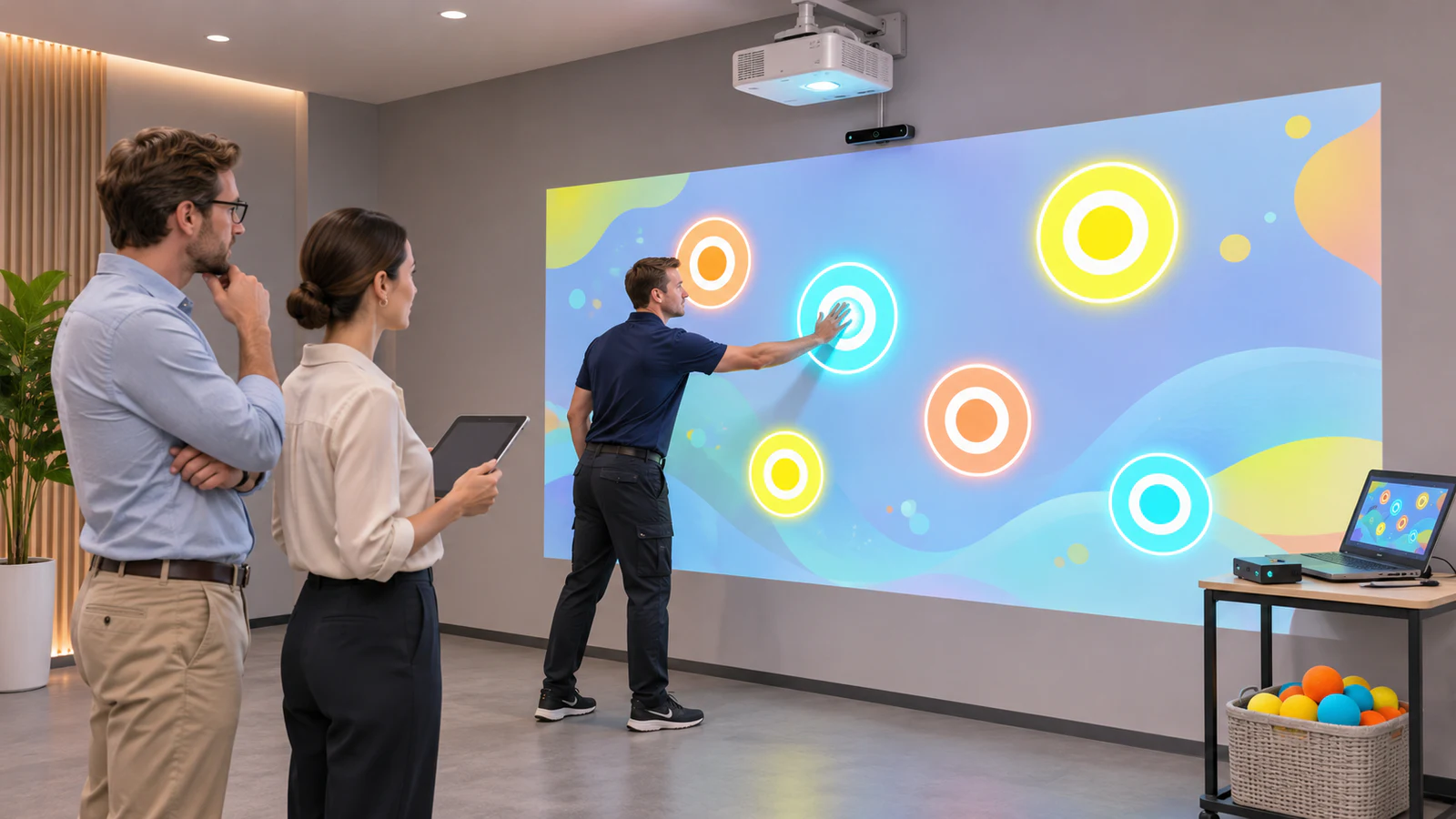
First, describe what players will actually do. Touching projected objects, throwing soft balls and kicking a football create different requirements for detection, content and wall construction. A demonstration of one action does not prove that the system supports another.
Send each shortlisted supplier the same information:
- Venue type, target age group and intended interaction.
- Wall width and height, room depth and ceiling height.
- Photos showing lighting, obstacles and possible mounting positions.
- Expected group size, operating hours and target opening date.
- Installation country and the work your local team can undertake.
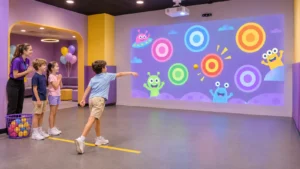
Next, ask for a proposed configuration and an explanation of why it suits the site. A relevant interactive ball wall solution should address the throwing area and surface, not just show attractive game footage.
Should You Buy from a Manufacturer, Distributor or Integrator?
These roles can overlap. A manufacturer may also integrate third-party components, while a distributor may provide installation and local repairs. Compare the work each company actually performs rather than relying on its label.
| Partner type | Potential advantage | What to verify |
|---|---|---|
| Interactive wall manufacturer | Direct access to product configuration, assembly and repeat-order planning | Which components it makes or integrates, who controls software changes, and who handles faults |
| Distributor | Local communication, available stock or replacement equipment | Authorization, stock availability, warranty handling and access to technical support |
| AV or attraction integrator | Coordination of mounting, wiring, calibration and site handover | Relevant wall-game experience, installation scope and responsibility for system performance |
For example, a multi-site operator with an experienced installation team may benefit from direct manufacturer supply. In contrast, a venue without technical staff may place greater value on an integrator who can attend the site.
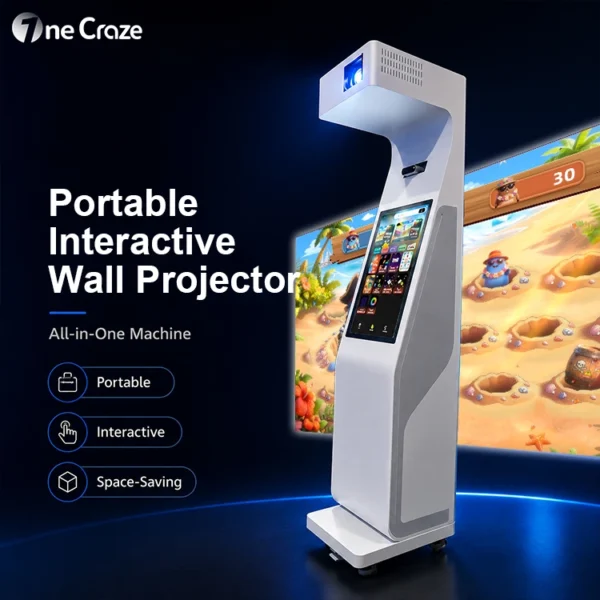
If you plan to install or resell equipment, review the scope of an interactive wall game kit separately from a fully installed attraction. Neither supply model automatically includes the other’s services.
What Advantages Can an Interactive Wall Manufacturer Offer?
Buying directly can help when the manufacturer controls the parts of the system that matter to your project. However, direct supply does not automatically mean the lowest total cost or full ownership of the software.
More precise customization
A manufacturer with access to the development team may coordinate changes to game themes, languages, cabinet design or controls. Before ordering, separate a logo change from a new game mechanic: the development effort and acceptance tests differ.
For custom interactive wall games and OEM options, request a written scope covering deliverables, revision rounds, schedule and usage rights. Branding rights do not automatically include source code or permission to resell software.
Consistency across repeat orders
For multiple venues, ask the manufacturer to maintain an approved component list and software version record. Also require approval before substituting a projector, sensor or computer. This gives your installation team a more consistent starting point when opening another location.
A clearer technical escalation route
Direct access to the team responsible for integration can help resolve calibration or compatibility problems. Nevertheless, ask who handles third-party component failures and whether replacement parts require local installation. A factory contact is useful only when responsibilities are clear.
What Evidence Should You Request Before Paying a Deposit?
Request a live demonstration of the proposed interaction, not only an edited promotional video. Ask the supplier to identify the hardware and software version being demonstrated and explain any differences from your quotation.
During the session, check:
- Response near the center and edges of the active wall area.
- Performance with the intended number of simultaneous players.
- Tracking when players move across each other’s paths.
- Repeated game changes and recovery after a restart.
- Calibration steps that your operator will need to perform.
Agree on test duration and acceptance criteria before the demonstration. Use a factory acceptance test checklist to record the configuration, results and unresolved issues before shipment. Site acceptance should then confirm operation under your actual lighting and mounting conditions.
How Should You Compare Quotes and After-Sales Support?
Compare offers on equal terms. One supplier may quote only a projector and computer; another may include tracking hardware, commercial software, mounts, calibration and training. Use a system quotation comparison to identify these differences before negotiating.
Separate the purchase price from delivery, installation and ongoing expenses. Ask whether software requires renewal, whether updates cost extra and what happens if the computer fails. Review interactive wall software licensing and compatibility before assuming that a license can move to replacement hardware.
Finally, define the support process in writing: service hours, response targets, diagnostic information required, replacement-part arrangements and who pays return shipping. Distinguish remote troubleshooting from an on-site visit. A long warranty is less useful if the agreement leaves these responsibilities unclear.
It can reduce some purchasing costs, particularly for repeat orders. However, freight, installation, software charges and local service affect the total. Compare complete delivery scopes rather than factory prices alone.
Ask which operations it performs internally, request a live tour of the relevant assembly or testing area, and match the demonstration to your proposed equipment. Separately verify who develops and licenses the software; manufacturing hardware does not establish software ownership.
Some suppliers offer branding, language changes or custom development. Request examples and a written specification. Confirm commercial usage rights, update responsibility and whether the proposed customization works with the quoted tracking system.