Why Are Projector Mapping Videos So Effective in Restaurants?
A great restaurant experience depends on emotion. Guests want to feel that they are stepping into something special. Projection mapping videos help create that feeling because they add motion, mood, and narrative to the environment without requiring permanent physical décor changes.
Unlike printed decoration or static LED signage, mapping content can shift throughout the day. A restaurant can display elegant ambient visuals during dinner service, festive storytelling during holidays, and energetic branded scenes during private events. This flexibility is one reason projection mapping has expanded into more diverse commercial venues and immersive hospitality settings.
Another key advantage is that immersive projection can increase the value of the venue itself. In large hospitality environments, permanent projection attractions have helped spaces become stronger revenue generators and more attractive for events. Christie’s Union Station case study describes an indoor immersive projection installation that increased event-related revenue significantly while complementing the architecture rather than competing with it.
What Makes the Best Projector Mapping Videos for Dining Spaces?
The best projector mapping videos for restaurants do not simply look flashy. They must fit the pace of dining, support the theme of the venue, and remain visually comfortable for guests.
Good restaurant mapping videos usually have these qualities:
1. Slow, elegant motion
Fast-moving content can feel overwhelming during a meal. In dining environments, smooth transitions and layered animation often work better than aggressive visual effects.
2. Strong storytelling
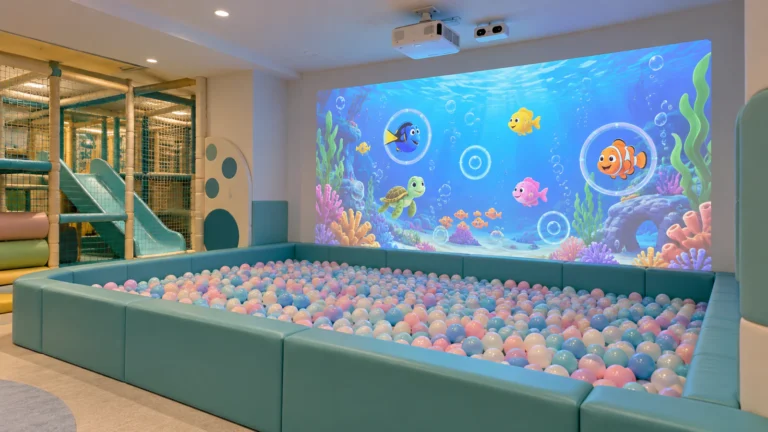
Guests remember experiences when visuals connect with a theme. A seafood restaurant may use underwater scenes, while a luxury fine dining venue may use abstract light art or seasonal narratives.
3. Space-aware design
The content should be designed for the exact surfaces in the restaurant. Projection mapping is powerful because it adapts visuals to walls, tables, arches, ceilings, and decorative structures.
4. Balanced brightness
Restaurants often have ambient lighting, candles, windows, and reflective surfaces. Brightness and image quality matter because visuals must stay clear without overpowering the dining atmosphere. Christie’s case study highlights high brightness and high resolution as critical for overcoming ambient light in immersive indoor environments.
The Best Types of Projector Mapping Videos for Restaurants
1. Ambient Nature Projector Mapping Videos
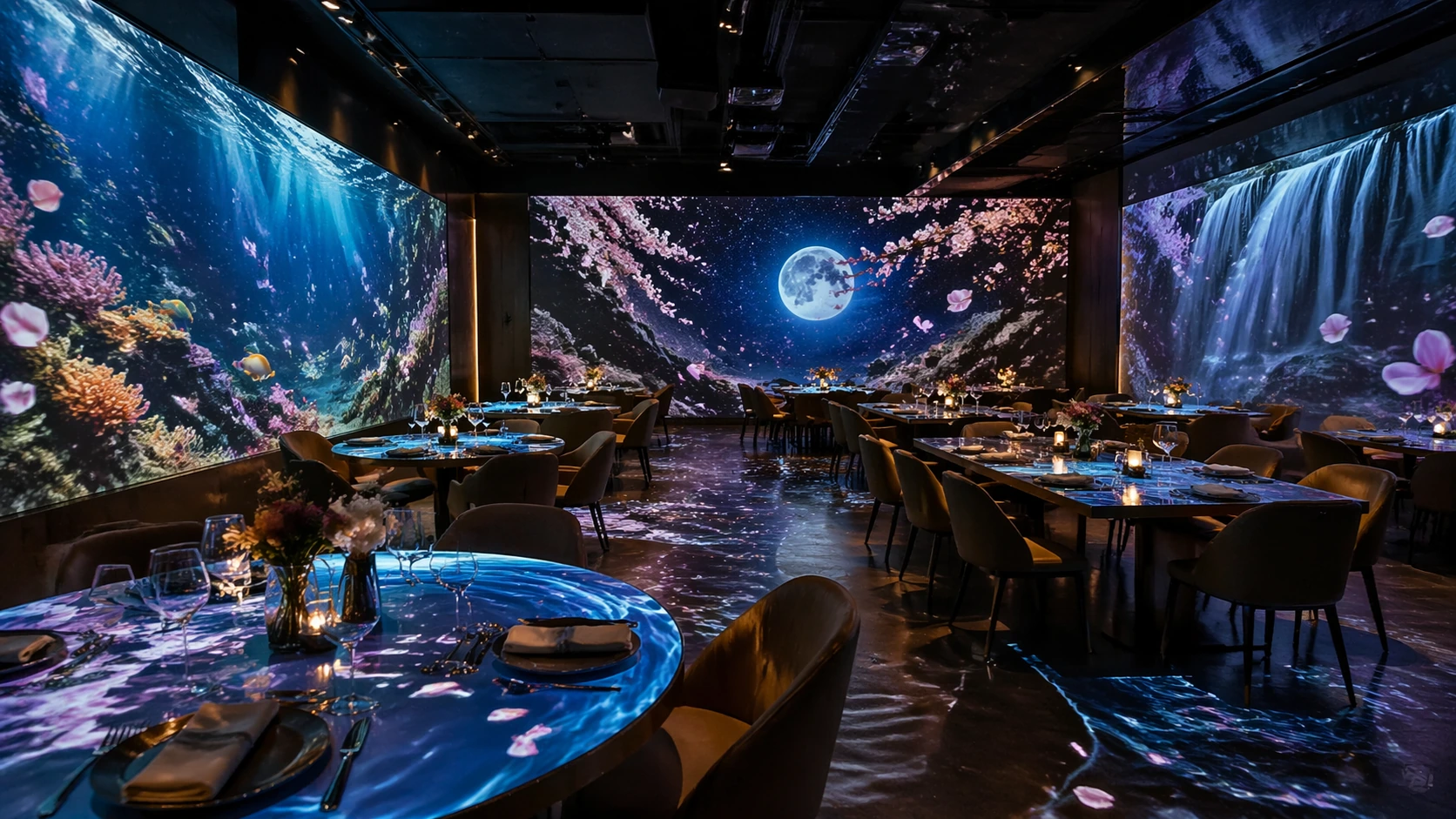
Nature-inspired visuals are among the best choices for immersive dining because they create mood without distracting from conversation. Popular themes include:
- flowing water
- moving clouds
- forest light
- underwater scenes
- blooming flowers
- starry skies
These videos work especially well in fine dining, rooftop dining, hotel restaurants, and themed tasting rooms. They help the room feel alive while keeping the guest experience calm and premium.
2. Seasonal and Holiday Projection Mapping Videos
Restaurants constantly need fresh promotional ideas. Seasonal projector mapping videos make it easy to update the venue for:
- Christmas dining events
- Valentine’s Day specials
- Halloween dinners
- Lunar New Year celebrations
- summer-themed menu launches
This category is commercially powerful because it gives restaurant operators a reason to update content several times a year without changing the physical design of the space.
3. Interactive Table Projection Mapping Videos
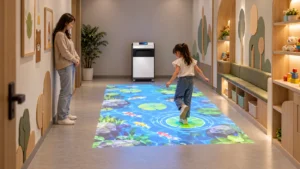
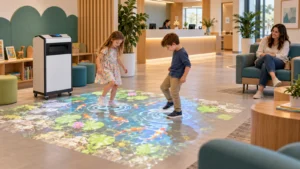
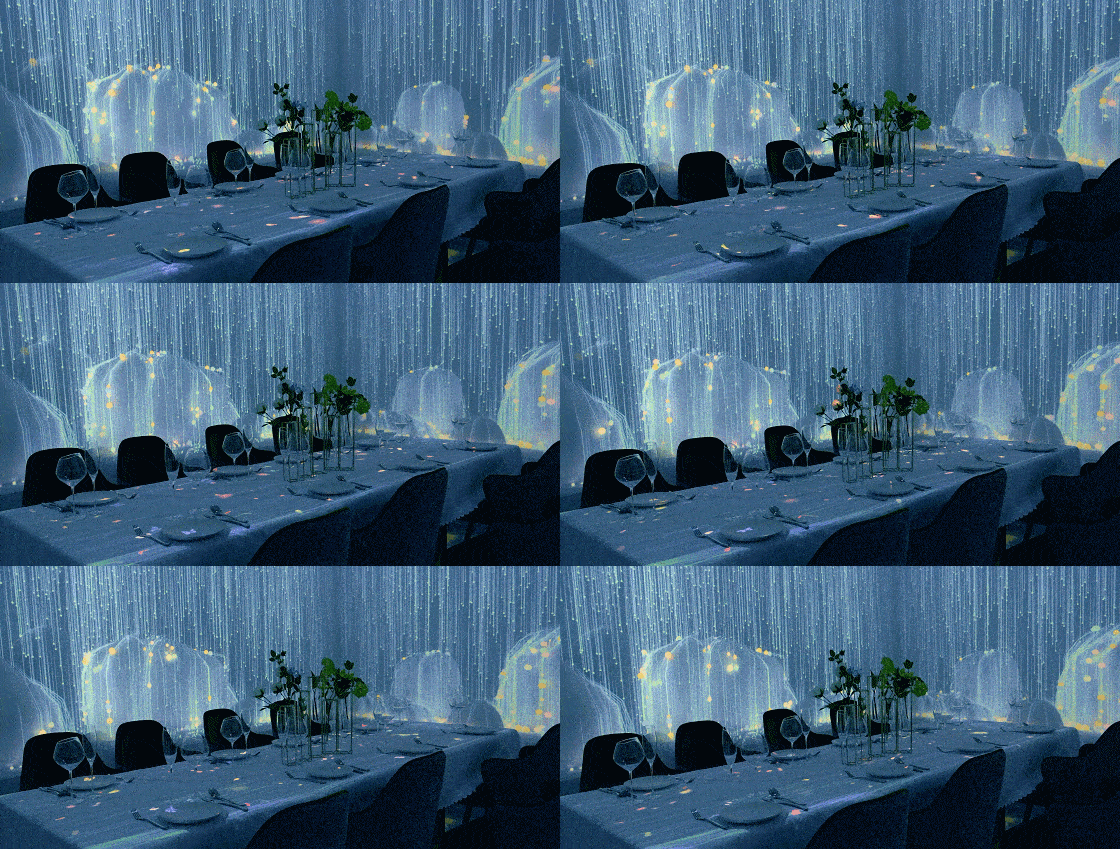
Tabletop projection is one of the most exciting directions in immersive dining. These videos can simulate moving plates, magical ingredients, ocean waves, floating sparks, or personalized celebratory scenes.
This style works particularly well for:
- chef’s table experiences
- tasting menus
- birthday dinners
- brand activation dinners
- luxury private dining rooms
For SEO and sales, this is a strong angle because buyers searching for immersive restaurant ideas often want highly visual, social-media-friendly experiences.
4. Story-Driven Themed Dining Videos
Themed restaurants and immersive dinner shows benefit from projection content that tells a story over the course of the meal. Instead of looping decorative visuals, these videos unfold in stages.
For example:
- an underwater journey during a seafood tasting
- a fantasy forest for a family dining experience
- a futuristic cityscape for a cocktail lounge
- a cultural storytelling sequence for destination dining
This style aligns with the broader trend of immersive storytelling in entertainment and hospitality spaces. Industry sources increasingly describe projection mapping as a tool for connected narrative environments, not just visual spectacle.
5. Architectural Wall and Ceiling Mapping Videos
Some of the best restaurant mapping videos are designed to enhance the room itself. Rather than treating the projector as a screen, these videos make use of columns, arches, textured walls, and decorative ceilings.
This can create:
- animated mural effects
- glowing ceiling patterns
- moving architectural illusions
- room transformation effects for private events
Large-scale immersive venues have shown that architectural projection is especially effective when it complements the space rather than hiding it. That principle translates very well into restaurants with strong interior design.
6. Branded Promotion and Menu Launch Videos
Restaurants can also use projector mapping videos for business goals, not just ambiance. Mapping content can highlight:
- signature menu launches
- chef introductions
- wine pairings
- anniversary campaigns
- sponsor collaborations
- branded dining events
This approach is ideal for hotel restaurants, chain concepts, and event-focused venues that want stronger storytelling around promotions.
Do Restaurants Need Expensive Equipment for Great Mapping Videos?
Not always. However, the quality of the final experience depends on the match between content, projector, surface, and environment.
For immersive dining, key technical considerations include:
- brightness
- resolution
- throw ratio
- color fidelity
- lens choice
- media server or playback system
- surface material
- installation angle
Industry case studies repeatedly show that brightness, resolution, and the ability to adapt to the venue are central to successful projection mapping projects. Creative content production also represents a major part of the total project value, not just the hardware.
They are custom animated visuals projected onto restaurant surfaces such as walls, tables, ceilings, or décor to create immersive dining experiences
Yes. Small restaurants can use compact projection systems for walls, tabletops, private rooms, or seasonal displays, as long as the content is designed for the space.
Normal projection displays content on a flat surface like a screen. Projection mapping adapts visuals to the shape and structure of real-world surfaces such as tables, walls, columns, or ceilings.