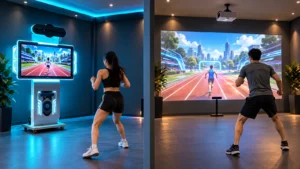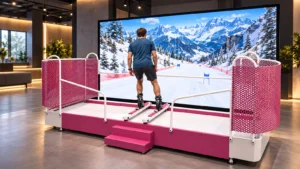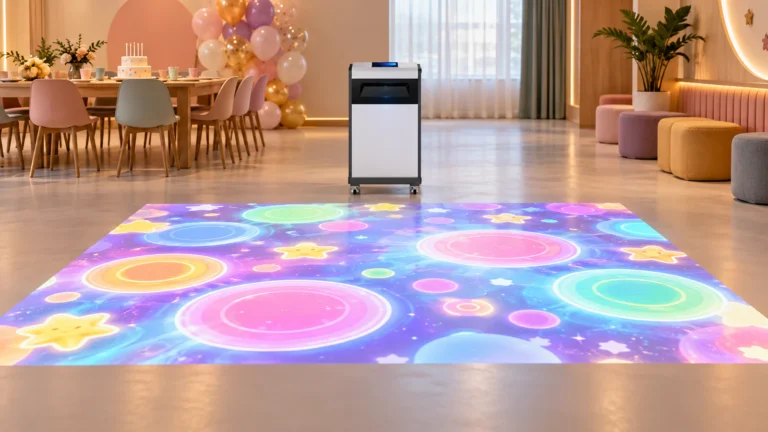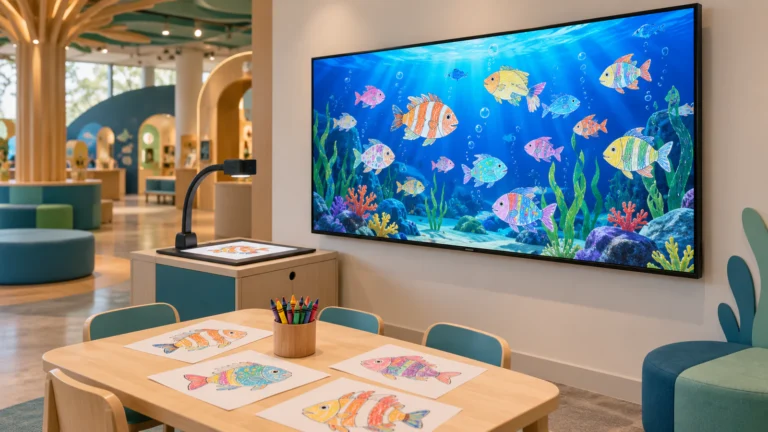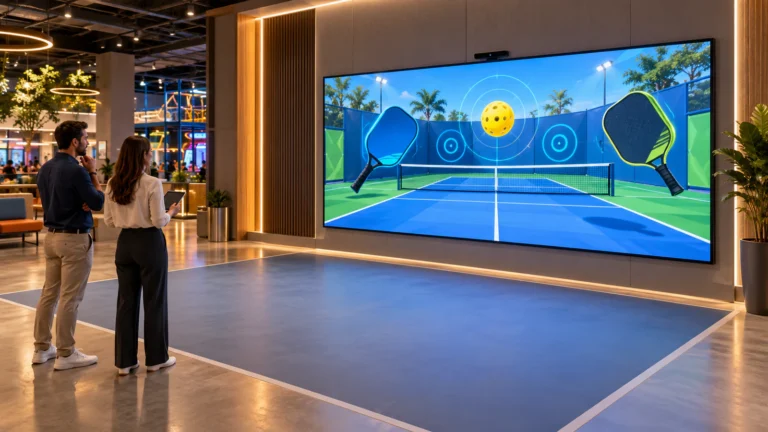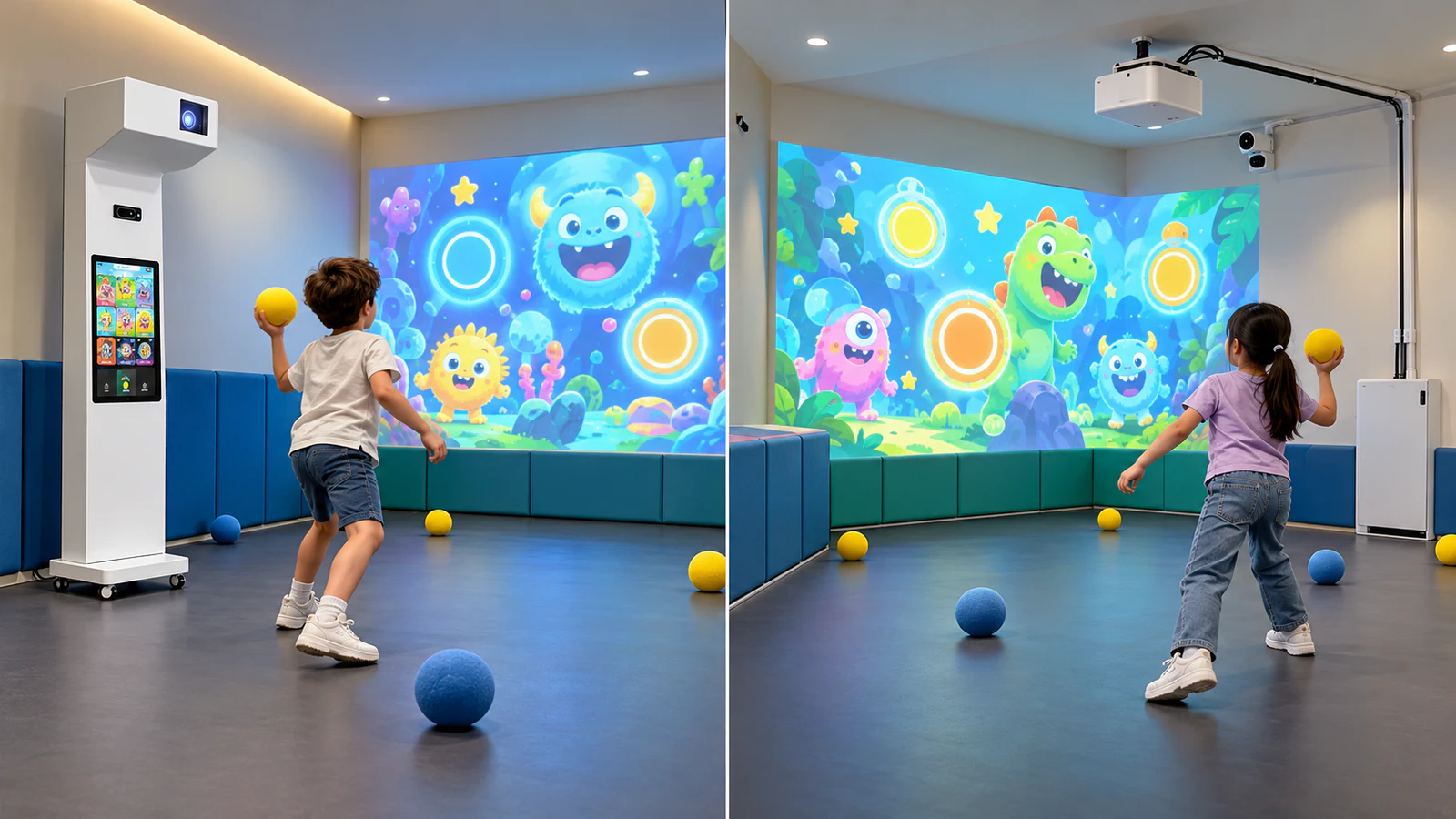
For indoor playground operators, distributors and AV integrators, OneCraze offers relevant product directions through its Smash Ball interactive projection system and mobile wall-game equipment. Compare the proposed configurations against the same intended gameplay before choosing a supply format.
What Does an Interactive Ball Wall Solution Include?
Also described as a ball throwing wall projection system or an interactive wall gaming system, this attraction lets players throw approved balls at projected targets. The software responds with effects, game progress or scores, depending on the selected content.
Here, “ball wall” means a projection-based attraction—not a tube-and-airflow ball wall, magnetic ball track or LED target panel. Making that distinction in an inquiry helps a supplier recommend the correct equipment.
A working solution connects four elements: the projected image, sensing equipment, computer and game software. It also needs a suitable impact surface and a practical throwing area. Therefore, buying a projector alone does not provide a complete interactive game.
OneCraze’s Smash Ball page describes target-hitting gameplay and lists projection, computing, sensing and controls. However, buyers should confirm the current equipment schedule and included game list in the project quotation.
When Does an All-in-One Interactive Wall Projector Make Sense?
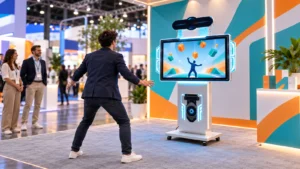
An integrated machine brings the main equipment together in one enclosure or mobile assembly. OneCraze’s mobile interactive wall projector combines projection, sensing, software, touchscreen control and a portable base.
This format is worth considering when the operator wants a self-contained unit, has limited installation resources or needs to reuse equipment in different activity rooms. For a distributor, it also provides a defined physical product to demonstrate to prospective customers.
Integration simplifies the equipment arrangement, not every site condition
The machine still needs an appropriate position relative to the wall. Its footprint, projection path and sensor view must remain clear of players and circulation routes. Moving it to another room may require alignment checks or recalibration according to the supplied instructions.
Moreover, an all-in-one enclosure does not make every wall suitable for ball impacts. Review the wall surface guide for ball-throwing games before selecting paint, panels or padding.
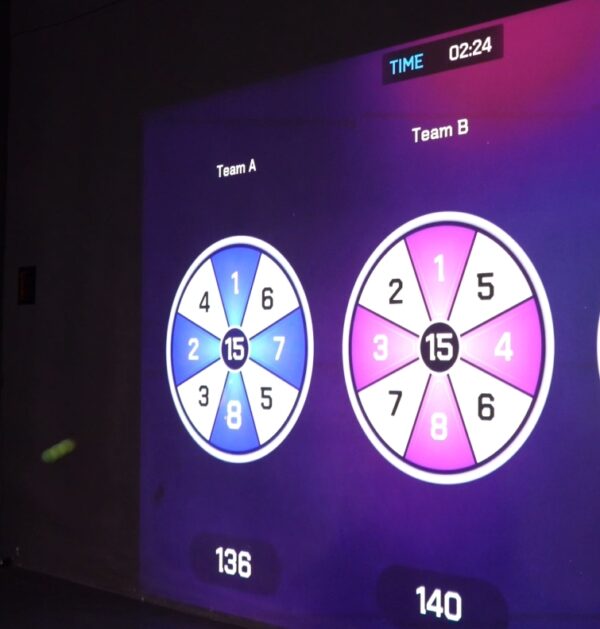
When Is Separate Equipment the Better Starting Point?
It can be a practical direction for a permanent attraction where an AV contractor handles mounting, cabling and commissioning. It may also suit buyers who want to source selected components locally, provided the supplier approves the complete hardware combination.
Typical reasons to discuss this format include:
- Keeping the main equipment outside the throwing and walking areas.
- Matching a specific projection surface or available mounting position.
- Coordinating the attraction with existing AV infrastructure.
- Establishing a repeatable installation specification for several sites.
However, placement flexibility does not guarantee better performance. Component compatibility and calibration still determine whether the game responds correctly. The ball-tracking guide explains why the approved balls and sensing configuration need to be evaluated together.
How Do the Two Supply Formats Compare?
Compare the operational differences first. Neither format automatically offers more games, greater accuracy or a lower total project cost.
| Decision factor | Integrated projector system | Separate-equipment system |
|---|---|---|
| Equipment arrangement | Main functions combined in a mobile unit | Components positioned individually |
| Site work | Usually fewer separate equipment placements; wall and play-area preparation still apply | Requires a coordinated mounting, cabling and commissioning plan |
| Room changes | Movable, but image and sensing alignment need checking | Generally planned around a fixed installation |
| Layout flexibility | Constrained by the unit’s optical and sensing arrangement | More options for component placement, subject to compatibility |
| Maintenance | Service access depends on the enclosure design | Individual components may be accessible separately, depending on mounting |
| Strong buying scenario | An operator seeking a self-contained machine | A permanent venue or integrator managing a site-specific installation |
What Should an Interactive Ball Wall Supplier Deliver?
The supplier’s role is to connect the equipment format with a usable installation and an agreed game package. A useful proposal should show what arrives, where it goes and who makes the combined system ready for use.
Match the offer to your purchasing role
For a venue owner, prioritize a layout, operator workflow, training and a clear support contact. For a distributor, discuss documentation, spare parts and any available branding options. For an AV integrator, request exact interfaces, approved hardware and commissioning responsibilities.
If the project needs branded graphics, translated instructions or different game rules, use the interactive wall customization guide to separate standard functions from additional development. OEM branding should not be treated as permission to resell every software element or obtain its source code.
Define what “turnkey” means in the quotation
A turnkey interactive wall projection solution should have an explicit delivery boundary. Clarify whether wall preparation, mounting, installation, travel, training and site acceptance are included or supplied by others. Our guide to comparing system quotations helps distinguish equipment supply from a broader project package.
Finally, agree on a factory acceptance demonstration using the quoted games and approved balls, followed by the necessary site checks. A demonstration of a different configuration should not substitute for evidence about the system being purchased.
Not always. A children’s target-throwing wall may use one approved ball type across several games. A sports wall may support additional actions or equipment. Confirm each required activity instead of assuming the product names guarantee identical capabilities.
Ask whether a partial equipment package is available for your project. Supply the proposed projector, computer and sensor details so compatibility can be assessed. Do not assume software will work with any locally purchased hardware.
Not necessarily. A projection-based ball wall can use external sensing rather than a touchscreen display. The touchscreen on a mobile machine may serve as the operator’s control interface, while the play wall has a different function.
Request an Interactive Ball Wall Solution
Send OneCraze your wall dimensions, room photos, available mounting positions, target audience and preferred game types. Tell us whether you need a mobile unit, a fixed installation or equipment for resale. Request a configuration proposal comparing the appropriate supply format, game package and installation responsibilities for your project.