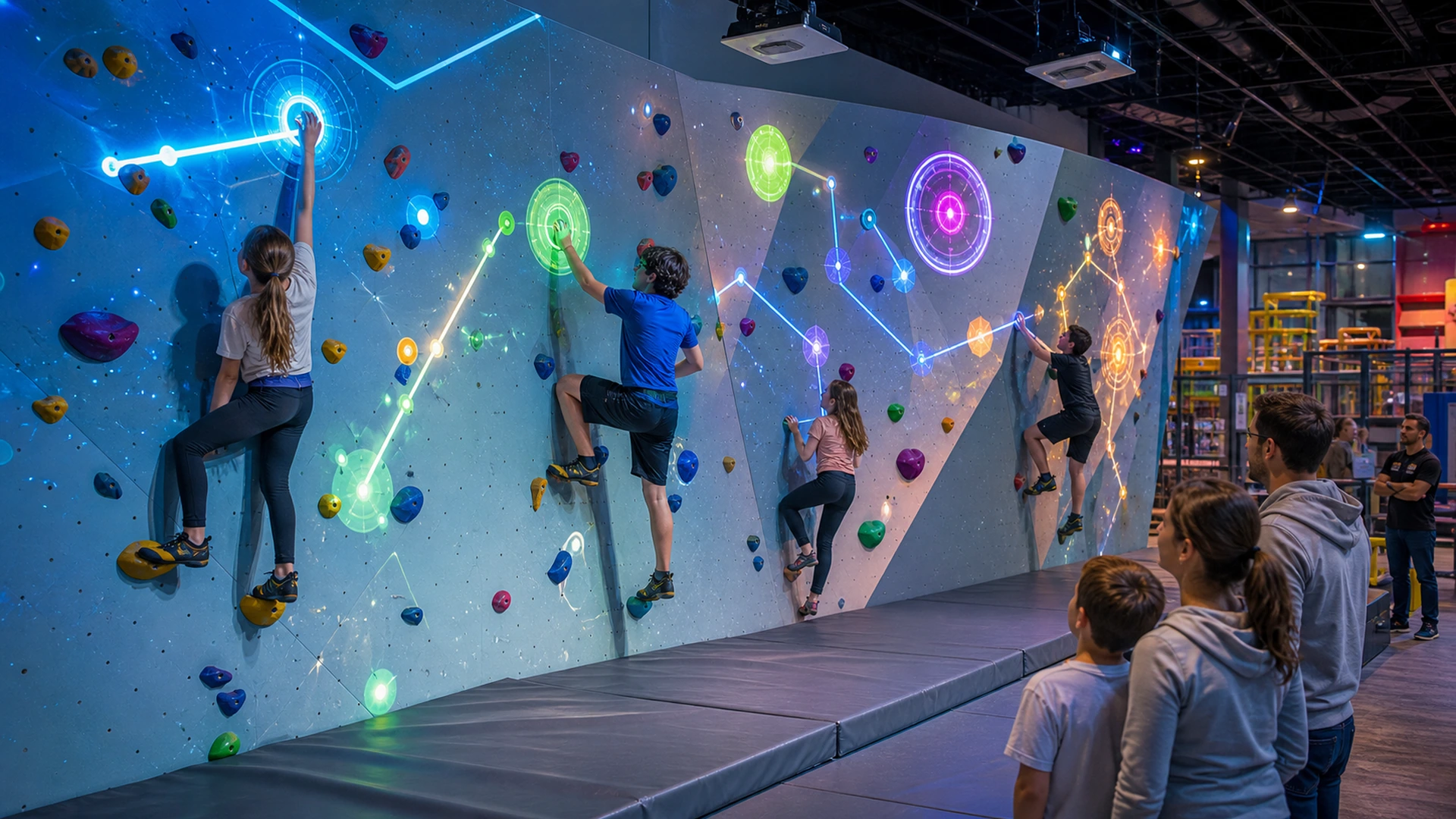
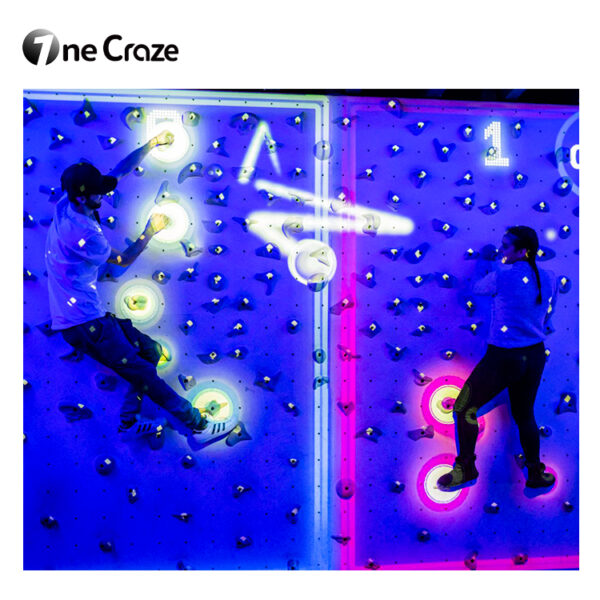
OneCraze’s interactive rock climbing projection system combines projected games with movement sensing. If you already have a climbing wall, the purchasing question is whether the proposed equipment and content suit your actual surface—not simply whether the wall is white.
Why Do Projection Climbing Walls Often Use Light Panels?
A projector adds light to the surface. The surface’s color and finish influence the image visitors see, so the same game can look different on a pale panel, a dark panel or a wall covered in colorful graphics.
A light, neutral background can help keep game colors recognizable. Nevertheless, color alone does not determine suitability: gloss, texture, ambient lighting and the projected image size also matter. Ask for a sample test under representative conditions before specifying a finish.
| Existing wall condition | What to evaluate before buying |
|---|---|
| Light, neutral panels | Target contrast, surface glare and image uniformity |
| Dark or strongly colored panels | Whether essential targets and instructions remain readable |
| Large printed graphics | Whether the background competes with game symbols |
| Glossy areas | Bright reflections from player and staff viewing positions |
| Angled panels or projecting volumes | Focus, mapping, shadows and sensor visibility across the intended game area |
These are assessment points, not automatic pass or fail rules. Keep any panel treatment compatible with the climbing structure’s manufacturer instructions.
Can You Keep Existing Colored Climbing Holds?
Possibly. Start by identifying where the game displays its targets. A large target on the panel between holds has different visibility requirements from a small symbol projected directly onto a hold.
Ask the supplier to demonstrate the selected games with representative hold colors, depths and spacing. Then check three separate effects:
- Color: Can players distinguish the target against the hold or surrounding panel?
- Shadow: Does the hold block important parts of the projected image?
- Detection: Can the sensor observe the action that the game requires?
White holds can still cast shadows, while colored holds do not automatically prevent movement detection. Therefore, avoid treating appearance and tracking as the same problem. The comparison of IR cameras, depth sensors and LiDAR explains why the detection method matters.
Where Should the Projector and Sensor Be Installed?
Plan their positions separately. The projector needs a suitable optical path to the wall; the sensor needs a clear view of the required player actions. Mounting them together may suit a particular package, but that arrangement still needs validation.
Provide the wall width and height, panel angles, ceiling dimensions and possible mounting locations. Add front and side photographs showing the deepest holds and volumes. The supplier should return a drawing identifying the proposed image area, equipment positions and sensing coverage.
The climbing-wall projection ratio guide introduces throw-distance planning. However, a throw ratio alone does not prove that a layout will avoid shadows or maintain focus across an uneven wall. Confirm the exact lens, installation orientation and clearance requirements.
Also test with a climber in representative positions. An empty wall can look clear even when the player later blocks a target or part of the sensor view. Equipment placement must remain compatible with the venue’s climbing and fall-area layout.
Which Surface and Installation Costs Belong in the Quote?
Request separate pricing for the digital system and any physical wall work. This lets your team compare retaining the current installation with changing specific components after testing.
| Quotation item | What the supplier or installer should clarify |
|---|---|
| Projector, lens and mount | Exact models, coverage, positioning and installation accessories |
| Sensor, computer and software | Supported games, tracking method and commercial license |
| Panel preparation or replacement | Whether required, approved material and responsible contractor |
| Hold changes | Which holds need attention, why, and who supplies and installs replacements |
| Cabling and electrical work | Included scope and local preparation required |
| Calibration and acceptance | Factory demonstration, on-site tests, training and saved settings |
For a consistent comparison, follow the equipment quotation guide. If a supplier proposes brighter projection or additional equipment, ask which observed limitation the change addresses and request a demonstration of the result.
What Should a Supplier Demonstrate Before You Order?
Request evidence that resembles your installation. A promotional video on a smooth white wall cannot establish performance with your colored panels, deep holds and room lighting.
Use a short acceptance checklist:
- Run the actual games proposed in the quotation.
- Check target visibility across the agreed play area under normal lighting.
- Demonstrate representative holds and player positions that create shadows or occlusion.
- Verify the required interaction, including missed actions and unintended triggers.
- Restart the system and confirm that staff can restore the approved setup.
Agree on measurable acceptance criteria with the supplier. The factory acceptance test guide can help organize equipment checks before shipment. Final site testing must still evaluate the installed wall.
If the space cannot support the intended climbing experience, evaluate a separate interactive gym wall game as an alternative attraction, rather than assuming the same package fits both activities.
Not for every system. Obtain the supplier’s requirements for the exact game package and test the proposed hold arrangement. White holds alone do not eliminate shadows or tracking obstructions.
It may improve visibility, but it does not remove the surface’s color influence, physical shadows or sensor obstructions. Compare the proposed setup under representative conditions before paying for a brightness upgrade.
It depends on the software and the extent of the change. Systems that associate targets with specific hold positions may need updates. Even with general movement tracking, verify coverage and gameplay after rearranging holds or volumes.