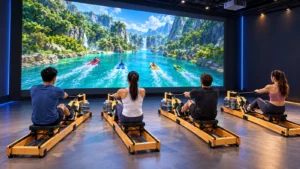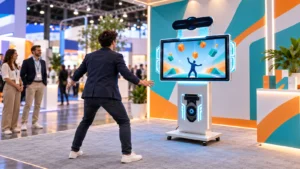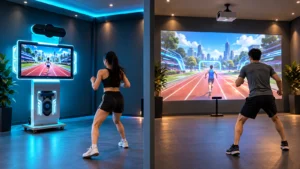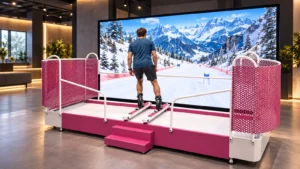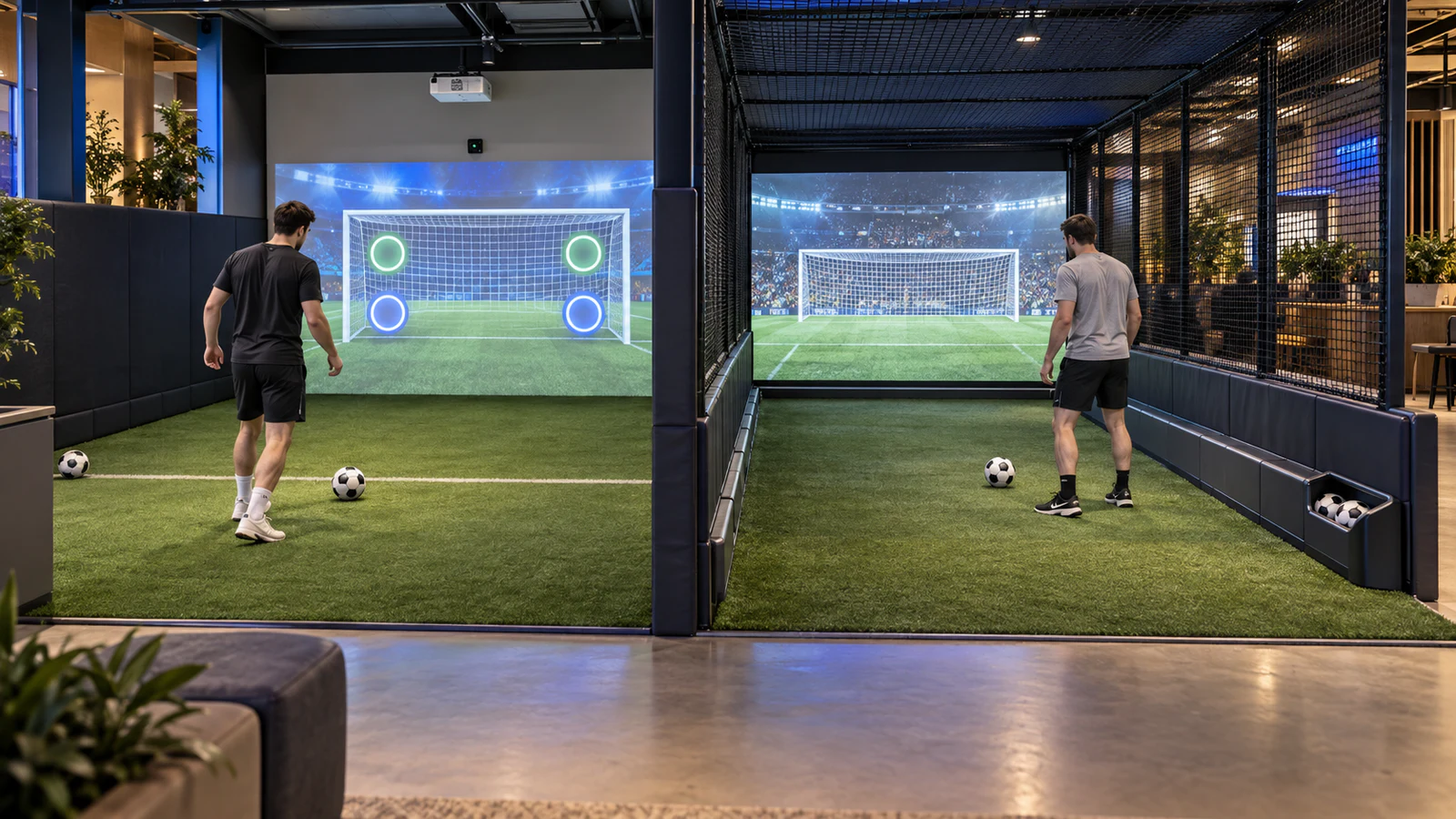
For FECs, sports bars and indoor activity venues, the right purchase depends on the complete play cycle, available space and maintenance resources. OneCraze’s commercial multi-sport ball simulator guide provides a starting point for the interactive-wall option. Automatic return or launching should only be treated as included when the supplier confirms the hardware in the quotation.
What Is the Difference Between the Two Systems?
An interactive football wall detects kicks or ball impacts and uses software to trigger game responses. A projection-based version also needs a suitable impact surface, projector, sensing equipment and computer. Balls may rebound toward the player or require retrieval, depending on the physical layout.
An automatic ball-return system adds a collection and transport arrangement that brings balls to a defined location. Some packages also include a launcher, storage and feeding mechanisms. However, a launcher can require manual loading, and a return system can operate without launching passes.
| Buying factor | Interactive football wall | Automatic ball-return soccer simulator |
|---|---|---|
| Main purchasing focus | Targets, detection and game content | Gameplay plus ball collection and recirculation |
| Ball handling | Confirm rebound behavior and retrieval method | Confirm collection coverage and where balls return |
| Automatic passing | Not implied by the wall or scoring software | Included only when a launcher is specified |
| Sports variety | Depends on the approved game library and balls | Depends on software and mechanical compatibility |
| Layout drivers | Kicking distance, containment, display and sensor coverage | Those factors plus return channels and service access |
| Maintenance scope | Surface, sensors, display, computer and software | Also the moving parts in the supplied return and feed system |
The categories can overlap. A wall system may integrate with ball-handling equipment, but buyers need evidence of that integration. Read the ball-tracking guide to distinguish detected game events from measured speed or trajectory.
Which Format Fits an FEC, Sports Bar or Kids’ Venue?
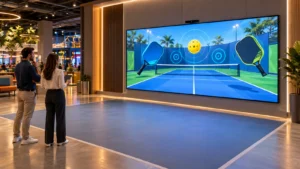
For a family entertainment center, first decide whether the attraction serves football fans or a wider group trying several activities. A multi-sport wall package is worth evaluating when the same space must support different games. Request the actual game list and approved ball types before promising that flexibility to customers.
For a sports bar, prioritize a clear playing boundary, spectator visibility and quick player changes. Automatic return may reduce retrieval interruptions, but the room still needs supervision, ball containment and access for staff. Confirm impact noise under realistic use, especially near seating or neighboring tenants.
For a children’s venue, assess ball size, weight, rebound behavior and game difficulty. If a launcher is proposed, require a model-specific demonstration of settings suitable for the intended users. Professional training performance should not be assumed from an entertainment game’s score display.
The FEC wall-game planning guide covers related questions about player flow and session operation.

How Much Space Does the Complete Attraction Need?
A screen width or equipment footprint is not the full room requirement. Ask for a dimensioned layout showing:
- The active player area and approved kicking distance.
- The impact surface, side containment and any overhead containment.
- The projector, sensor and operator-control positions.
- Ball collection channels, storage and launcher locations where supplied.
- Maintenance access, entry, exit and spectator positions.
In addition, check whether the return mechanism requires a raised platform or sloped floor. Those features can affect installation and access, so they belong in the proposal before construction begins.
Avoid applying another supplier’s room dimensions to your project. Send the usable width, depth, clear height, columns and door positions for assessment. The interactive wall installation guide can help you prepare the site information.
Does Automatic Ball Return Reduce Staffing or Increase Capacity?
It can reduce time spent retrieving balls when the collection system works reliably with the approved balls and expected shots. However, staff may still need to introduce the game, manage player changes, remove stray balls and respond to faults.
Measure the complete session cycle rather than using game duration alone:
Theoretical sessions per hour = 60 ÷ (play time + changeover and reset time, in minutes).
For example, a three-minute game followed by one minute of changeover allows 15 sessions per hour before interruptions. This is an illustrative calculation, not a OneCraze performance claim. Players per session, actual demand and downtime determine how that figure translates into visitor capacity.
During a demonstration, observe the next-ball delay, missed returns and staff interventions. For systems with a launcher, also watch the loading cycle and pause/resume behavior. More mechanical automation adds maintenance tasks, so request the cleaning procedure, wear-parts list and supplier-approved fault-recovery process.
What Should the Supplier Quote and Demonstrate?
Ask shortlisted suppliers to price the same scope. A wall-game quotation and a complete automated soccer bay may include very different equipment, even when both are described as a commercial soccer simulator.
| Quotation line | Evidence or detail to request |
|---|---|
| Display and impact surface | Exact hardware, approved balls and protection arrangement |
| Tracking and software | Detected actions, included games, license and update terms |
| Ball collection and return | Mechanism, collection area, returned-ball location and exclusions |
| Launcher, if required | Feed method, supported settings, controls and approved operating conditions |
| Installation and enclosure | Drawings, containment, floor work, cabling and responsible installer |
| Support and delivery | Packing, freight, commissioning, training, warranty and spare parts |
Then request an unedited demonstration using the proposed balls and game modes. It should show game start, several consecutive shots, scoring, collection or retrieval, player changeover and restart. Include representative off-target shots within the approved playing area and record any manual intervention.
Use the quotation comparison guide and factory acceptance test checklist to document the agreed package. Confirm the installed result again at the venue.
No. Scoring processes a detected event in software. Returning the ball requires a physical arrangement that must be specified separately.
Some multi-sport packages support several activities. Confirm each game, approved ball and required surface. Changing the scene does not automatically make the enclosure suitable for a different sport.
Do not assume so. Ask the supplier to define permitted operating conditions, supervision, fault handling and staff responsibilities. Automated return alone does not establish unattended operation.