Interactive Slide Projection System Manufacturer for Commercial Play Venues
For a buyer, the key question is not only “Which projector should I buy?” The better question is: “Who can provide a complete slide projection solution that fits my venue, slide dimensions, traffic flow and operation model?” A manufacturer or supplier with project experience can help match hardware, software and content to the real site.
OneCraze provides the Slide Interactive Projection system for commercial children’s entertainment venues. The solution can support indoor playgrounds, FECs, family resorts, commercial play centers, shopping mall activity spaces and themed kids areas. Compared with a generic projection device, a dedicated slide projection system is designed around movement, timing and repeatable children’s play.
The global attractions industry also puts strong emphasis on safety, operations and professional venue management. Industry bodies such as IAAPA provide safety resources for amusement parks, FECs, museums and related attractions, while official playground guidance from the U.S. Consumer Product Safety Commission reminds operators to evaluate play equipment, surfaces and use environments carefully. Local rules and project-specific safety requirements should always guide the final design.
What OneCraze Provides as a Slide Projection Solution Supplier
An interactive slide projection system should be treated as a project package. The projector creates the visual layer, but the attraction only works well when sensing, content, control and installation align with the slide structure.
| Solution module | What OneCraze provides | Why it matters for operators |
|---|---|---|
| Projection hardware | Projector configuration and projection planning | Helps create clear visuals on the slide surface |
| Motion sensing | Detection method for slide movement and interaction timing | Makes effects respond at the right moment |
| Game software | Interactive slide game scenes and control logic | Gives the attraction repeatable entertainment value |
| Content customization | Themes, colors, seasonal scenes or branded visual ideas | Helps the venue match its own concept or campaign |
| Layout advice | Review of slide size, angle, surroundings and viewing area | Reduces mismatch between hardware and site conditions |
| Installation support | Mounting guidance, calibration and operation advice | Helps the system run more smoothly after delivery |
| After-sales support | Training, troubleshooting and update guidance | Supports long-term commercial use |
This supplier role is important because a slide projection project is not only a media display. Children move quickly, staff need simple controls, and the system must stay stable during peak hours.
Custom Slide Projection Solutions for Different Venues
Different venues need different slide projection designs. An indoor playground may want colorful ocean, jungle or space scenes for younger children. A family entertainment center may prefer faster game effects, score-style interactions and party-friendly content. A shopping mall kids area may need a compact, eye-catching attraction that attracts passing families without complicated staff operation.
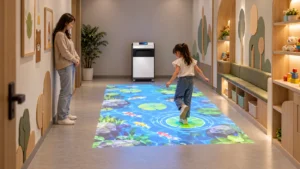
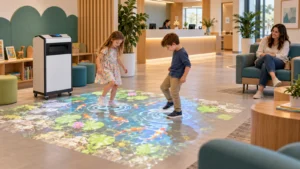
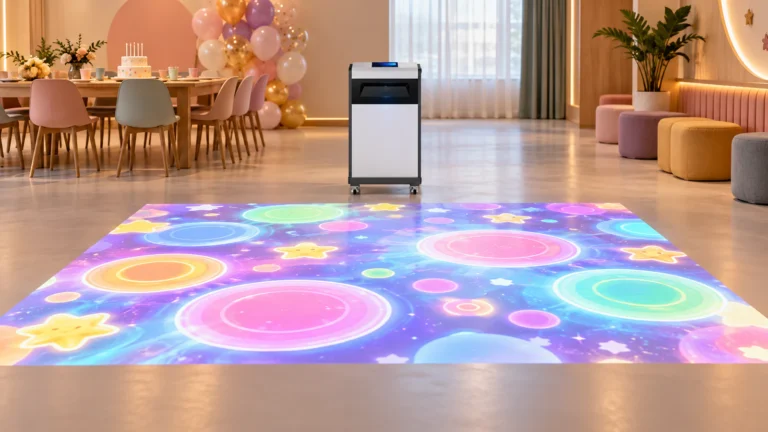
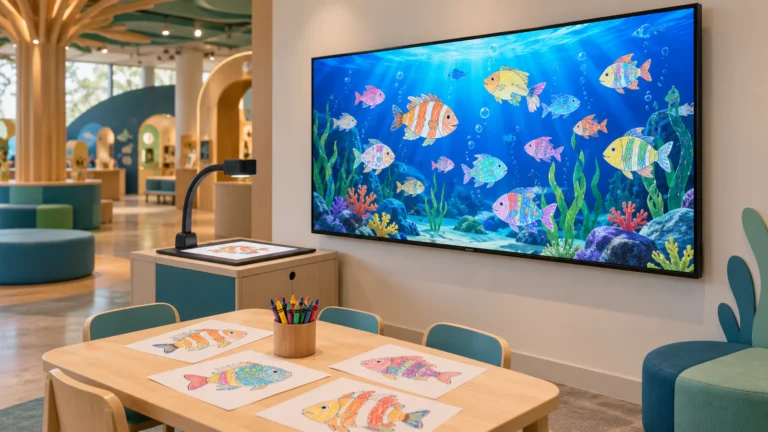
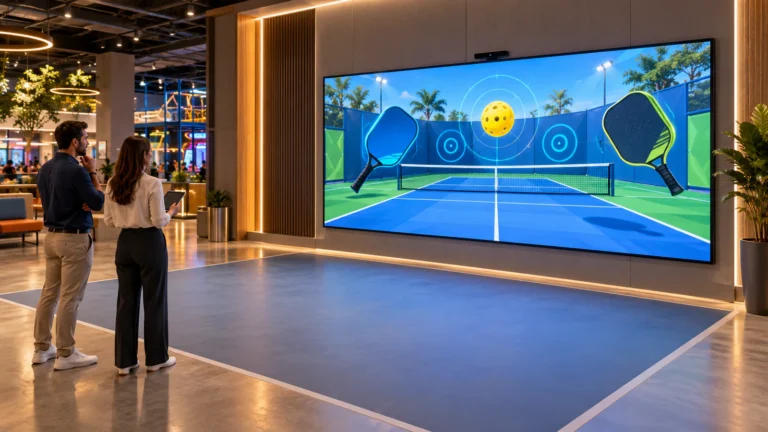
For larger projects, OneCraze can also help connect slide projection with other interactive attractions. For example, a venue might combine slide projection with interactive floor projection for FECs, interactive wall projection games or an interactive climbing wall game to create a fuller indoor playground experience.
How the Interactive Slide Projection System Works
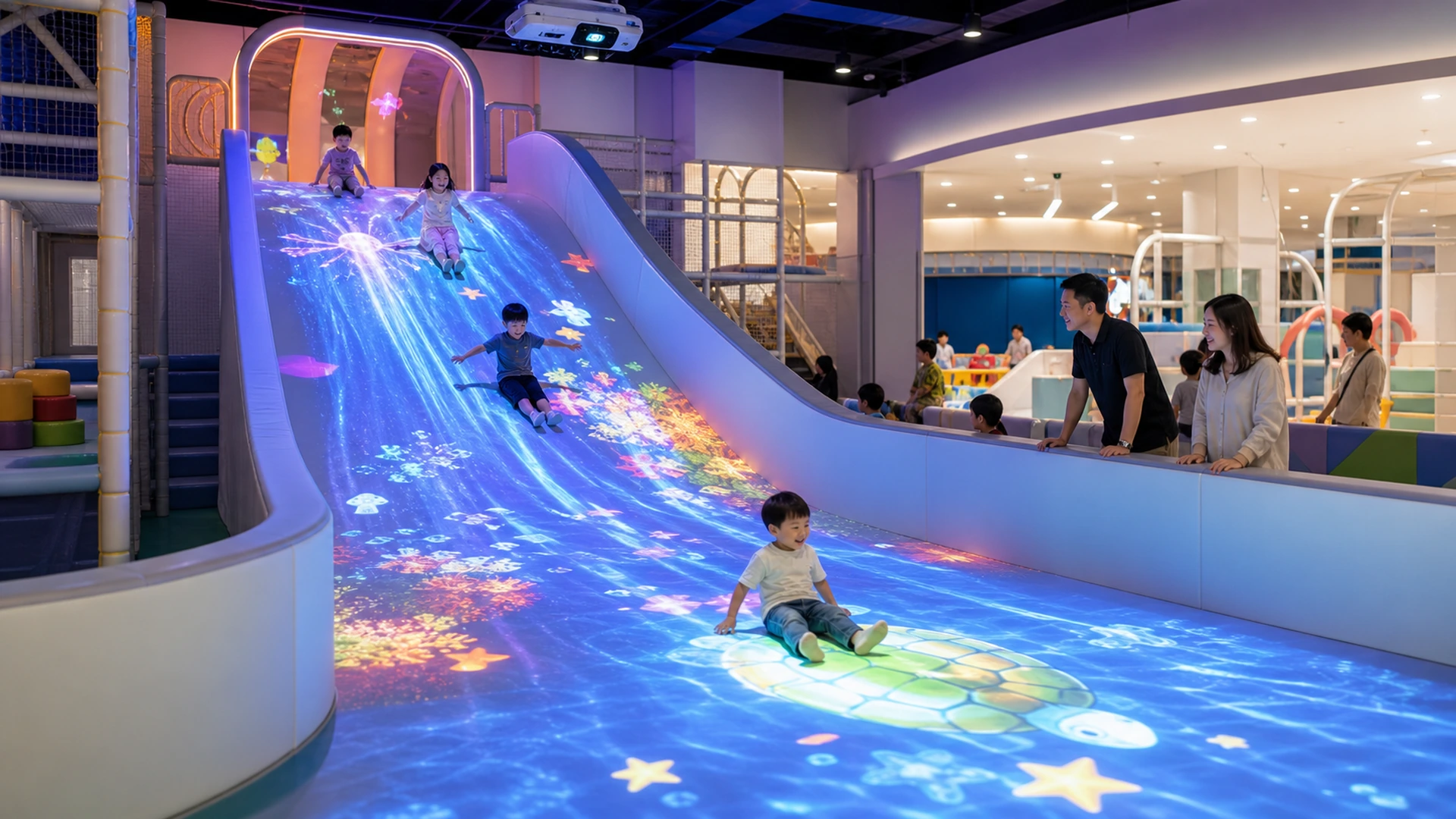
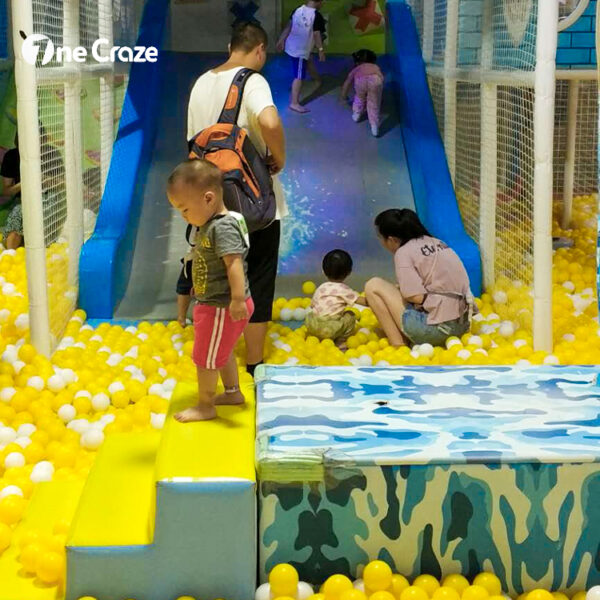
A slide projection system usually includes a projector, sensing device, control computer, game software and projection content. The projector displays animated scenes onto the slide surface or surrounding projection area. The sensor detects movement or timing as children use the slide. Then the software triggers effects such as flowing water, stars, animals, racing tracks, light trails or other game responses.
The installation team needs to consider the slide surface, projection distance, projector angle, brightness, ambient light and possible shadows. Calibration is also important. If the image does not align with the slide, the attraction may look weaker and feel less interactive. That is why a supplier should review site details before recommending the final setup.
Why Choose a Manufacturer Instead of Only Buying a Projector?
A projector is only one part of the attraction. If an operator buys a generic projector and tries to build the whole experience alone, they still need software, motion detection, content, mounting, calibration, safety flow and technical support. A manufacturer or solution provider can reduce that integration burden.
The difference becomes clear during daily operation. A commercial venue needs a system that staff can start, monitor and maintain. It also needs game content that children understand quickly. In that sense, the supplier’s software and project support are just as important as the hardware.
Project Workflow: From Venue Layout to Final Installation
OneCraze can support the project from early planning to final operation. Before recommending a system, the team should understand the slide dimensions, venue layout, ceiling conditions, light level, power access and expected visitor age group.
| Project step | Information or action needed |
|---|---|
| 1. Venue review | Share photos, drawings, slide size, ceiling height and surrounding space |
| 2. Solution proposal | Confirm projection method, hardware configuration and game direction |
| 3. Content planning | Select standard scenes or discuss custom themes |
| 4. Installation preparation | Plan projector position, sensor location, cabling and control area |
| 5. Calibration | Align projected visuals with the slide surface and interaction timing |
| 6. Staff training | Teach operators how to start, switch and manage the system |
| 7. Support and updates | Provide troubleshooting, maintenance advice and future content options |
OEM, ODM and Custom Branding Options
Many commercial venues want an attraction that does not look exactly the same as a competitor’s. OneCraze can support custom content ideas for different themes, venue styles and campaign needs. For example, a shopping mall may want holiday scenes, a children’s park may want ocean or jungle themes, and a resort may want content that matches its brand story.
OEM and ODM discussions can also be useful for distributors, playground builders and regional entertainment equipment suppliers. A supplier may need localized game themes, branded start screens, content packaging or project support materials for its own market. In these cases, the goal is not only to sell one device, but to build a repeatable interactive slide projection solution.
Build a Custom Interactive Slide Projection Attraction
If you are planning an interactive slide projection system for an indoor playground, FEC, shopping mall kids zone, family resort or commercial play center, OneCraze can help you design a custom projection, sensing and game content solution for your venue.
Start here: view the OneCraze Slide Interactive Projection system or contact OneCraze for a custom project recommendation.
Buyers can also review OneCraze’s existing article on interactive slide projector games for kids playgrounds for a more implementation-focused overview. This manufacturer article focuses more on supplier capability, customization and project delivery.
Yes. OneCraze can support custom themes, visual styles, seasonal content and venue branding ideas depending on the project requirements. Custom content should match the slide size, target age group and attraction concept.
In many cases, yes. The project team needs to review the slide dimensions, surface, surrounding space, mounting conditions and lighting before confirming the final solution.
Yes. It is designed for commercial play venues such as indoor playgrounds, FECs, shopping mall kids areas and family entertainment spaces. Operators should still follow local safety rules and maintain proper staff supervision.