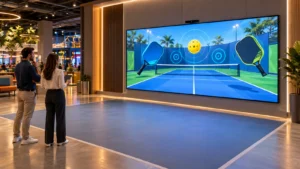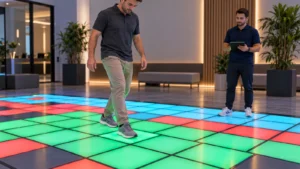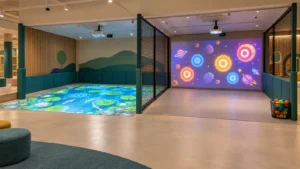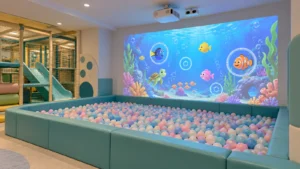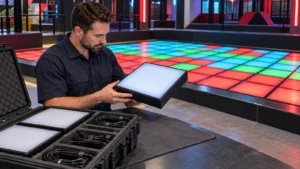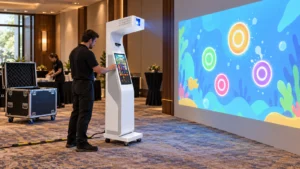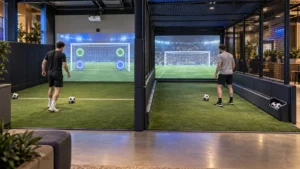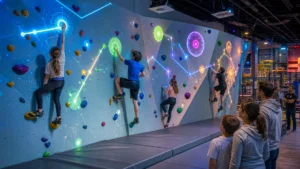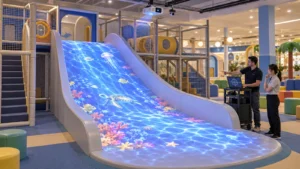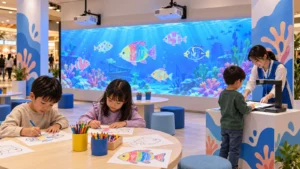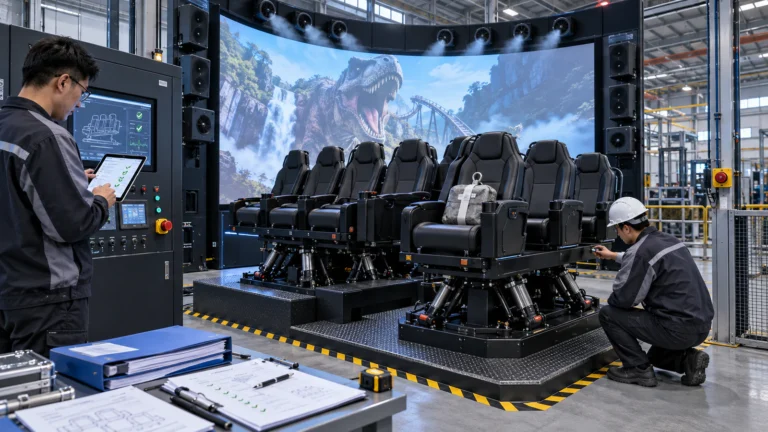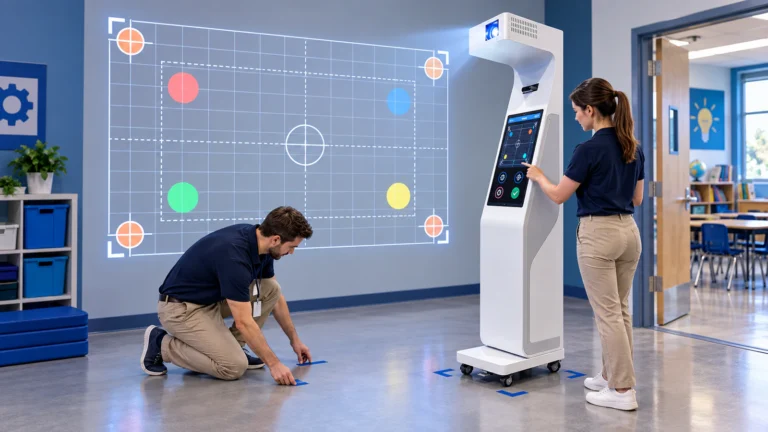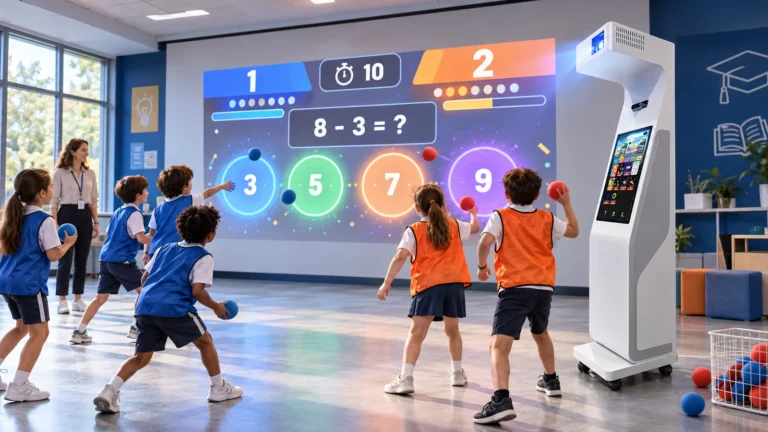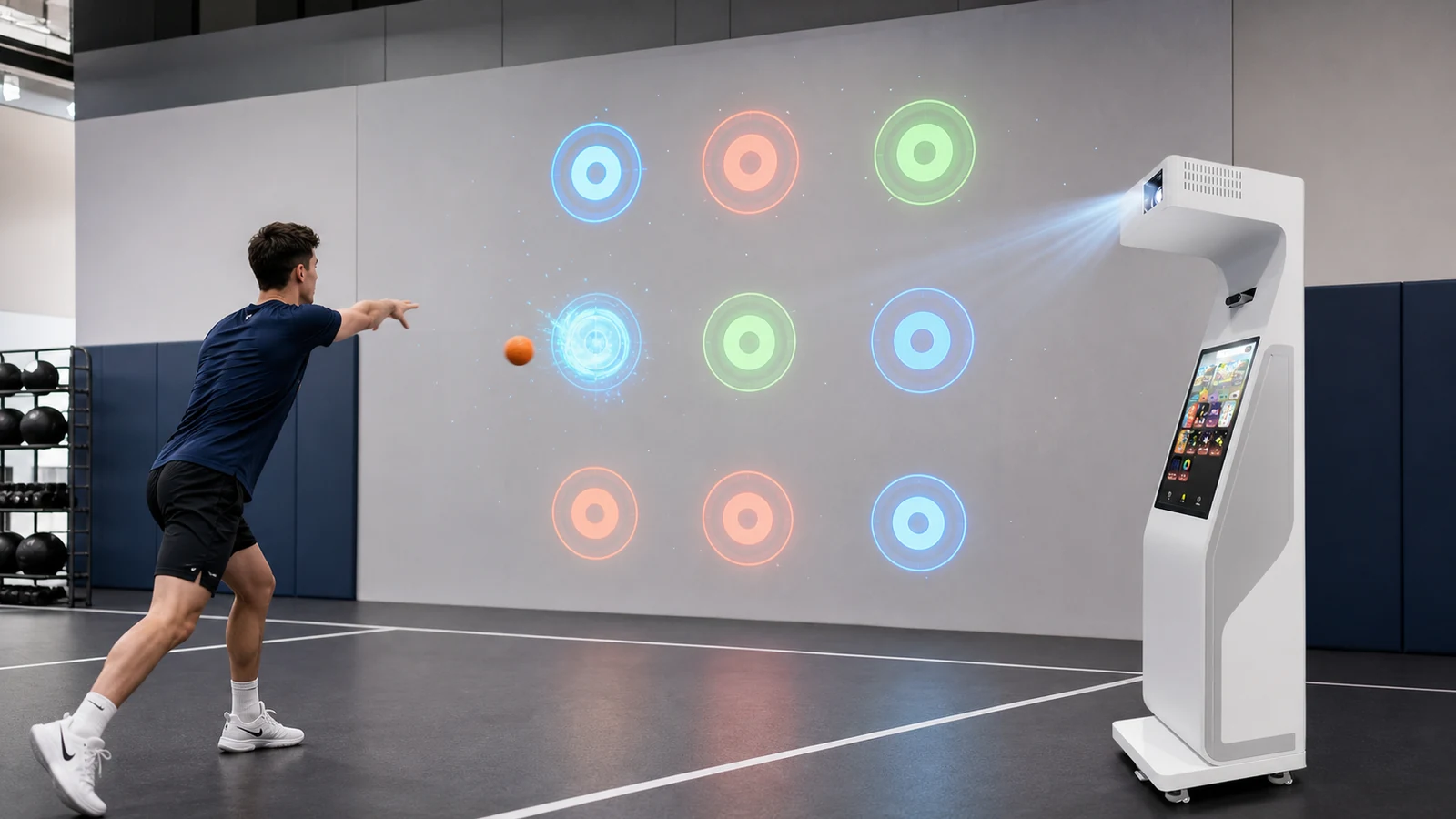
Before requesting a quotation, confirm the active wall size, player distance, ambient light, sensor method and operating schedule. These details determine whether the supplier should recommend a fixed installation, a portable all-in-one machine or a customized turnkey system. Buyers can review the OneCraze interactive wall projection system as a starting point for commercial wall games.
What Is Included in a Commercial Interactive Wall Projector System?
A complete system needs both visual and sensing hardware. The projector displays the game, while the sensor detects a player, ball or touch event. The computer then processes the input and updates the software in real time.
A typical package may include:
- A laser or high-brightness projector with the correct lens
- An infrared sensor, depth camera, radar or other tracking device
- An industrial or commercial computer
- Interactive wall game software and the agreed game library
- A control interface for starting games and adjusting settings
- Mounting brackets, signal cables and installation accessories
- Optional speakers, protective cabinets and wall materials
- Remote setup, operator training and after-sales support
For venues that cannot install equipment permanently, a portable interactive wall projector all-in-one machine can reduce ceiling work and simplify relocation. In contrast, a fixed system can keep equipment outside the player area and may better suit a permanent sports room.
How Much Room and Projector Brightness Does a Gym Need?
The following figures are preliminary planning ranges rather than final specifications:
| Installation factor | Planning starting point | What the buyer should confirm |
|---|---|---|
| Active projection width | 3–5 m | Game aspect ratio, player count and available wall |
| Active projection height | 1.8–3 m | Ceiling height and target placement |
| Clear player zone | Approximately 2.5–5 m deep | Ball type, throwing movement and spectator separation |
| Projector brightness | Often 5,000–8,000 ANSI lumens indoors | Ambient light, image size and wall reflectivity |
| Wall finish | Flat, light and matte | Glare, seams, cleanability and impact resistance |
| Equipment access | Accessible without entering active play | Filter cleaning, cable checks and component replacement |
Projector brightness alone cannot guarantee a clear game image. A bright room, dark wall or oversized picture can reduce contrast even when the projector has a high lumen rating. Consequently, the supplier should calculate image size and throw distance using the exact projector and lens. Buyers can cross-check the proposal with the official Epson projection distance calculators or BenQ projector calculator.
The final wall also affects tracking and maintenance. The OneCraze guide to the best wall surface for ball-throwing interactive projection compares matte paint, impact panels, padding and other options. If the system uses balls, the venue should define their size, weight, material and color before factory testing.
Infrared, Depth Camera or Radar: Which Sensor Should Buyers Choose?
The right sensor depends on what the player does. A touch-style game does not create the same tracking event as a fast ball hitting the wall. Similarly, a full-body fitness game requires a wider sensing volume than a single projected button.
| Sensor method | Suitable interaction | Main advantage | Buyer should verify |
|---|---|---|---|
| Infrared sensing | Touch, hand or object interaction near the wall | Direct detection and established installation method | Active area, sunlight sensitivity and sensor alignment |
| Depth camera | Body movement, gesture and multiplayer activity | Tracks position and depth without wearable controllers | Player range, occlusion and lighting conditions |
| Radar | Ball throwing and fast motion | Can detect movement without relying only on visible images | Ball size, speed range, detection zones and calibration |
| LiDAR | Spatial tracking and defined scan areas | Accurate distance and zone detection | Scan height, blind spots, reflectivity and software integration |
For a more detailed technical comparison, see LiDAR vs infrared camera vs depth sensor for interactive projection. Venues planning several sports can also review how interactive multi-sport wall projector ball tracking changes with different ball types.
Hardware-Only or Turnkey: Which Quotation Fits the Project?
A hardware-only package can suit an experienced audiovisual integrator that already manages local construction, installation and commissioning. It normally contains the projector, sensor, computer, controller and software. However, the buyer must still coordinate the wall, power, network, audio, mounting and safety work.
A turnkey interactive wall projection system may add:
- Site-layout and installation drawings
- Projector and sensor mounting hardware
- Protective cabinets and safety cables
- Wall preparation or impact-resistant facing recommendations
- Audio equipment and player-zone markings
- Game customization, language changes and branded interfaces
- Factory acceptance testing
- On-site or remote commissioning
- Operator training and a spare-parts package
How Should Buyers Compare Interactive Wall Projector Suppliers?
A serious supplier should prove how the system performs, not only show edited promotional clips. Ask for a continuous video demonstration using the offered hardware configuration. If ball throwing is required, the test should use the approved ball and show repeated throws across the full wall.
Before placing an order, verify:
- The exact projector, sensor, computer and controller models
- The number of included games and the software licensing period
- Supported languages, logo customization and content-update method
- Sensor range, response method and recalibration procedure
- Continuous operating time and heat-management design
- Production lead time, packing dimensions and shipping terms
- Warranty coverage for third-party and manufacturer-built components
- Spare sensor, computer, controller and cable availability
- Remote diagnostics and response time after installation
- Electrical, EMC and safety documents available for the destination market
OneCraze provides both equipment and customized interactive multimedia solutions. Buyers evaluating a wider product range can visit the interactive projector category and compare fixed and mobile configurations before requesting a final proposal.
Which Gym and Entertainment Applications Fit the System?
Interactive wall projection works best when the game, sensor and room support the same activity. A family entertainment center may prioritize fast rounds and visual effects, while a gym may need measurable scores, repeatable drills and durable equipment.
Common configurations include:
- Gym reaction training: Timed target hits, coordination drills and individual score tracking
- Ball-throwing sports wall: Soft-ball target games, team competition and multi-sport activities
- Family entertainment center: Short multiplayer games with a simple operator interface
- Trampoline or activity park: Group challenges connected to a larger play route
- School activity room: Supervised movement games with age-appropriate difficulty
The venue should define the maximum number of simultaneous players and daily operating hours. It should also decide whether visitors queue behind the active zone or enter from the side. These details affect sensor occlusion, spectator safety and the position of the control screen.
Before shipment, the factory acceptance test should include at least 30 minutes of continuous play, start-and-stop control, every included game mode, edge detection and recovery after restarting the system. Finally, the installer should repeat the calibration and acceptance test after mounting the system at the venue. The OneCraze guide to interactive wall projection games for FECs provides additional planning considerations for commercial entertainment rooms.
The required space depends on image size, lens, sensor and game type. As an early planning point, many venues consider a 3–5 m wide active wall and approximately 2.5–5 m of clear player depth. The supplier must calculate the final layout from the actual room drawing.
Yes, when the selected sensor and software support ball tracking. However, detection can change with ball diameter, weight, color, speed and wall material. The supplier should test the exact ball before approving the configuration.
Customization may include brand logos, interface language, game graphics, scoring rules and selected software functions. Buyers should list every required change in the quotation because content customization and hardware supply may have different lead times.