What Are Interactive Gym Wall Games?
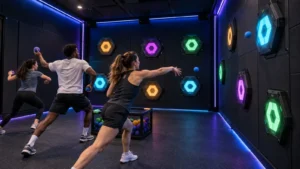
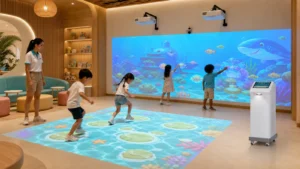
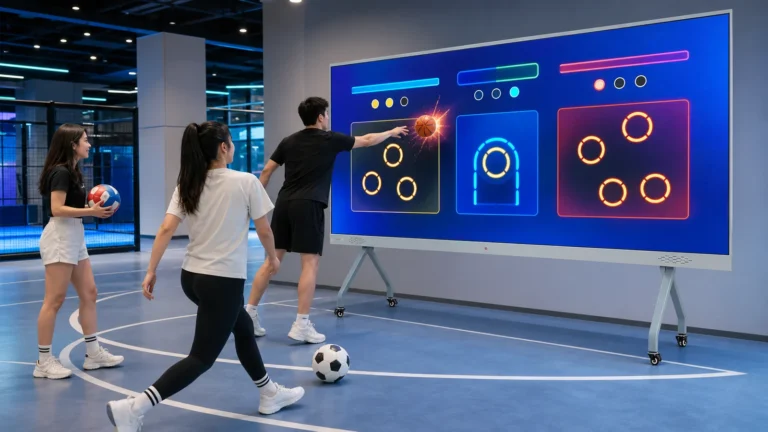
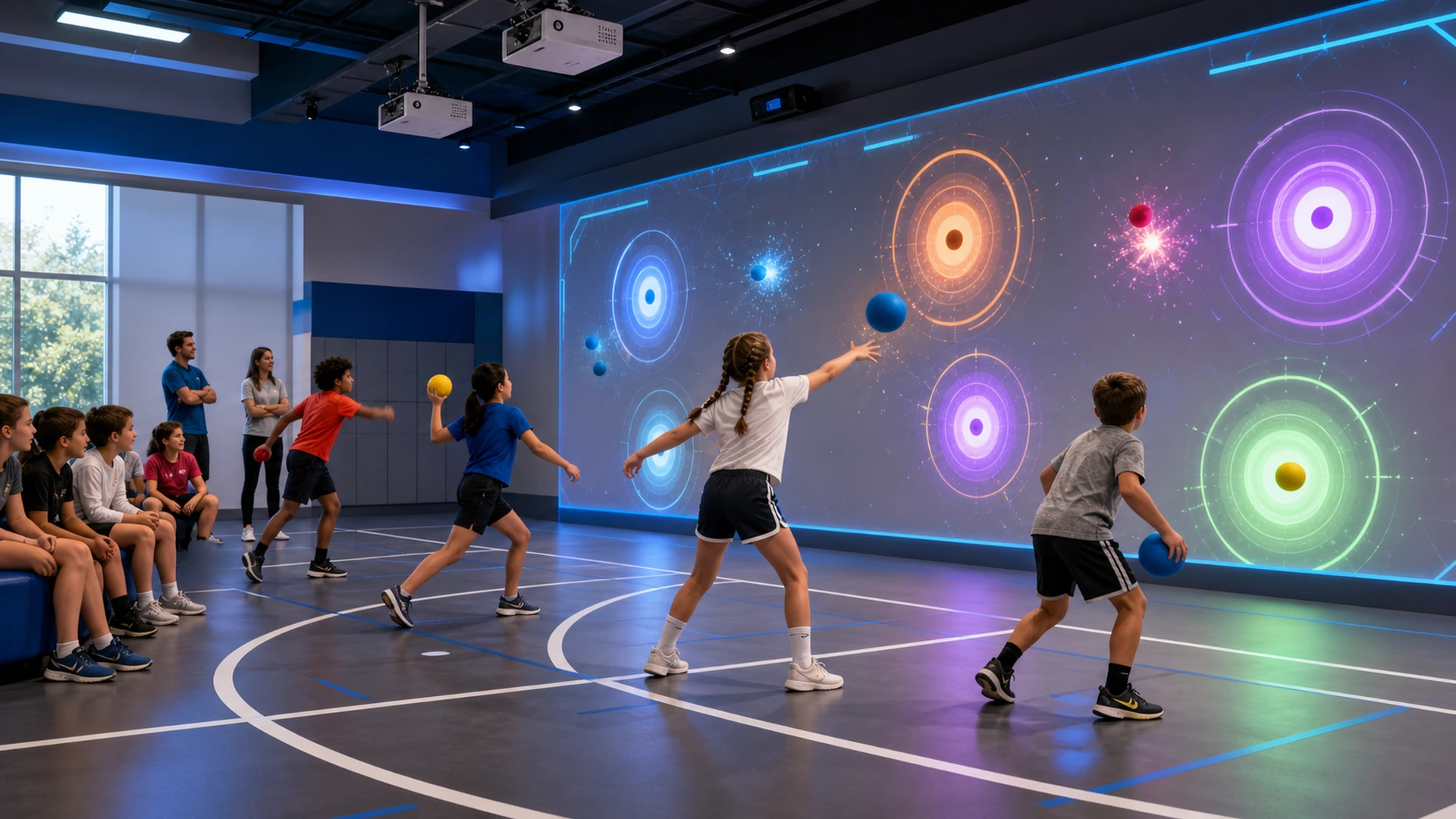
Interactive gym wall games use projection, motion sensing and game software to create responsive wall-based activities. The projector displays targets, sports scenes or game effects on a wall. Then the sensor detects ball hits, body movement or touch-style interaction, and the software responds with scoring, animations and sound.
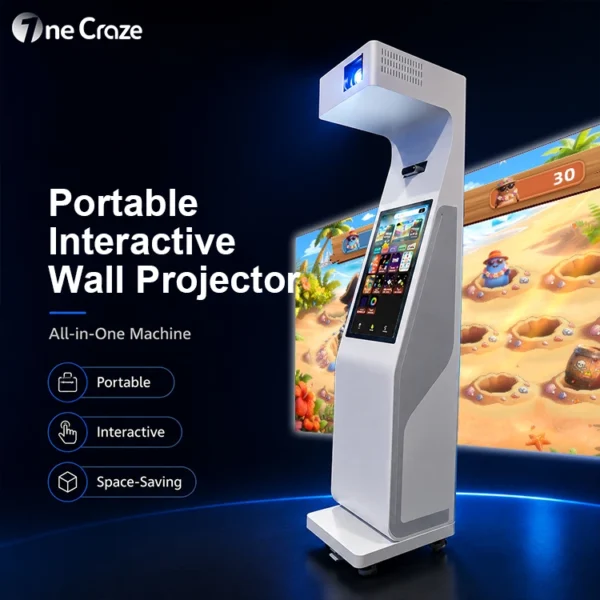
This format works well in gyms because it feels physical and easy to understand. Players do not need a long tutorial. They see a target, move, throw or react. For buyers who want a movable product instead of a fixed installation, OneCraze’s Portable Mobile Interactive Wall Projector All-in-One is the most relevant product to consider.
What Equipment Does a Portable Interactive Wall Game System Need?
A portable wall game system should combine the core parts into one simple operating unit. The goal is to reduce installation work and let staff move the system between different rooms or event areas. According to the OneCraze product listing, the all-in-one device combines a projector module, motion sensor, touchscreen control panel, built-in software system and mobile base.
| Equipment part | What it does | Why it matters |
|---|---|---|
| Projector module | Displays the game image on the wall | Bright visuals help players see targets clearly |
| Motion sensor | Detects player movement or ball interaction | Accurate sensing makes the game feel responsive |
| Touchscreen control panel | Lets staff choose and manage games | Simple control reduces training time |
| Built-in software | Provides game content and interaction logic | Good software creates replay value |
| Mobile base | Allows the system to move between spaces | Schools and event venues can use one unit in multiple rooms |
| Audio feedback | Adds sound effects and game cues | Players understand hits, timing and scores faster |
| Safe play props | Soft balls or similar accessories | Physical interaction stays suitable for children and public venues |
Because the system is not only a projector, buyers should evaluate it as a complete activity product. The projector, sensor, software and physical play setup must work together.
Best Use Cases for Schools, Gyms and FECs
Interactive gym wall games fit spaces where people already expect movement. However, the best use case depends on the age group, session length and staff model. A school may need PE class activities and active learning. A family entertainment center may need fast rounds and party packages. A gym may need reaction training or group challenges.
| Venue | Best game style | Main benefit |
|---|---|---|
| School gym | PE reaction games, throwing challenges and team competitions | Makes physical education more engaging |
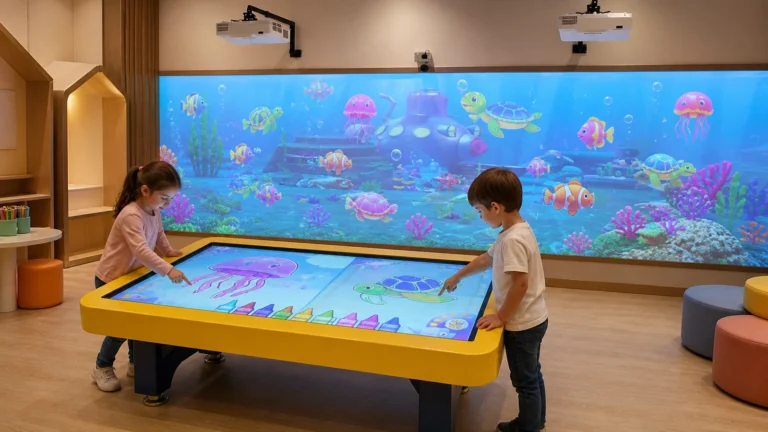
| Kindergarten or kids center | Simple target games and colorful movement activities | Gives younger children easy active play |
| Family entertainment center | Timed wall games, party modes and multiplayer scoring | Adds a compact revenue attraction |
| Sports training room | Reaction, accuracy and coordination drills | Supports skill practice with instant feedback |
| Mall event or pop-up | Portable challenge games and branded activities | Attracts foot traffic without permanent construction |
| Community center | Group fitness and family activity programs | Creates reusable programming for different ages |
If you are comparing a wall game zone with a larger FEC installation, read our related guide on interactive wall projection games for FECs.
Portable Wall Projector vs Fixed Interactive Wall System
Both portable and fixed systems can work well, but they solve different problems. A fixed system is stronger when the venue wants a permanent attraction with custom installation. A portable system is better when the operator needs mobility, lower setup complexity and flexible use between rooms.
| Comparison point | Portable interactive wall projector | Fixed interactive wall system |
|---|---|---|
| Installation | Usually faster and less construction-heavy | Requires planned mounting, wiring and calibration |
| Mobility | Can move between rooms or event zones | Stays in one dedicated area |
| Best buyer | Schools, gyms, small FECs, event operators | Large FECs, museums, permanent attractions |
| Space use | Works well in multipurpose rooms | Works best in a dedicated wall game zone |
| Staff operation | Touchscreen control can simplify daily use | May require more system-specific training |
| Customization | Good for standard games and portable events | Better for deep custom scenes and room integration |
| Budget style | Often easier as an entry product | Usually a larger project investment |
Therefore, a portable unit is a good choice when you want to test demand, support multiple programs or avoid a heavy construction project. A fixed system makes more sense when the wall game becomes a permanent flagship attraction.
Game Ideas That Work Well on a Gym Wall
The best gym wall games are active, clear and repeatable. Players should understand the rule almost immediately. In most cases, simple scoring and strong visual feedback perform better than complicated game menus.
| Game idea | How players interact | Suitable venue |
|---|---|---|
| Target hit game | Players throw soft balls at moving projected targets | Schools, gyms and FECs |
| Reaction wall challenge | Players hit targets as they appear in different zones | PE classes and sports training rooms |
| Team battle mode | Two teams compete for score within a timed round | Birthday parties and group events |
| Accuracy training | Players aim for specific zones to improve control | Sports clubs and youth training |
| Monster or cartoon hit game | Children hit animated characters or objects | Kids play centers and indoor playgrounds |
| Fitness challenge | Players move quickly between targets for cardio activity | Gyms and community centers |
| Branded event game | Custom visuals support a sponsor or seasonal campaign | Mall events and pop-up activations |
For a broader range of interactive projector products, you can also review the OneCraze interactive projector system products page.
Setup Checklist Before Buying
Before buying an interactive gym wall game system, check the wall, room size, light level, power access and player safety area. Even a portable system needs enough throw distance, a suitable wall surface and a clear play zone.
| Checklist item | What to confirm |
|---|---|
| Wall surface | Flat, light-colored and large enough for the game image |
| Player distance | Enough room for throwing, movement and safe spacing |
| Ambient light | Light should not wash out the projection |
| Power access | Convenient outlet location without exposed trip hazards |
| Floor condition | Non-slip, clear and suitable for active movement |
| Staff position | Easy access to the touchscreen and system controls |
| Ball safety | Use soft, lightweight balls for public and school environments |
| Storage | Space to keep the mobile device and accessories when not in use |
In addition, confirm whether the system will stay in one room or move between several locations. If it will move often, the base, wheels, startup process and daily calibration steps become more important.
What Should Schools and FECs Compare?
Buyers should not compare only the projector brightness or device price. A useful wall game system must fit the real operating environment. Schools should focus on durability, simple operation and age-appropriate content. FECs should focus on repeat play, session turnover and party package value.
| Buying factor | Why it matters | Question to ask |
|---|---|---|
| Game library | Content determines replay value | Are the games suitable for my age group? |
| Tracking response | Delayed detection weakens the experience | Does the system respond quickly to ball hits and movement? |
| Portability | Multi-room use depends on easy movement | Can staff move and set it up without technical help? |
| Control interface | Staff need simple daily operation | Can operators switch games quickly? |
| Maintenance | Public venues need reliable uptime | How do we clean, restart and service the system? |
| Custom content | Branding can support events and premium packages | Can the supplier add custom themes or game rules? |
| Support | Schools and FECs need help after delivery | What training and remote support are included? |
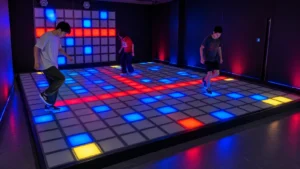
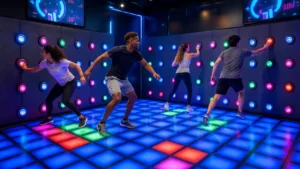
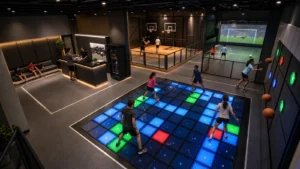
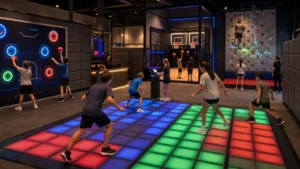
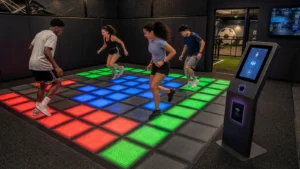
If your project needs a floor-based mobile option instead, compare the wall product with the OneCraze Mobile Interactive Floor All-in-One. The wall version is stronger for throwing and target games, while the floor version is better for stepping, running and foot-triggered play.
Choose a Portable Interactive Wall Game System
If you need an interactive gym wall game system for a school, gym, FEC, kids center or event space, OneCraze can help you choose the right portable wall projector setup, game content and operating plan.
Start here: view the Portable Mobile Interactive Wall Projector All-in-One or contact OneCraze for a custom recommendation.
An interactive gym wall game is a projection-based activity system that turns a wall into a responsive game surface. Players can throw soft balls, hit targets, move their bodies or compete in timed challenges.
Yes. A portable unit can work well for school gyms, PE classes, activity rooms and after-school programs. Schools should check wall size, room lighting, safe play distance and age-appropriate game content before buying.
Yes. A mobile all-in-one wall projector can reduce permanent installation work because the projector, sensor, software and control panel are built into one movable device. However, the room still needs a suitable wall, power access and safe play area.